
Part 52: A New Chapter Begins
Click the icon below to download a 4-page PDF version of this page.

The end of our journey
Our journey comes to its end. God has defeated Satan and every evil power. He’s dealt with all the tangled consequences of sin. He’s expelled every rebellious human and angel from creation. God’s people are living in God’s presence in God’s paradise. The Kingdom of God has come in its full glory.

Early Light © Tony Armstrong-Sly at Flickr.com (CC BY-NC-ND 2.0)
Our journey may have come to an end. But God’s great story hasn’t. It’s actually begun a new chapter.
Our journey may have come to an end. But God’s great story hasn’t. It’s actually begun a new chapter. As C.S. Lewis wrote at the conclusion of his Narnia series: “But for them it was only the beginning of the real story. All their life in this world and all their adventures in Narnia had only been the cover and the title page: now at last they were beginning Chapter One of the Great Story which no one on earth has read: which goes on for ever: in which every chapter is better than the one before.”[1]

“. . . now at last they were beginning Chapter One of the Great Story which no one on earth has read: which goes on for ever: in which every chapter is better than the one before.”[1]
Our longings fulfilled
What will life on the New Earth be like? To help us answer that question, we need to ask ourselves: what do we really long for? Our answers will reveal a lot about life on the New Earth. All our deepest longings will be fulfilled there.
● We long to love and be loved. New Jerusalem is a community gathered “from every tribe and language and people and nation” (Revelation 5:9). It will be a family bound together in warm, close, perfect fellowship. There’ll be no social, racial or language barriers, no personality clashes, no misunderstandings, nothing to spoil our relationships with each other. Above all, we’ll know, so much more fully than we do now, the love of God for us, the love that exceeds all human love.
●We long for a place to call home. Though the New Earth will be so gloriously perfect, we’ll feel more at home there than we’ve ever felt on this Earth. In a wonderful way, the New Earth will be familiar to us. We’ll say, like C.S. Lewis’s Unicorn in ‘The Last Battle’: “I have come home at last! This is my real country! I belong here. This is the land I have been looking for all my life . . . .”[2] We humans have never forgotten paradise; we’re homesick―we long to return there. We will come home.
In the new creation we’ll say, “I have come home at last! . . . . This is the land I have been looking for all my life”
●We long for ways to engage our talents and creativity, our intellect and imagination. Life in glory won’t disappoint! These desires―desires that God built into our human nature―will be fulfilled in ways that we can’t even dream of now. There’ll be purposeful work to do. It will be enjoyable and satisfying.

We long for ways to engage our talents and creativity, our intellect and imagination. Life in glory won’t disappoint!
●We long for a special place and unique role in society. In the world to come, each one of us will have a special role that no-one else can fulfil.
More real, more alive!
One writer comments, “. . . many people tend to picture the afterlife as something less solid, less substantial than our earthly life, an existence in some ethereal and virtually disembodied state. In this respect, much current thinking is topsy-turvy. The one thing we can with certainty say about life in heaven is that it is more real than life on Earth.”[3] Our new bodies will be “spiritual” bodies (1 Corinthians 15:44). But that doesn’t mean they won’t also be physical. They’ll be radiant with glory, powerful, immortal, unable to suffer pain or injury, free from weakness and disease. They’ll be glorious bodies, like Jesus’s own “glorious body” (Philippians 3:21).

“The one thing we can with certainty say about life in heaven is that it is more real than life on Earth.”[3]
Our human nature, and our powers and abilities, will be enriched and expanded in ways that we can’t even imagine now. [4] The American evangelist, D.L. Moody, once remarked: “Some day you will read in the papers that D. L. Moody of East Northfield, is dead. Don’t you believe a word of it! At that moment I shall be more alive than I am now; . . . .”[5] Our intellects will be sharper, our minds more perceptive, our sight more penetrating, our hearing more acute, our sense of touch more sensitive. C.S. Lewis wrote: “To enter heaven is to become more human than you ever succeeded in being on earth.”[6]

Earth will be saturated with God’s presence and glory. Habakkuk’s prophecy will then have come to full fulfilment: “For the earth will be filled with the knowledge of the glory of the Lord as the waters cover the sea” (Habakkuk 2:14 and see Isaiah 11:9).
Heavenly rewards
From a number of Scriptures (such as 1 Corinthians 3:10-15, 2 Corinthians 5:10, and Revelation 22:12) we learn that God rewards faithful believers. These rewards seem to relate to responsibility. Jesus’s parables of the minas (or pounds) and the talents show us that God will give people differing degrees of responsibility (Luke 19:11-27, Matthew 25:14-30). But every faithful believer will enjoy equal delight and joy in fulfilling what God gives them to do. We’ll enter “into the joy of” our Lord (Matthew 25:21,23)―and there’s no greater joy than that!
“We will see His face”
God made us in His image and likeness (Genesis 1:26). In the world to come, we’ll at last bear His image and likeness fully. We’ll be untroubled by temptation and incapable of sin. We’ll be “conformed to the image of his Son” (Romans 8:29).
In the world to come, we’ll at last bear God’s image and likeness fully.
And “we know that when he appears we shall be like him, because we shall see him as he is” (1 John 3:2). [7] We, God’s servants, “will see his face” (Revelation 22:4). But God is “invisible” (Colossians 1:15). So how will we see Him? That word “his” in Revelation 22:4 seems to refer jointly to “God and . . . the Lamb” (22:3).[8] We’ll see the invisible Godhead in the visible face of Jesus Christ. That’s what happened when people saw Him two thousand years ago: “the Word became flesh and dwelt among us, and we have seen his glory, glory as of the only Son from the Father, full of grace and truth” (John 1:14). Jesus is still a Man; He has a glorious human body (Philippians 3:21). We’ll see Him with our own eyes, and so we’ll see the glory of God (compare 2 Corinthians 4:6).
We’ll not only see Him with physical eyes, but also with spiritual sight. In our present life, we know God indirectly, incompletely. But then we’ll know Him ‘face to face’. It’s rather like the difference “between looking at a photograph and seeing someone in person”.[9] Seeing a photo of someone we love is good, but it’s no substitute for seeing them in person. In the world to come we’ll know God ‘face to face’―intimately, perfectly, without shadow or interruption. It will be a joy outshining every other joy. All this is our glorious “inheritance”―an inheritance “imperishable, undefiled, and unfading, kept in heaven for you” (1 Peter 1:4).
Prophets, priests and kings
What will we do in the world to come? To work is part of what it means to be human, as we saw in Part 4. God will call each one of us to a unique role that no-one else can fill, work that will bring pleasure to Him, blessing to other people, and joy and fulfilment to us.
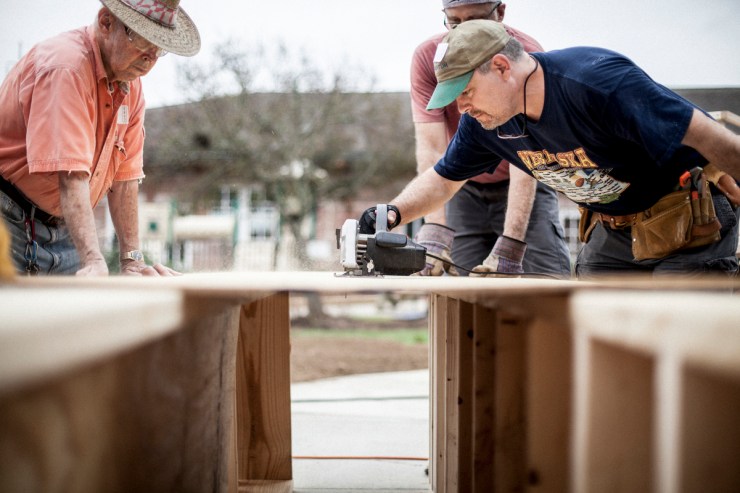
What will we do in the world to come? To work is part of what it means to be human. God will call each one of us to a unique role that no-one else can fill.
Right from the beginning, God called us humans to be His prophets, priests and kings. We saw that in Part 45. In the world to come, we’ll be God’s prophets, priests and kings in a wonderful new way:
► We’ll be God’s prophets. Before God’s prophets of old could ever speak on His behalf, God took them into His confidence, and shared His plans with them (see Amos 3:7). They were God’s confidants. In a far deeper way, we will be God’s confidants and friends.
► We’ll be God’s priests. The whole of New Jerusalem is a Most Holy Place, filled with God’s presence. The Old Testament priests served God in the Tabernacle and Temple. In New Jerusalem, all God’s people will serve Him as priests. We read, “The throne of God and of the Lamb will be in the city, and his servants will serve him” (Revelation 22:3 NIV). That word “serve” is also translated “worship” (ESV). It suggests priestly service. We’ll worship and serve God and the Lamb as priests. And, just as the Old Testament priests ministered to God’s people, we’ll all minister to each other in all kinds of ways, too.
► We’ll be God’s kings. In the beginning, God gave mankind dominion over this Earth (Genesis 1:26,28). In the world to come, God’s new humanity, with Jesus Christ as our Head, will rule over Earth just as God always intended. We’ll share Christ’s rule; we’ll ”reign for ever and ever” (Revelation 22:5).
God’s promises fulfilled
In Part 30, we saw the wonderful promises that God made to His people through His Old Testament prophets. Everything God promised is fulfilled through Jesus: “all the promises of God find their Yes in him” (2 Corinthians 1:20). And He’ll complete His work when He ushers in the New Heaven and Earth.
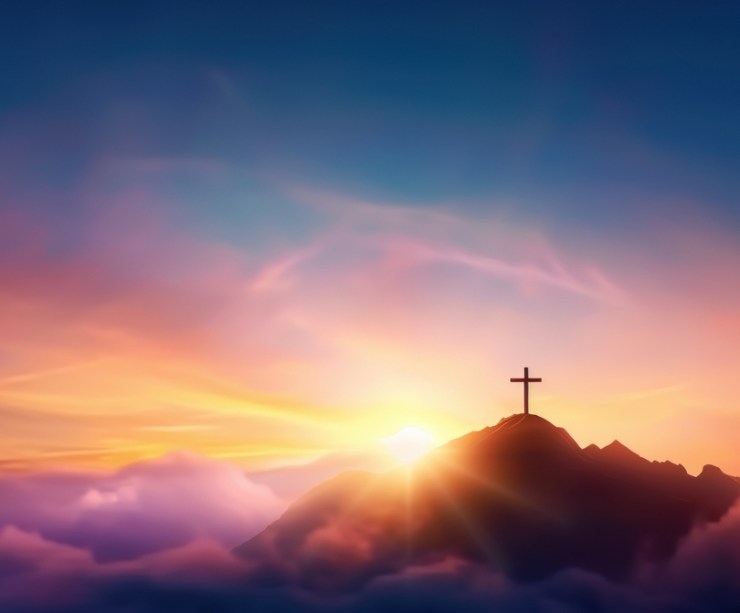
Everything God promised is fulfilled through Jesus: “all the promises of God find their Yes in him” (2 Corinthians 1:20). He’s fulfilled them through His death and resurrection and ascension to His Father’s right hand.
► The new Exodus God promised there’d be a new Exodus (for example, Isaiah 11:10-16, 43:14-21). Jesus is now leading people through a new Exodus: they’re crossing over “from death to life” (John 5:24), they’re being released from guilt, and from slavery to sin. Jesus is bringing people home―home to His “Father’s house” (John 14:2-3).[10][11] The Triune God has made His home in us believers (John 14:17,23). But we’re not fully home yet; we’re still “foreigners and exiles” (1 Peter 2:11 NIV). Jesus is leading us through the wilderness of this world; journey’s end is our eternal home, the new creation. [12]
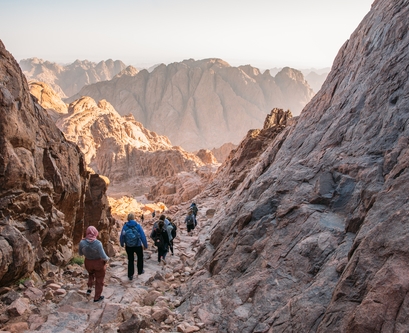
Jesus is leading us through the wilderness of this world; journey’s end is our eternal home, the new creation.[12]
► The new Promised Land God promised there’d be a new Promised Land (for example, Ezekiel 36:33-36); in fact, there’ll be a new Heaven and Earth (Isaiah 65:17-25). Now we see that new world in all its glory.
► The new Jerusalem God promised a new Jerusalem (see Zechariah 8:3-5). It’s the city that Abraham looked for, “the city that has foundations, whose designer and builder is God” (Hebrews 11:10). Now in Revelation 21:1-22:5 we see her in all her glory: “the Holy City, the new Jerusalem, coming down out of heaven from God” (21:2 NIV). But why does God picture the new creation as a city? Two reasons are: ● A city is a seat of government―New Jerusalem is “the city of the great King” (Psalm 48:1-2). ● A city is a community: “the assembly of the firstborn who are enrolled in heaven” are gathered in New Jerusalem (Hebrews 12:22-23). So much of our joy and fulfilment is bound up in our relationships―how much more will this be true in the new creation!
► The new Temple God promised there’d be a new Temple (Ezekiel 40 to 47); He said He would set His sanctuary “in their midst for evermore” (Ezekiel 37:26-28). There was no Temple in the Garden of Eden. But after sin polluted this world, God lived in a holy sanctuary separated from that pollution. First was the Tabernacle with its Most Holy Place; then Solomon’s Temple, then the second Temple, built after the exile. Then God came in the Person of His Son; Jesus “tabernacled” or “lived in a tent” here (John 1:14, literal translations). Now we are “a holy temple in the Lord” (Ephesians 2:21). But on the New Earth, God won’t need a special sanctuary any more; there’s no sin to make that necessary. As we saw in Part 51, the whole of New Jerusalem―in fact, the whole new creation―is God’s Most Holy Place, His holy dwelling place. And so Ezekiel’s prophecy is fulfilled.
► The new King God promised there’d be a new King of David’s dynasty (for example, Ezekiel 37:24-25). He’ll be God Himself (for example, Isaiah 7:14, 9:6). He’ll rule the whole Earth (for example, Zechariah 9:9-10), and “his dominion . . . shall not pass away” (Daniel 7:14). God has kept His promise. King Jesus is destroying “every rule and every authority and power”, and putting “all his enemies under his feet”; He’ll complete His conquest when He returns. Then He’ll deliver “the kingdom to God the Father” (1 Corinthians 15:24-25). [13] The Triune God―Father and Son and Holy Spirit―will reign for ever; their dominion will never be challenged again.[14] “God and . . . the Lamb” are enthroned in New Jerusalem (Revelation 22:3); the Lamb, “the Lion of the tribe of Judah, the Root of David” (Revelation 5:1-10) will rule there for ever with His Father through the Holy Spirit.
► The triumph over evil God promised that all the evil forces ranged against Him and His people would be defeated (for example, Ezekiel 38:1-39:29, Isaiah 27:1). In Part 50, we saw Jesus fulfil that promise. He conquers all the powers of evil.
► The blessing of the nations God promised Abraham that “all peoples on earth will be blessed through you” (Genesis 12:1-3 NIV). In a nutshell, this blessing is salvation. At its root, it’s to be “justified by faith in Christ” (Galatians 2:16, and see Galatians 3:8). And so we’re reconciled to God; we’re now His friends. God’s people are justified, born again, filled with His Spirit, freed from the penalty and power of sin, united with Christ, members of His Bride, and sons of the Father. And in the new creation, they’re free from even the presence of sin, and living in God’s presence in paradise!
The New Covenant fully fulfilled
On the Day of Pentecost, the Holy Spirit began to bring people into the blessings of the “new covenant” foretold in Jeremiah 31:31-34 and Ezekiel 36:25-27―the covenant activated by Jesus’s death and resurrection. But in the new creation, we’ll enjoy all its blessings to the full. John hears “a loud voice from the throne saying, ‘Look! God’s dwelling-place is now among the people, and he will dwell with them. They will be his people, and God himself will be with them and be their God.” (Revelation 21:3 NIV). And so God fulfils what He promised: “My dwelling place shall be with them, and I will be their God, and they shall be my people.” (Ezekiel 37:27).
That fellowship with God is symbolised by eating a meal in His presence. We see this throughout the Bible: the Passover meal (Exodus 12:3-11), the meal on Mount Sinai (Exodus 24:11), the fellowship offering (Leviticus 3:1-17), “the bread of the Presence” in the Tabernacle (Exodus 25:30), and the Lord’s Supper (1 Corinthians 11:23-26). Now in the new creation we’ll enjoy the great and final meal, “the marriage supper of the Lamb” (Revelation 19:9), a supper that will go on for ever.

In the new creation we’ll enjoy the great and final meal, “the marriage supper of the Lamb” (Revelation 19:9), a supper that will go on for ever.
The eternal Jubilee
The angel Gabriel told Daniel about 70 ‘sevens’ or ‘weeks’ “decreed for your people and your holy city. . . .” (Daniel 9:24). We saw this in Part 30. These ’70 weeks’ recall the Year of Jubilee, which we met in Part 19. After the ’70 weeks’ comes God’s eternal ‘super-Jubilee’. It’s already begun―Jesus launched it through His ministry (Luke 4:18-19). On the Day of Pentecost it came in a greater way (see Part 39). God is releasing people from spiritual blindness, redeeming them from sin’s penalty, unshackling them from slavery to sin. But this super-Jubilee will come fully when Jesus returns and ushers in the new creation. Then we’ll be freed even from the presence of sin. We’ll enjoy perfect freedom, rest and joy.
And in all that He’s done, God has vindicated His Name against all His enemies’ accusations. He’s proved to all heaven’s hosts, to all humanity, and to every evil spirit that He is good, that He can be trusted, that all He does is always in perfect love. Satan is proved to be a liar (John 8:44).
The ‘bookends’ of the Bible
When you read about the new Heaven and Earth in Revelation 21:1-22:5, you can’t help being reminded of the Garden of Eden. They’re rather like two ‘bookends’ of the Bible. But, as we saw in Part 51, the garden was just God’s starting point. [15][16] He had a renewed and transformed world in mind―a garden-city. ● A river “flowed out of Eden to water the garden” (Genesis 2:10-14); “the river of the water of life” flows from the throne of God and of the Lamb (Revelation 22:1). ● The “tree of life” grows in the garden (Genesis 2:9); in the New Jerusalem, we see “on either side of the river, the tree of life”―what seems to be many trees lining both banks of the river (Revelation 22:2) [17]. ● Satan was able to enter the garden; but “nothing unclean” can enter New Jerusalem (21:27). ● In the garden, God walked “in the cool of the day” (Genesis 3:8); but in New Jerusalem we find “the throne of God and of the Lamb” (Revelation 22:1,3); God dwells with His people (21:3). ● In the garden, there’s gold and precious stones (Genesis 2:12); New Jerusalem is “pure gold, clear as glass”, and adorned with all kinds of precious stones (Revelation 21:18-21). ● In the garden we see two people; in the New Earth, we see “the nations” (21:24,26, 22:2). ● In the garden, we see a man and his wife (Genesis 2:22-24); in the New Earth, we see the Lamb and His bride (Revelation 19:7, 21:2,9).

When you read about the new Heaven and Earth, you can’t help being reminded of the Garden of Eden. They’re rather like two ‘bookends’ of the Bible. But the garden was just God’s starting point.[15][16] He had a garden-city in mind.
And so, after all we’ve seen, all we can do is to give thanks to our God and bless His Name, “For the LORD is good; his steadfast love endures for ever, and his faithfulness to all generations” (Psalm 100:5).
“Oh, the depth of the riches and wisdom
and knowledge of God!
How unsearchable are his judgments
and how inscrutable his ways! . . . .
For from him and through him
and to him are all things.
To him be glory forever. Amen.”
(Romans 11:33,36).
Bible Reading and Question
You may like to read Revelation 4:1-5:14. Here’s a question to think about:
?In this passage John tells us about a wonderful vision of the Triune God upon His throne, and of Jesus, the Lamb of God, “the Lion of the tribe of Judah, the Root of David”. Having read this passage, and come to the end of our journey through the Bible story, what things about God and about Jesus Christ do you see more clearly, or see for the first time?
Song
Here’s a song about the new creation by Keith and Kristyn Getty, called There is a Higher Throne. You can find the lyrics, more information about the song, and recordings to purchase HERE.
REFERENCES ► [1] Quoted from The Last Battle by C.S. Lewis, page 165. Published by Penguin Books in association with The Bodley Head, Harmondsworth, United Kingdom, in 1964. [2] Quoted from The Last Battle by C.S. Lewis, page 155. [3] Quoted from The Eternal Weight of Glory by Harry Blamires. Published in Christianity Today, issue for 27 May 1991. Available online at https://www.christianitytoday.com/1991/05/eternal-weight-of-glory/, accessed on 27 June 2025. [4] See Christ Ascended for Us―’Jesus’ Ascended Humanity and Ours’ by Nick Needham. Published in Evangel, volume 52, number 2, issue for Summer 2007. Available online at https://biblicalstudies.org.uk/pdf/evangel/25-2_042.pdf, accessed on 27 June 2025. [5] Quoted from The Life of Dwight L. Moody by his son, William R. Moody, page entitled The Autobiography of Dwight L. Moody, unpaginated page two pages before the title page. Issued by The Authorized Publishers, in 1900, copyright 1900 by Fleming H. Revell Company. Available online at https://archive.org/details/lifeofdwight00mood/page/n5/mode/2up, accessed on 27 June 2025. [6] Quoted from The Problem of Pain by C.S. Lewis, page 113. Published by Geoffrey Bles: The Centenary Press, London, United Kingdom, in 1940. [7] See The Letters of John (Pillar New Testament Commentary) by Colin G. Kruse, page 116. Published by William B. Eerdmans Publishing Company, Grand Rapids, Michigan, and Cambridge, United Kingdom, and Apollos, Leicester, United Kingdom, in 2000. [8] See The Revelation of John: a Commentary on the Greek Text of the Apocalypse by Stephen S. Smalley, page 564. Published by SPCK, London, United Kingdom, in 2005. [9] Quoted from The First Epistle to the Corinthians, Revised Edition (The New International Commentary on the New Testament) by Gordon D. Fee, page 718. Published by William B. Eerdmans Publishing Company, Grand Rapids, Michigan, and Cambridge, United Kingdom, in 2014. [10] See Exodus Old and New: a Biblical Theology of Redemption by L. Michael Morales, page 179. Published by IVP Academic, and imprint of InterVarsity Press, Downers Grove, Illinois, in 2020. [11] See The Gospel of John: a Commentary, Volume II by Craig S. Keener, pages 932-939. Published by Hendrickson Publishers, Peabody, Massachusetts, in 2003. [12] See Sojourner and Exiles Living in a Foreign and Hostile Land: an Overview Sermon of 1 Peter by Juan R. Sanchez. Published in Southern Baptist Journal of Theology, volume 21, part 3, in 2017, pages 25-39, especially page 27. Available online at https://equip.sbts.edu/publications/journals/journal-of-theology/sbjt-213-fall-2017/sojourners-exiles-living-foreign-hostile-land-overview-sermon-1-peter/, accessed on 27 June 2025. [13] See The Majesty on High: Introduction to the Kingdom of God in the New Testament (Second Corrected Printing) by S.M. Baugh, pages 61-63. Copy kindly supplied privately by the author. Published in 2017. [14] See ESV Study Bible, English Standard Version, note on 1 Corinthians 15:28 on page 2214. Published by Crossway Bibles, a publishing ministry of Good News Publishers, in 2008. [15] See Heaven Will be Better than Eden by Nancy Guthrie. Available online at https://www.desiringgod.org/articles/heaven-will-be-better-than-eden, accessed on 27 June 2025. [16] See Revelation (Baker Exegetical Commentary on the New Testament) by Grant R. Osborne, pages 771. Published by Baker Academic, Grand Rapids, Michigan, in 2002. [17] See Revelation (Baker Exegetical Commentary on the New Testament) by Grant R. Osborne, pages 770-772.
CREDITS ► Text copyright © 2025 Robert Gordon Betts ► Unless otherwise indicated, all Scripture is taken from the ESV® Bible (The Holy Bible, English Standard Version®), copyright © 2001 by Crossway, a publishing ministry of Good News Publishers. Anglicized English Standard Version copyright © 2002 by Crossway. Used by permission. All rights reserved. The ESV text may not be quoted in any publication made available to the public by a Creative Commons license. The ESV may not be translated in whole or in part into any other language. ► Scripture quotations marked ‘NIV’ are taken from The Holy Bible, New International Version (Anglicised edition). Copyright © 1979, 1984, 2011 by Biblica (formerly International Bible Society). Used by permission of Hodder & Stoughton Publishers, an Hachette UK company. All rights reserved. ‘NIV’ is a registered trademark of Biblica (formerly International Bible Society). UK trademark number 1448790.
 52 Steps