
Part 5 ► Peril in Paradise
Click the icon below to download a 4-page PDF version of this page.

In Genesis 2:8 we read that “the LORD God planted a garden in Eden, in the east, and there he put the man whom he had formed”. That garden was a well-watered paradise, a wonderful home for Adam and his wife, Eve. It was also God’s earthly home. God walked “in the garden in the cool of the day” (Genesis 3:8). He enjoyed times of companionship with Adam and Eve there.
The “knowledge of good and evil”
God told Adam, “You may surely eat of every tree of the garden, but of the tree of the knowledge of good and evil you shall not eat, for in the day that you eat of it you shall surely die“ (Genesis 2:16-17). Adam and Eve could eat as much as they liked from all the other trees. That’s a lot of trees! That’s how generous God is! But they weren’t to eat from one particular tree―“the tree of the knowledge of good and evil”.

God told Adam not to eat from one particular tree―“the tree of the knowledge of good and evil”.
Eating this tree’s fruit would give them “the knowledge of good and evil” (it could be translated ‘the knowledge of good and bad’). But didn’t Adam and Eve already know right from wrong? Yes, they did. They knew it was wrong to eat this tree’s fruit. They knew it was right to obey God and refuse to eat it.
So what does “the knowledge of good and evil” actually mean? In a nutshell, it means deciding for yourself what’s good or bad. To eat the fruit of this tree was to say to God, in effect: “We know better than You. We’ll decide for ourselves what’s good, and what’s bad. We’ll decide for ourselves how to live our lives.”
God wanted Adam and Eve to learn that He is good, that He can always be trusted, that He always knows what’s good or bad for us.
But why did God plant this tree in the garden? Why was this tree connected to “the knowledge of good and evil”? Why would eating its fruit be fatal? In fact, Adam and Eve didn’t need to know any of this. All they had to do was to trust and obey God. That was the whole point. God wanted them to learn that He is good, that He can always be trusted, that He always knows what’s good or bad for us, that He always has our best interests at heart. He wanted them to learn how much He loves us. God wants us to learn these things, too.
By planting this tree in the garden, God was giving Adam and Eve a choice. Would they trust and obey Him? Or would they reject Him and decide for themselves how to live?
The tree of the knowledge of good and evil may well have been an ordinary tree with ordinary fruit. But the ordinary physical act of eating its fruit had huge spiritual significance. Eating its fruit would be an act of rebellion against God. Refusing to eat it would be an act of commitment to Him.
The crafty snake
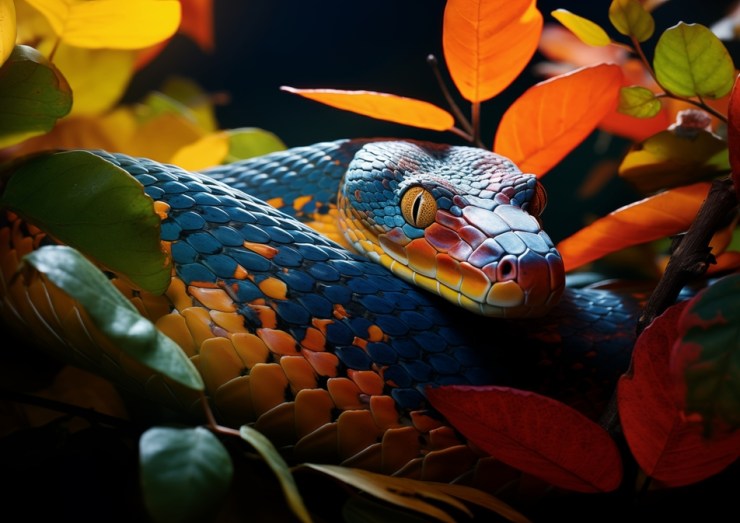
One day, a snake entered the garden. This snake “was more crafty than any other beast of the field that the LORD God had made” (Genesis 3:1).
We’ve seen that Adam was to “work” the garden. And he was to “keep” or “guard” it (Genesis 2:15). This suggests there was something, or someone, the garden needed to be guarded from. And there was!
One day, a snake enters the garden. (Most translations call it a “serpent”; that’s another word for snake.) This snake “was more crafty than any other beast of the field that the LORD God had made” (Genesis 3:1).
This crafty snake targets Eve. It focuses her mind on the tree of the knowledge of good and evil. It asks: “Did God actually say, ‘You shall not eat of any tree in the garden’?” (Genesis 3:1). The snake seems surprised at what God had said. And it deliberately misquotes God. God had said, ”You may surely eat of every tree of the garden, . . . .” The snake twists this into ”You shall not eat of any tree . . . ?” It makes God seem mean and stingy.
Eve seems caught off-guard. She replies, “We may eat of the fruit of the trees in the garden, . . . .” (Genesis 3:2). She misquotes God, leaving out the words “surely” and “every”. She downplays God’s generosity. And she continues, “but God said, ‘You shall not eat of the fruit of the tree that is in the midst of the garden, neither shall you touch it, lest you die.’” (Genesis 3:3). She claims they weren’t even to touch the fruit―making God’s command stricter than it actually was. The snake has made God seem stingy. That lie seems to have taken root in Eve’s mind.
Ever the deceiver, Satan hid his true identity.
Clearly, this snake was no friend of God. So what was it? It was, at the least, the mouthpiece of God’s arch-enemy Satan. It may have been Satan in disguise. Ever the deceiver, Satan hid his true identity. In the book of Revelation, Satan is called “that ancient serpent” (Revelation 12:9, 20:2), pointing us to this creature in the garden.
God’s arch-enemy
So who is Satan? It seems that he was once an angel who lived in God’s presence in Heaven. He wasn’t always evil. God is good and He can’t create anything evil. Satan is a created being, so he must have been originally perfect.
Satan seems to have been a very powerful angel. But he became proud―the apostle Paul probably implies this in 1 Timothy 3:6. In his pride, he wanted to be worshipped and served instead of God. So he rebelled against God. This was when evil entered God’s creation. Our holy God threw Satan out of Heaven.
Satan is an evil angel. Angels are personal beings, as we humans are. But they don’t have physical bodies like ours (though they can appear in human form). They’re not at home here on Earth, but in heavenly realms we can’t see. God’s holy angels worship and praise Him. And they serve Him in various ways, often as His messengers.
Most angels are loyal to God. But many angels joined Satan’s rebellion against God. They too, were thrown out of Heaven. And so Satan and the other evil angels came to live in another supernatural domain.
The name ‘Satan’ is a Hebrew word. It basically means ‘opponent’. Satan is also often called ‘the devil’―derived from a Greek word meaning ‘slanderer’ or ‘accuser’. Satan and his evil angels hate God. And they hate every human and every angel loyal to God. Satan is called various names in the Bible, for example “the evil one” (for example, 2 Thessalonians 3:3) and “the deceiver of the whole world” (Revelation 12:9). He and his forces of evil are unimaginably cruel, malicious, destructive, and perverted.
But we need to remember that Satan’s power is limited. God is all-powerful. He is everywhere, and knows everything. In contrast, Satan doesn’t know everything. He can’t be everywhere at once. And his power (though great) is limited.
What is evil?
Evil isn’t an impersonal force. It’s a personal, relational thing. Ultimately, all evil is rebellion against God. Only personal beings―humans and angels―are capable of rebelling against God. So only humans and angels can do evil things―in other words, commit sins. Animals may appear to do ‘evil’ things. The poet Tennyson wrote of “nature, red in tooth and claw”.[1] But animals don’t sin when they kill and eat other animals. Nature, too, appears to do ‘evil’ things. Tornadoes, hurricanes, earthquakes and tsunamis destroy lives and property. Nature is certainly affected by evil. But it hasn’t become evil.
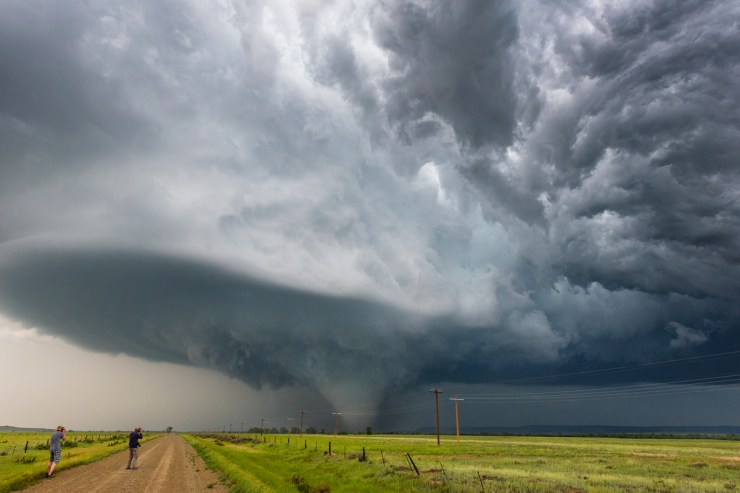
A tornado in Montana, United States. Tornadoes, hurricanes, earthquakes and tsunamis destroy lives and property. Nature is certainly affected by evil. But it hasn’t become evil.
So God threw Satan out of His home in Heaven. But God had created another home for Himself. That home was here on planet Earth―the garden of Eden.
Evil isn’t an impersonal force. It’s a personal, relational thing. Ultimately, all evil is rebellion against God.
Satan wanted to be worshipped and served in God’s heavenly home. He failed. Now, it seems, he turned his attention to Earth. He wants to be worshipped and served here on planet Earth. And so this snake turns up in the garden.

Satan wants to be worshipped and served here on Earth.
The first temptation
The snake continues to speak with Eve. Adam, it seems, remains in the background, passively observing what’s going on. Remember that Adam and Eve were to guard the garden. That snake had no business being there. They should have told it to get out. But they didn’t.
Then the snake launches a vicious attack on God’s character. He says to Eve, “You will not surely die. For God knows that when you eat of it your eyes will be opened, and you will be like God, knowing good and evil.” (Genesis 3:4-5.) In other words, the snake was saying this: “God is lying. You won’t really die if you eat this fruit. God is being mean. He’s keeping something back from you. That ‘something’ is freedom. God is free to do whatever He likes. But He doesn’t want you to be free. Go eat from that tree. Choose for yourself what’s good for you and what’s bad for you. Only then will you be truly free! Only then will you have a life that’s really worth living!”
Satan wanted Adam and Eve to think wrongly―to think wrongly about God, and to think wrongly about themselves, too.
Satan wanted Adam and Eve to think wrongly about God. He wanted them to believe that God wasn’t trustworthy, that He didn’t love them, that He was selfish, and that He didn’t want the best for them. That’s what he still wants people to believe.
And Satan wanted Adam and Eve to think wrongly about themselves, too―that their lives would be better without God, that they could be their own gods and decide for themselves how to live. He still infects people’s minds with that lie today.
Eve gazes at the tree. How lovely it looks! How delicious its fruit must be! And the snake’s promise stirs her imagination. To become wise, to “be like God, knowing good and evil”―how awesome that would be!
Satan tempted Adam and Eve to love themselves rather than God. Underlying all sin―thinking and saying and doing wrong things―is making ourselves the most important person in our world. Sin is, in the end, to worship and serve ourselves, not God―to become “lovers of self rather than lovers of God”[2] (see 2 Timothy 3:2-4). But Jesus said, “You shall love the Lord your God with all your heart and with all your soul and with all your mind. This is the great and first commandment. And a second is like it: You shall love your neighbour as yourself.” (Matthew 22:37-39.)
In the next part . . .
Eve gazes at the tree, pondering what the snake told her. What will she do? Who will she trust―God or this snake? We’ll see next time.
Bible reading and question
You may like to read Genesis 3:1-5. Here’s a question to think about:
? We saw that Satan wanted Adam and Eve to think wrongly about God. Are there ways in which we might be tempted to think wrongly about God’s character?
Resource: A short guided tour of the Bible
Here’s a short guided tour of the 66 books of the Bible. Click the image below to read it.

REFERENCES [1] Quoted from Alfred, Lord Tennyson’s poem In Memoriam A. H. H. Available, for example, HERE. [2] Quoted from It is Finished by Stephen Wellum, page 24. Published by Union Publishing, Bridgend, Wales, United Kingdom, in 2025.
CREDITS ► Text copyright © 2024 Robert Gordon Betts ► Unless otherwise indicated, all Scripture is taken from the ESV® Bible (The Holy Bible, English Standard Version®), copyright © 2001 by Crossway, a publishing ministry of Good News Publishers. Anglicized English Standard Version copyright © 2002 by Crossway. Used by permission. All rights reserved. The ESV text may not be quoted in any publication made available to the public by a Creative Commons license. The ESV may not be translated in whole or in part into any other language.
 52 Steps