
Part 48: Lampstands in a Darkened World
Click the icon below to download a 4-page PDF version of this page.

Jesus’s messages to seven churches
Within 30 years of the Day of Pentecost many churches had been planted in the eastern Roman Empire. What became of them in the years that followed? Jesus Himself shows us in the Book of Revelation.
The year is probably around AD 90-95; the Roman Empire is almost at the height of its power. John the apostle is now elderly, and exiled on a Mediterranean island called Patmos. At this moment in history, God gives a special message, or “revelation” to His Son, who, in turn, sends an angel to tell it to John. John writes, “I was in the Spirit on the Lord’s day, and I heard behind me a loud voice like a trumpet saying, ‘Write what you see in a book and send it to the seven churches, to Ephesus and to Smyrna and to Pergamum and to Thyatira and to Sardis and to Philadelphia and to Laodicea’” (Revelation 1:10-11). These churches were in Asia Minor, now western Turkey (see the map below).
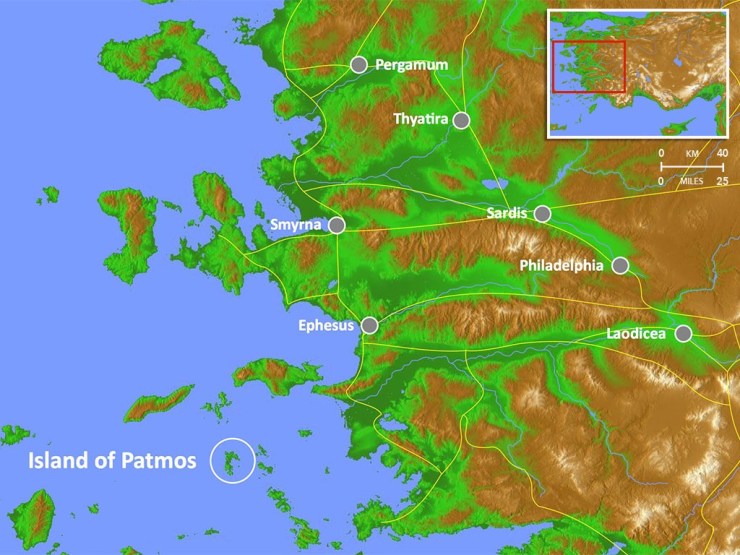
Image created by FreeBible Images using Accordance Bible Map software (CC BY-NC-SA 4.0)
Map showing the seven cities of Asia Minor, where the seven churches of Revelation were located. It also shows the position of the island of Patmos. The seven churches are addressed in the order that a messenger might travel to deliver the book to each church.
There were many other churches in those days. So why did God write to these seven? The key reason is this: He chose them to represent all churches over the whole period of Church history. The challenges they experienced reflect those that, in various ways, the whole Church worldwide would experience down the centuries. In fact, God sent the Book of Revelation to every local church, including our own.
The seven churches of Revelation represent all churches over the whole period of Church history.
The believers in each of these churches gather, eager to hear the scroll of the Book of Revelation read out to them. They discover that God has included a special message to their own church (Revelation 2:1-3:22). But each church receives the whole scroll. They hear not only the message Jesus has sent specially to them, but also His messages to all the other churches, and the rest of Revelation.

Chora of Patmos © Francesco Bini at Wikimedia Commons (CC BY-SA 4.0)
John was exiled on the Mediterranean island of Patmos. This is a view from the capital of the island, Chora, northwards to the port, Skala, and the northern part of the island. John writes, “I, John, your brother and partner in the tribulation and the kingdom and the patient endurance that are in Jesus, was on the island called Patmos on account of the word of God and the testimony of Jesus” (Revelation 1:9).
Jesus begins each of the seven messages by telling that particular church something about Himself―mostly drawn from the magnificent vision of Him in 1:12-16. In that vision, we see Jesus standing among seven golden lampstands, each representing one of the seven churches. Jesus tells each church what He knows about them. Where necessary, He corrects them and calls them to repent―and warns them of how He’ll judge them if they don’t. He brings encouragement to faithful believers. Then He says, “He who has an ear, let him hear what the Spirit says to the churches”―which means, “Let the one who is willing to hear, listen to Me, and obey”.[1] Finally, Jesus makes a wonderful promise to “the one who conquers”―conquer can also be translated overcome or be victorious. It’s a key word in Revelation. We’re to be overcomers.
In the midst of a pagan world
What kind of world did these churches live in? It was a world full of idolatry―worship of the Emperor and of pagan gods―and awash with sexual immorality. In any of these seven cities, a visitor would see pagan temples and altars. But they wouldn’t have seen any church buildings. Believers met mostly in homes. To the outside world, the churches were all but invisible. And yet each church was a “lampstand”. Each church was to carry the light of God’s presence and truth in a darkened world. It was to be an embassy of God’s Kingdom, a colony of Heaven on Earth.
Each church was to carry the light of God’s presence and truth in a darkened world.
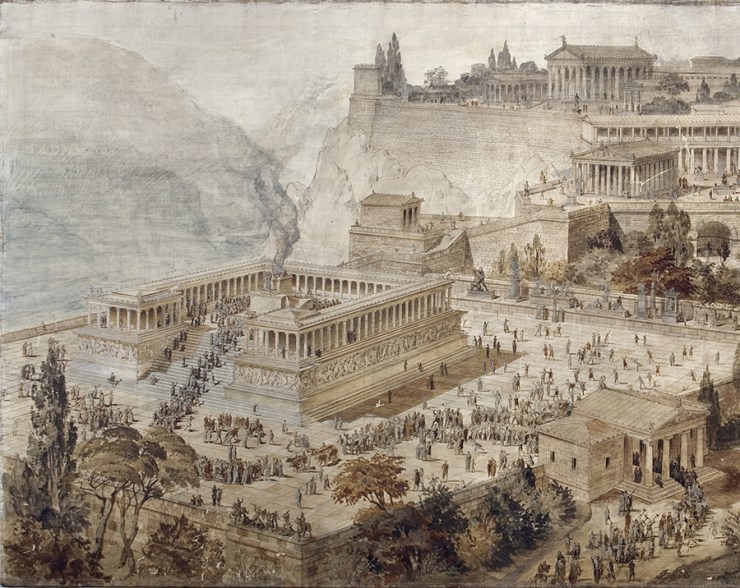
Image from Wikimedia Commons
Detail from a reconstructed view of the acropolis of Pergamon. The acropolis was an imposing hill, on which stood various civic buildings. This reconstruction was based on the first published findings of the excavators; it gives a very good idea of what it may have looked like. To the left in the foreground is the great Pergamum Altar; above it and to its right, is the temple of the goddess Athena, with a colonnaded building behind it. Above that and a little to the left is the Temple of Trajan, one of the Roman Emperors. Both the Pergamum Altar and the Temple of Athena were in existence when Revelation was written; the Temple of Trajan was completed only a few decades later (in AD 128).
What did the pagan Romans think of Christians? They called them atheists, because they didn’t worship the pagan gods. And they called them haters of the human race because they didn’t show political loyalty to the Emperor, and thus to the Empire. Believers faced harassment from the authorities, and from the society around them. And some faced opposition from Jews. At that time, persecution was local and sporadic. But there was the possibility that you might have to suffer and even die for Christ―as Antipas had (2:13). John himself had been exiled to Patmos because of his faith in Christ. Jesus said: “If the world hates you, know that it has hated me before it hated you. . . . . If they persecuted me, they will also persecute you.” (John 15:18–20).
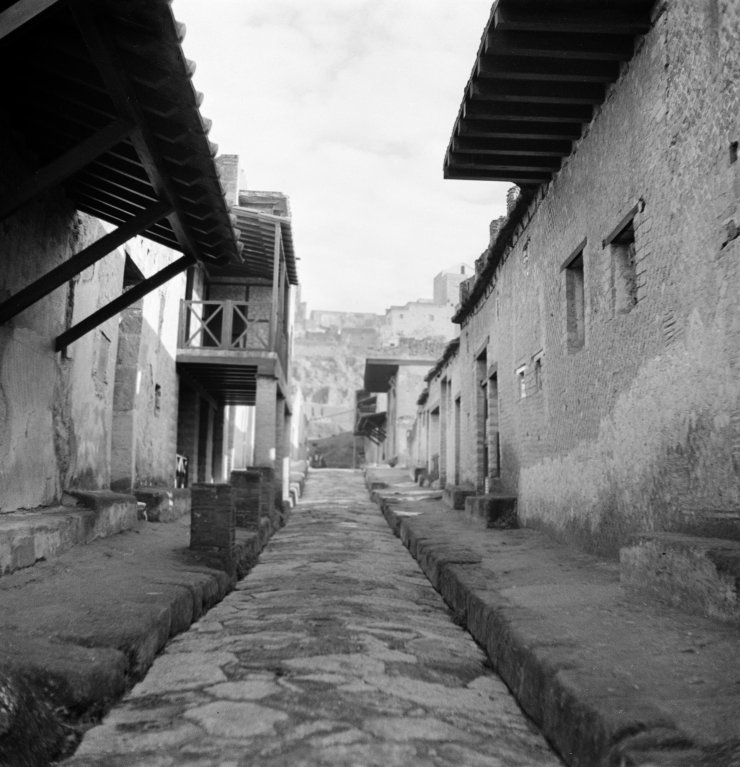
Image from Wikimedia Commons
A photo of an ancient street in the Roman town of Herculaneum, buried by the eruption of Mount Vesuvius in AD 79, perhaps 10-15 years before Revelation was written. Excavations have revealed the remarkably preserved ruins of the city. This is one of the streets in the city. In the first century AD, churches usually met in people’s houses―perhaps very similar to the ones on this street.
Deceivers in the churches
Believers didn’t only face pressure from the world, but from within the churches, too. In fact―over the centuries―it’s that pressure which has damaged the Church far more than persecution. Decades before the Book of Revelation was written, Paul warned the elders of the church in Ephesus: “I know that after my departure fierce wolves will come in among you, not sparing the flock; and from among your own selves will arise men speaking twisted things, to draw away the disciples after them. Therefore be alert, . . . .” (Acts 20:29-31). Jesus Himself tells us about false christs (Matthew 24:4-5,23-24). And we hear about false apostles (2 Corinthians 11:12-15); false teachers (for example, 2 Peter 2:1-3); and people who won’t put up with sound doctrine (2 Timothy 4:3-4). Behind all this false teaching, of course, is Satan, “the deceiver of the whole world” (Revelation 12:9). And deception is so dangerous. Deceived people don’t even realise they’re deceived!
In Revelation chapter 2 we’re told about those “who call themselves apostles and are not” (2:2), “Nicolaitans” (2:6,15), those “who hold the teaching of Balaam” (2:14), and a false prophetess referred to as “Jezebel” (2:20). Very probably, all these deceivers were encouraging believers to compromise―for example by going to feasts where pagan gods were honoured, and participating in Emperor worship. In this way, they could make life a lot easier for themselves. And at least some of these false teachers were also condoning “sexual immorality” (2:14,21)―which here primarily means spiritual immorality (in other words, idolatry), but also includes sexual immorality.

Paul warned the elders of the church in Ephesus, “ I know that after my departure fierce wolves will come in among you, not sparing the flock; and from among your own selves will arise men speaking twisted things, to draw away the disciples after them ” (Acts 20:29-30).
False teaching is like a cancer. Left unchecked, it destroys churches. So how can we stop ourselves being deceived? Rule number one is: know what the real thing looks like! To be able to recognise a fake antique, you need to spend lots of time examining and handling genuine antiques. Then, when a fake turns up, you’ll spot it much more easily. And that’s how it is with spiritual deception. We need to know the truth. We need to know the Scriptures thoroughly. We need to hear faithful preaching and teaching of the Bible. We need to gather with other believers to learn from the Bible together. And, as we learn, we need to practise the truth―in all we think and say and do.
How can we stop ourselves being deceived? Rule number one is: know what the real thing looks like! We need to know the truth.
The seven churches
Jesus knows all about these churches. To each one, He says, “I know”. He sees beneath the surface to what they’re like on the inside. Five are not healthy. Jesus says some very complimentary things about the churches in Pergamum and Thyatira, but in both cases there’s a “But” (2:14,20). False teachers are at work. Two churches are in an even worse state. The church in Sardis has “the reputation of being alive”, but is actually close to death. A few believers haven’t “soiled their garments”, but even what little life remains is “about to die”. The church in Laodicea is in the worst condition of all. Jesus can find nothing to commend it. The church has blended in with the world around. This church makes Jesus sick (3:16)! After His resurrection, Jesus said to His disciples “make disciples of all nations, . . . teaching them to observe all that I have commanded you” (Matthew 28:19-20). But the churches in Laodicea, Sardis, Pergamum and Thyatira had, to varying degrees, allowed the world to disciple them and teach them how to think and live.
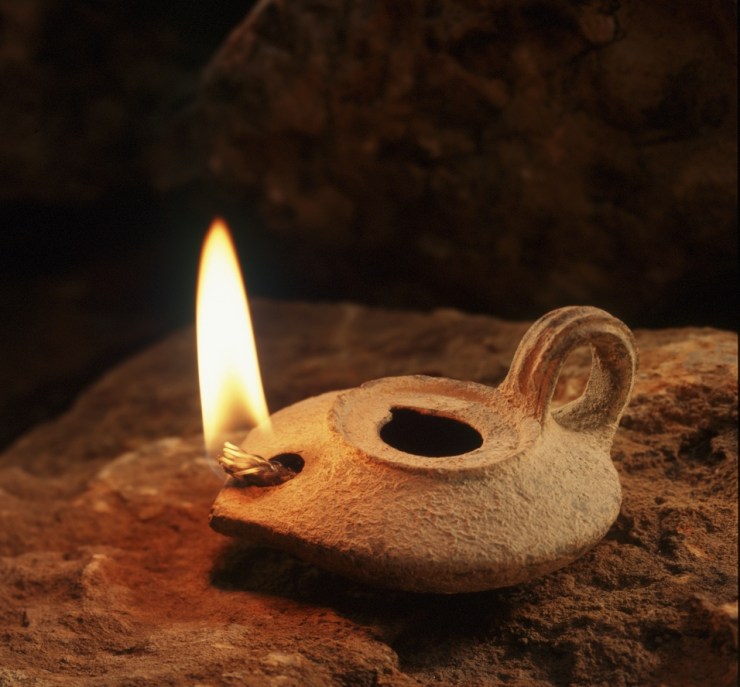
An oil lamp of an ancient design, one of the kinds that would have been used in the apostle John’s day. Each of the seven churches is symbolised as a golden lampstand (Revelation 1:20)―a stand upon which an oil lamp like this one would be placed. God intended each church to carry the light of His presence and truth in a darkened world.
The church at Ephesus has a different problem. It seems to be healthy. They’re hard-working, enduring patiently, “bearing up” for Jesus’s sake. They haven’t “grown weary” (2:2-3). They’ve tested and rejected false apostles; they hate “the Nicolaitans”, who are false teachers (2:6). But He tells them, “you have abandoned the love you had at first” (2:4). Was this their love for Jesus or love among themselves? Probably both. Their relationship with God has cooled. Their love for His people has faded. Without love, all their work is to no avail; they are nothing (compare 1 Corinthians 13:2). And if they don’t love each other, how will people know they’re Jesus’s disciples (see John 13:34-35)?
But the churches in Smyrna and Philadelphia receive no rebuke from our Lord. In the midst of persecution and trouble, they’ve remained faithful to Him. And if they continue faithful, they’ll receive a “crown” (2:10, 3:11)―a wreath of honour awarded, for example, to victors in the games or in battle. These churches no doubt felt weak and vulnerable in a world that hated them. But both receive our Lord’s commendation. And that, in the end, is the only thing that matters.
God’s resistance movement
During the Second World War, resistance networks worked behind enemy lines to fight the occupying Nazi forces. We believers live in enemy-occupied territory. John writes, “the whole world lies in the power of the evil one” (1 John 5:19). But Satan has no right to be here―Jesus has “All authority in heaven and on earth” (Matthew 28:18). We’re to be God’s resistance movement.[2]
We believers live in enemy-occupied territory. We’re to be God’s resistance movement, a counterculture in the midst of the culture of this world.
We in the Western world may not live surrounded by pagan temples and idols―as believers in other lands may do. We do, however, live in a materialistic and humanistic society that imposes ever-increasing pressure on us to conform to its ways. God calls us to put on God’s armour so we can “stand” against Satan (Ephesians 6:11). We’re to remain faithful to God. As we saw in Part 44, each local church is an embassy of God’s Kingdom, a counterculture in the midst of the culture of this world. And we’re to be God’s ambassadors, bearing witness to Jesus with our words and our lives, and making “disciples of all nations” (Matthew 28:19).
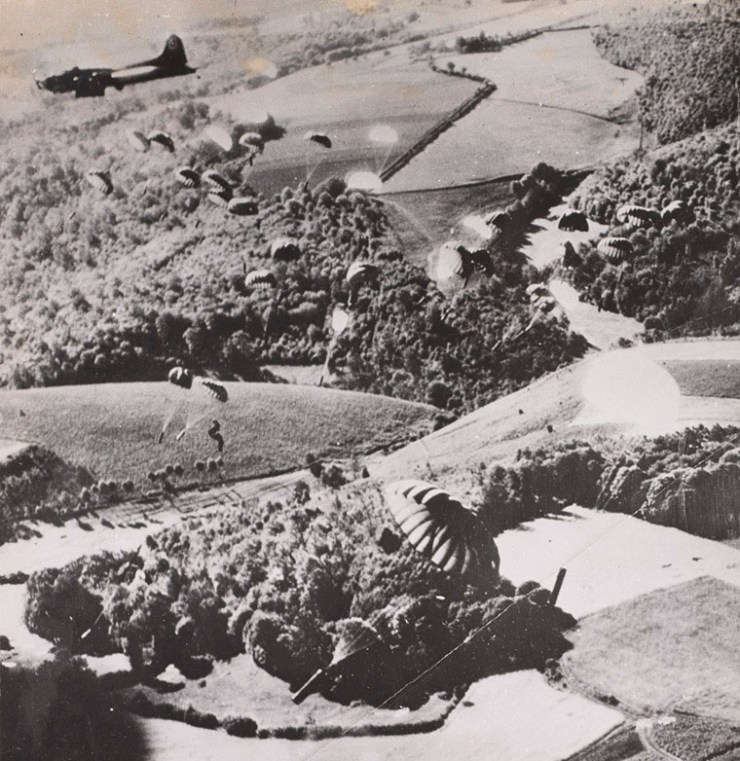
Image courtesy of the National Army Museum
Photo of dropping supplies by parachute to the French resistance during World War II, in 1944. We believers live in enemy-occupied territory. We’re to be God’s resistance movement, a counterculture in the midst of the culture of this world.
Our Lord’s promises
Only two churches were fully faithful to our Lord. Yet Jesus did not give up on any of these seven churches. They were precious to Him. He loved them (compare Ephesians 5:25–27). He wanted to present all seven churches to Himself in glorious splendour, holy and pure. To each of them, Jesus makes a wonderful promise to “the one who conquers”. Astonishingly, He reserves His most amazing promise for the worst church! To the church in Laodicea, He says, “The one who conquers, I will grant him to sit with me on my throne, as I also conquered and sat down with my Father on his throne” (3:21).
Next time . . .
Satan’s dark kingdom clashes with God’s Kingdom in the ‘war of the worlds’―a war that grows ever fiercer as the end of this age approaches. During this war a mysterious figure appears―a figure the Bible calls ‘the antichrist’. We’ll look at all this next time.
Bible Reading and Questions
You may like to read Revelation 2:1-3:22. Here are questions to think about:
? Jesus sent the Book of Revelation to local churches, rather than to individual believers. Why do you think He did this?
?What were the most pressing challenges facing these seven churches? What do you think are the most pressing challenges for churches in the UK today?
Book Recommendation
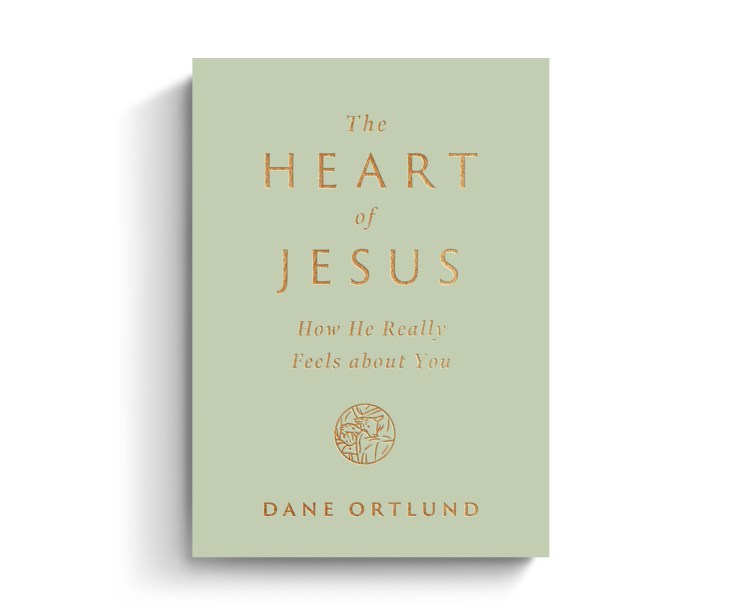
When Christians struggle with sin, they can easily feel that God is close to giving up on them. But in Matthew 11, Jesus describes Himself as “gentle and lowly in heart” (Matthew 11:29), longing for believers to find rest in Him. The good news of the gospel flows from God’s deepest love for His people. In Dane Ortlund’s book The Heart of Jesus: How He Really Feels about You, readers will encounter Jesus’s tender heart for sinners and sufferers. The chapters are short enough to read at bedtime, around the dinner table, or during lunchtime. The Heart of Jesus dives into Bible passages that speak of who Christ is, comforting and sustaining readers with the affections of Christ for his people.
Read the publisher’s description HERE. Download an excerpt HERE.
Dane C. Ortlund (PhD, Wheaton College) serves as senior pastor of Naperville Presbyterian Church in Naperville, Illinois. He is the author of Gentle and Lowly: The Heart of Christ for Sinners and Sufferers and Deeper: Real Change for Real Sinners.
REFERENCES [1] See Revelation (Baker Exegetical Commentary on the New Testament) by Grant R. Osborne, page 121. Published by Baker Academic, a division of Baker Publishing Group, Grand Rapids, Michigan, in 2002. [2] See We Are a Resistance Movement by Stephen Liggins. Available online at https://gotherefor.com/offer.php?intid=29916 (accessed 29 May 2025). Quoted from Genesis: An Introduction and Commentary (Tyndale Old Testament Commentaries) by Derek Kidner, page 159. Published by Inter-Varsity Press, Leicester, U.K. and Downers Grove, Illinois, in 1967.
CREDITS ► Text copyright © 2025 Robert Gordon Betts ► Unless otherwise indicated, all Scripture is taken from the ESV® Bible (The Holy Bible, English Standard Version®), copyright © 2001 by Crossway, a publishing ministry of Good News Publishers. Anglicized English Standard Version copyright © 2002 by Crossway. Used by permission. All rights reserved. The ESV text may not be quoted in any publication made available to the public by a Creative Commons license. The ESV may not be translated in whole or in part into any other language. ► Scripture quotations marked ‘NIV’ are taken from The Holy Bible, New International Version (Anglicised edition). Copyright © 1979, 1984, 2011 by Biblica (formerly International Bible Society). Used by permission of Hodder & Stoughton Publishers, an Hachette UK company. All rights reserved. ‘NIV’ is a registered trademark of Biblica (formerly International Bible Society). UK trademark number 1448790.
 52 Steps


