
Part 45: God’s New Humanity
Click the icon below to download a 4-page PDF version of this page.

God’s calling for humanity
As Christians, we’re members of God’s new humanity, the Church. As His new humanity, God has called us to be His prophets, priests and kings. That’s the calling He gave mankind right from the beginning.
As His new humanity, God has called us to be His prophets, priests and kings. That’s the calling He gave mankind right from the beginning.

Image from Wikipedia (brightened and recoloured)
The Andes of Ecuador by Frederic Edwin Church. The artist had Eden in mind when he painted this masterpiece. Walking in fellowship with God,and guided by His word, Adam and Eve were to rule over the Earth, care for it and serve Him here.
► Adam and Eve had a prophetic calling. Prophets are people who know God. God confides in them; He reveals His plans and purposes to them. Amos wrote, “For the Lord GOD does nothing without revealing his secret to his servants the prophets” (Amos 3:7). [1][2] We see that with prophets like Moses (Exodus 3:1-22) and Isaiah (Isaiah 6:1-13). [3][4] In the beginning, before sin entered this world, God walked “in the garden in the cool of the day” (Genesis 3:8)―something that it seems He did regularly. We can be sure He met with Adam and Eve, and shared with them about Himself and His creation, and all He planned for this world. God gave them true understanding. So they, in turn, were able to speak with wisdom and insight about God and His ways and purposes. [5] That’s a prophetic calling.
►Adam and Eve had a priestly calling. God put Adam into the garden of Eden “to work it and take care of it” (Genesis 2:15 NIV). We find these words used in Numbers (3:7-8, 8:26, 18:5-6) to describe the duties of the Levites and priests who looked after the Tabernacle and served God there. Adam and Eve were to care for God’s garden home in Eden, and serve Him there. That’s priestly work.
►Adam and Eve had a royal calling. God said to them: “. . . have dominion over the fish of the sea and over the birds of the heavens and over every living thing that moves on the earth” (Genesis 1:28, and see Psalm 8:4-8). Adam and Eve were to rule this world on God’s behalf. Ruling is what kings do; they were His royal people.
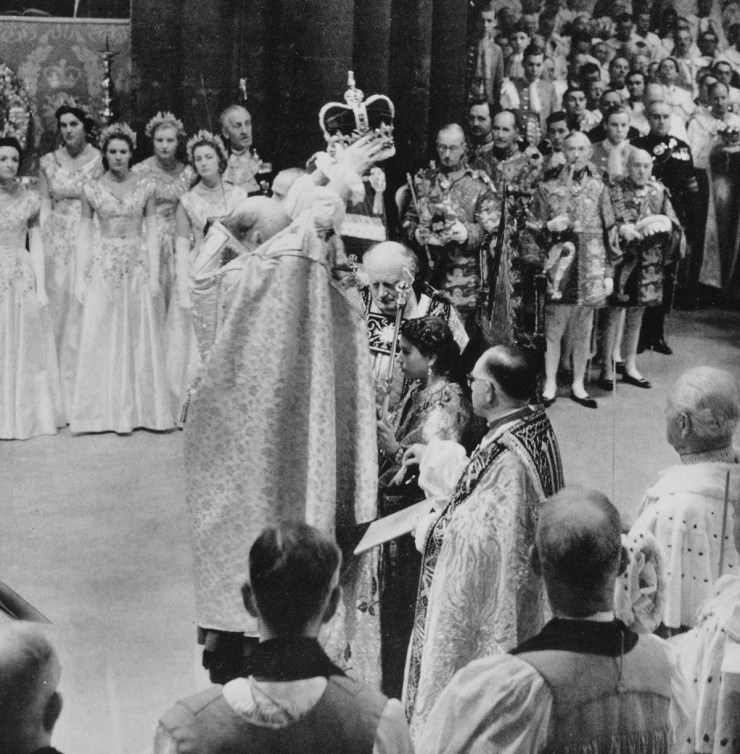
Image courtesy of the Royal Collection Trust
A photograph of the moment when the Archbishop of Canterbury placed the crown on Queen Elizabeth II in 1953. It’s reported that C. S. Lewis remarked “the pressing of that huge, heavy crown on that small, young head was a symbol of the situation of all men” .[6] God has called us to be his rulers on Earth.
Restoring our calling: the Old Testament
But Adam and Eve’s sin sabotaged all this. So God begins to restore humanity to its original calling―to be His prophets, priests and kings:
►Throughout the Old Testament, we see God choosing people to be His prophets. He confides in them; they in turn speak on His behalf “as they were carried along by the Holy Spirit” (2 Peter 1:21).
►God appoints priests―Aaron and his sons―to serve as mediators (or ‘go-betweens’) between Himself and His people. They’re to worship and serve God on behalf of the nation. They’re to keep His Tabernacle holy, and offer sacrifices for the people. And they’re to pray for the people, and teach and judge them on God’s behalf.
►And God appoints David and his dynasty to be kings over His people Israel (2 Samuel 5:12, 7:4-17).
And, in fact, as we saw in Part 18, God called all Israel to be “a kingdom of priests” (Exodus 19:6). They were His royal priesthood. [7]
Restoring our calling: Jesus Christ
Then God sends His Son, Jesus Christ. He’s our perfect Prophet, Priest, and King.
Jesus is our great Prophet
Moses prophesied, “The Lord your God will raise up for you a prophet like me from among you, from your brothers—it is to him you shall listen . . . .” (Deuteronomy 18:15, see Acts 3:20-26). God raised up many prophets after Moses. But ultimately, Moses was prophesying about Jesus. In “these last days” God “has spoken to us by his Son” (Hebrews 1:2). Jesus not only speaks God’s message (John 12:49-50) but He is the Word of God Himself (see John 1:1-2,14).
Jesus is our great High Priest
He’s our great High Priest who serves in the heavenly sanctuary (Hebrews 8:1-2). A priest is a mediator―someone who ‘builds a bridge’ between two parties, bringing them into relationship together. [8] Jesus is the “mediator between God and mankind” (1 Timothy 2:5), who died to “bring us to God” (1 Peter 3:18). He’s the perfect Mediator between us and God because He’s both fully God and fully human. He had to be made like us “in every respect, so that he might become a merciful and faithful high priest” (Hebrews 2:17). So, through Him, we may “approach God’s throne of grace with confidence, so that we may receive mercy and find grace to help us in our time of need” (Hebrews 4:16 NIV).
Jesus Christ is our perfect Prophet, Priest, and King.
And because He became a human and experienced life here on Earth, He knows all about our own struggles and temptations. He’s been “tempted in every way, just as we are―yet he did not sin” (Hebrews 4:15). So, because “he himself suffered when he was tempted, he is able to help those who are being tempted” (Hebrews 2:18). And He prays for us all the time (Romans 8:34, Hebrews 7:25).
And when we sin, He’s our “advocate with the Father” (1 John 2:1). ● He speaks to the Father on our behalf, presenting His death as the basis for our forgiveness. ● And He defends us against Satan’s accusations.
As our great High Priest, Jesus offered the perfect sacrifice for sin: ● He was the officiating High Priest, the one appointed to offer the sacrifice (Hebrews 2:17, 4:14, 7:26 28). ● He Himself was the sacrifice. He didn’t offer an animal, as the Old Testament priests did. He offered Himself (Hebrews 7:27, 9:12,26, 10:10). ● Jesus took the place of the sinner who offered the sacrifices.
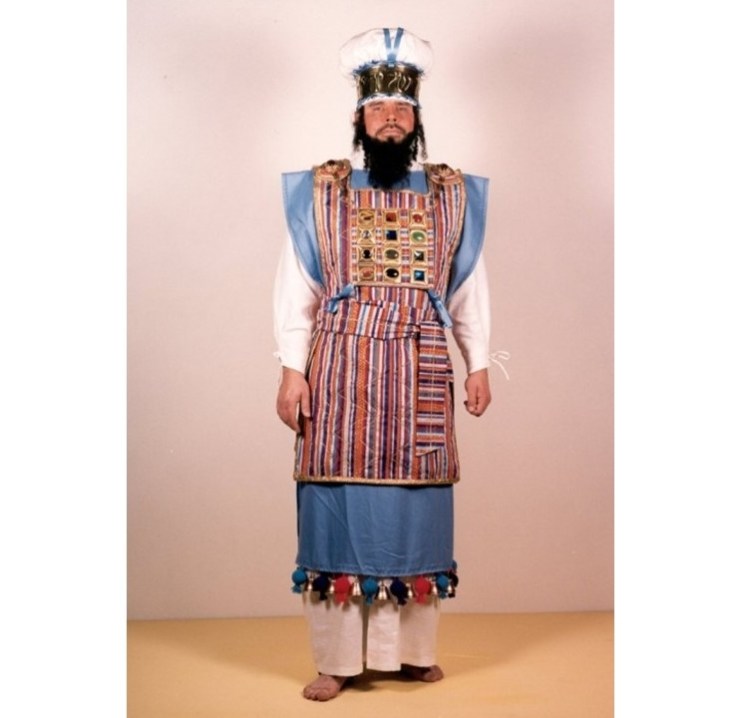
Image © George Bates at The Bible Zone
Here’s a picture of what the High Priest, dressed in robes, would have looked like. He foreshadowed Jesus Christ, our perfect, eternal High Priest, who offered Himself as the perfect sacrifice for sin.
Jesus is our great King
He’s the last and greatest of David’s royal dynasty. As we’ve seen, by His death and resurrection, He defeated Satan and all the forces of darkness (see Colossians 2:15). He ascended into Heaven and is now seated at His Father’s right hand, enthroned in absolute authority over all creation (see Ephesians 1:20-22, 1 Peter 3:22). As the Son of God, He’s always ruled creation, but now He rules it as a Man, too. He’s now treading down all God’s enemies; as David prophesied, “The LORD says to my Lord: ‘Sit at my right hand, until I make your enemies your footstool'” (Psalm 110:1).
Restoring our calling: the Church
So, through Christ, humanity’s original calling is now being fulfilled in the Church. Christ Jesus is our unique Prophet, Priest and King. As the Son of God, there are aspects of His prophetic, priestly and royal ministry that can’t be shared with any human. Nonetheless, in Christ, we are God’s prophetic people, and His “royal priesthood” (1 Peter 2:9). So what does that look like for us?
In Christ, we are God’s prophetic people, and His “royal priesthood” (1 Peter 2:9).
God’s prophetic people
On the Day of Pentecost, Peter declared: “. . . this is what was uttered through the prophet Joel: ‘And in the last days . . . God declares, . . . I will pour out my Spirit on all flesh, and your sons and your daughters shall prophesy, and your young men shall see visions, and your old men shall dream dreams; . . . .’” (Acts 2:16-17, quoting Joel 2:28-29). God makes His Church a prophetic people.
But we don’t all have the specific gift of prophecy (as listed, for example, in 1 Corinthians 12:10,28). So what does this mean? Firstly, we can assume Joel’s prophecy includes spiritual gifts in general, not just the gift of prophecy. (We’ll look at the spiritual gifts in the next part.) But, secondly―as we’ve already seen―prophets are people who know God. God confides in them. God confides in us, His Church. Jesus told His disciples: “. . . I have called you friends, for all that I have heard from my Father I have made known to you” (John 15:15). What He said to these disciples, He says to us all. He teaches us through His Holy Spirit (John 14:26, 16:13, 1 John 2:27)―and the key way He does that is through the Bible. We’re all called to be prophets in the sense of knowing God and hearing Him speak to us. He wants us to “be filled with the knowledge of his will in all spiritual wisdom and understanding” (Colossians 1:9).

God has called us to be a prophetic people. We’re called to be prophets in the sense of knowing God and hearing Him speak to us. Jesus teaches us through His Holy Spirit; the key way the Spirit teaches us is through the Bible, the written word of God.
God’s holy priesthood
We believers are God’s priests (1 Peter 2:5,9, Revelation 1:6). As priests, we’re to live in God’s presence and serve Him there. The Old Testament priests served God in His Tabernacle and in the Temple that replaced it. But we don’t serve Him in a Temple made of stone―we are the Temple! His Spirit lives in us.
A key duty of the Old Testament priests was to offer sacrifices. We’re to offer sacrifices, too (1 Peter 2:5). We’re to offer God our bodies―meaning our whole selves (Romans 12:1-2). We’re to offer “a sacrifice of praise to God” (Hebrews 13:15); we’re “to do good and to share” (Hebrews 13:16; compare Philippians 4:18). Like the Old Testament priests, we’re to pray for others (for example, see 1 Timothy 2:1). In fact, all that we believers do for others is priestly ministry. [9] And a vital part of that ministry is mission to the nations, so that “all the families of the earth” (Genesis 12:3) may find the blessing of salvation in Christ. [10]
A vital part of our priestly ministry is mission to the nations, so that “all the families of the earth” (Genesis 12:3) may find the blessing of salvation in Christ.
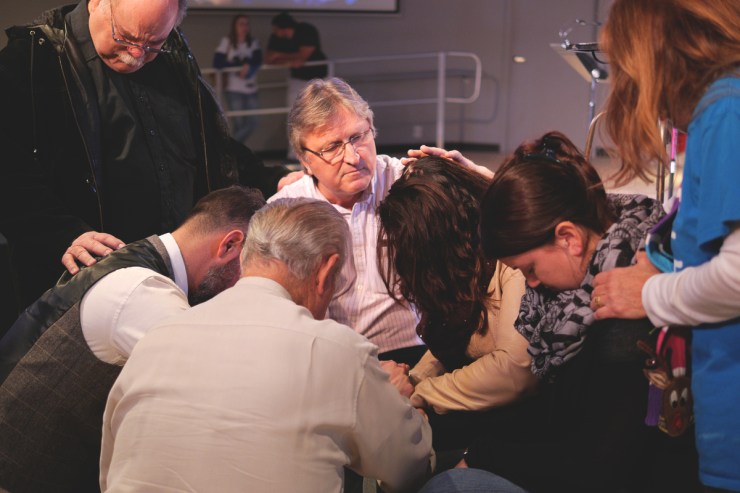
All that we believers do for others is priestly ministry―for example, praying for one another.
God’s royal nation
As kings, we’ll “reign forever and ever” in the new creation (Revelation 22:5). But we already have a share in Jesus’s rule. The Man Christ Jesus is now seated at God’s right hand “in the heavenly places, far above all rule and authority and power and dominion, and above every name that is named, not only in this age but also in the one to come” (Ephesians 1:20-21). And we’re seated with Him (Ephesians 2:6). Even now, we share His dominion over evil powers (see, for example, James 4:7, Ephesians 6:11-13). And one day we’ll rule just as God has always planned: we’ll reign with Christ on the New Earth. As the writer to the Hebrews says, “it was not to angels that God subjected the world to come” (Hebrews 2:5)―it was to mankind.

As kings, we’ll “reign forever and ever” in the new creation (Revelation 22:5). As the writer to the Hebrews says, “it was not to angels that God subjected the world to come” (Hebrews 2:5)―it was to mankind.
Next time . . .
God enables us all to serve Him and other people by giving us spiritual gifts. We’ll look at each of these gifts in the next part.
Bible Readings and Question
You may like to read Hebrews 2:14-18, 4:14-16, 7:23-28, 9:11-14, 10:19-22. Here’s a question to think about:
?Jesus is our High Priest who brings us to the Father. How does this encourage and help us in our daily life, especially when we pray?
Book Recommendation

Remaking a Broken World: the Heart of the Bible Story gives us, in the words of its author, Christopher Ash, “a fresh camera angle on the Bible story”. It focuses on scattering and gathering―scattering as an aspect of God’s judgment, and gathering as an aspect of God’s redemption. On the journey through the Bible, the author takes us through Eden, the Tower of Babel, Mount Sinai, Jerusalem, Babylon, Golgotha (where Jesus was crucified), the Day of Pentecost, the Church, and the New Creation. He shows how the gathering of God’s people is central to God’s plan for the world. The book will give you a clear and engaging ‘road-map’ of the Bible.
Read the publisher’s description, which also provides a sample containing the introduction to the book HERE.
REFERENCES [1] See The Prophets, volume 1, by Abraham J. Heschel, page 21. Published by Harper and Row, New York, in 1955. As quoted in Through New Eyes: Developing a Biblical View of the World, by James B. Jordan, page 138. Published Wolgemuth and Hyatt, Publishers, Inc., Brentwood, Tennessee, in1988. Available online at https://biblicalhorizons.com/wp-content/uploads/2017/12/Through-New-Eyes.pdf, accessed 6 January 2025. [2] See The Day of the Lion: the Message of Amos by J.A. Motyer, pages 73-74. Published by Inter-Varsity Press, London, United Kingdom, in 1974. [3] See Adam as Prophet, Priest and King, by Tim Bertolet. Available online at https://biblemesh.com/blog/adam-as-prophet-priest-and-king-2/ (accessed 5 May 2025). [4] See Adam as Prophet, Priest and King, and the Bible as the Story of ‘Three Sons’ by David S. Schrock. Available online at https://davidschrock.com/2018/03/22/adam-as-prophet-priest-and-king-and-the-bible-as-the-story-of-three-sons/ (accessed 5 May 2025). [5] See Systematic Theology: an Introduction to Biblical Doctrine, Second Edition by Wayne Grudem, pages 772-773. Published by Inter-Varsity Press, London, United Kingdom, and Zondervan Academic, Grand Rapids, Michigan, in 2020. [6] Quoted from An Old Testament Theology: an Exegetical, Canonical, and Thematic Approach by Bruce K. Waltke with Charles Yu, page 219. Published by Zondervan, Grand Rapids, Michigan. [7] See Restoring the Image of God: A Corporate-Filial Approach to the “Royal Priesthood” in Exodus 19:6 by David Schrock. Available online at https://cf.sbts.edu/equip/uploads/2018/10/SBJT-22.2-Royal-Priesthood-Schrock.pdf (accessed 5 May 2025). [8] See God’s Mediators: a Biblical Theology of Priesthood by Andrew S. Malone, page 10. Published by Inter-Varsity Press, London, United Kingdom, and InterVarsity press, Downers Grove, Illinois, in 2017. [9] See Romans 9-16 (Word Biblical Commentary, Volume 38B) by James D.G. Dunn, page 868. Published by Word Books, Dallas, Texas, in 1988. [10] See A Holy Nation: The Church’s High Calling -1 Peter 2:9-10 by Don Carson. Available online at https://www.thegospelcoalition.org/sermon/a-holy-nation-the-church-s-high-calling-1-peter-2-9-10/ (accessed 5 May 2025).
CREDITS ► Text copyright © 2025 Robert Gordon Betts ► Unless otherwise indicated, all Scripture is taken from the ESV® Bible (The Holy Bible, English Standard Version®), copyright © 2001 by Crossway, a publishing ministry of Good News Publishers. Anglicized English Standard Version copyright © 2002 by Crossway. Used by permission. All rights reserved. The ESV text may not be quoted in any publication made available to the public by a Creative Commons license. The ESV may not be translated in whole or in part into any other language. ► Scripture quotations marked ‘NIV’ are taken from The Holy Bible, New International Version (Anglicised edition). Copyright © 1979, 1984, 2011 by Biblica (formerly International Bible Society). Used by permission of Hodder & Stoughton Publishers, an Hachette UK company. All rights reserved. ‘NIV’ is a registered trademark of Biblica (formerly International Bible Society). UK trademark number 1448790.
 52 Steps
