
Part 44: Unity and Community
Click the icon below to download a 4-page PDF version of this page.

The Church, local and universal
As we saw in Part 41, the gospel travels out from Jerusalem through the eastern Mediterranean region. In house after house, believers are meeting together to learn from the Scriptures, celebrate the Lord’s Supper, worship and pray. Each local gathering of believers is a local church. People often use the word ‘church’ for buildings where Christians meet. But the Bible never does this. The New Testament word for ‘church’ is ekklēsia. It’s a word used to mean an assembly or gathering of believers―either a local gathering (for example, 1 Corinthians 1:2), or all believers who’ve ever lived, which we can call the universal Church (for example, Ephesians 1:22-23, Hebrews 12:23). For clarity, we’ll spell the former with a small ‘c’, the latter with a capital ‘C’.
Christ’s body, God’s household, God’s temple
The Church is at the centre of the New Testament story; in fact, it “lies at the very centre of the eternal purpose of God”.
The Church is at the centre of the New Testament story; in fact, it “lies at the very centre of the eternal purpose of God” .[1] We can think of the Church as the community of the Kingdom of God; we believers are members of that community, citizens of God’s Kingdom. So the Church is a community; the New Testament uses three pictures to show this:
● Firstly, it describes the Church as a body―the body of Christ. Paul tells us “. . . you are the body of Christ and individually members of it” (1 Corinthians 12:27). A body is a single organism made up of many cells, tissues and organs.
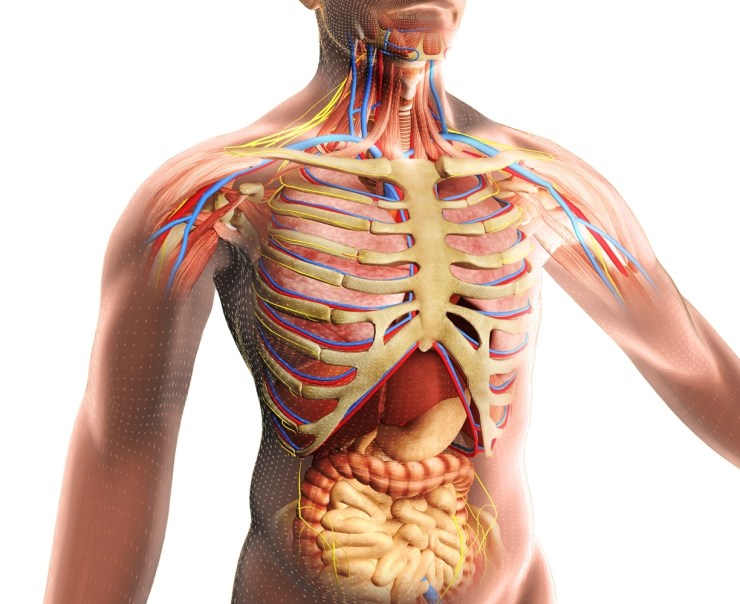
The Church is a body―the body of Christ. Paul tells us, “. . . you are the body of Christ and individually members of it” (1 Corinthians 12:27).
●It also calls the Church God’s household. Paul writes: “. . . you are no longer strangers and aliens, but you are . . . members of the household of God” (Ephesians 2:19). Households in New Testament times might include other relatives, slaves, hired workers, and perhaps lodgers. They lived together, and shared a common life.
●Thirdly, it pictures the Church as God’s temple―a place where He lives. The whole Church is a temple. Paul says: “the whole structure . . . grows into a holy temple in the Lord. . . . being built together into a dwelling place for God by the Spirit” (Ephesians 2:21-22). Like any building, the earthly Temple in Jerusalem was made up of individual stones. So is God’s Church; we are “living stones” in God’s temple (1 Peter 2:5). And each individual believer is a temple, too: “. . . your body is a temple of the Holy Spirit within you” (1 Corinthians 6:19).
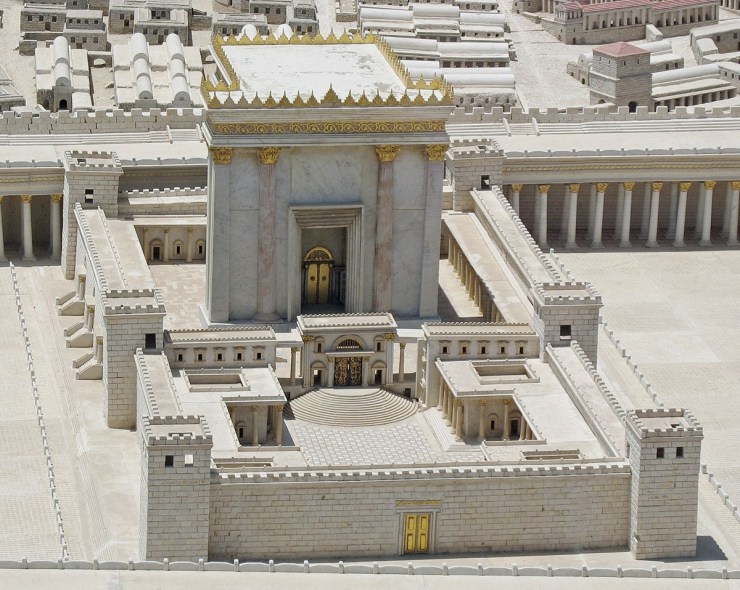
The Second Jewish Temple. Model in the Israel Museum. © (Ariely) on Wikimedia Commons (CC BY 3.0) Image cropped.
A model of the Temple in Jerusalem in New Testament times, at the Israel Museum in Jerusalem. The Church is a temple. Paul says:“the whole structure . . . grows into a holy temple in the Lord. . . . being built together into a dwelling place for God by the Spirit” (Ephesians 2:21-22).
There’s a clear connection between these three pictures. They’re all a single integrated whole made up of many parts―a body comprising many different tissues, organs, and stuctures, a household of different people sharing a common life, a temple built of living stones. And each one of us has a unique place and a vital role in the Church.
As we’ve just seen, the Church is the body of Christ. He’s the Head of the body. He lovingly rules and guides and cares for His Church. He’s its Head in the same kind of way that a husband is the head of his wife. Paul writes: “the husband is the head of the wife even as Christ is the head of the church, . . . .” (Ephesians 5:23). Jesus Christ loves the Church, provides for it, protects, nurtures, and guides it.
The Bride of Christ
And that leads us to another New Testament picture of the Church. The Church is the Bride of Christ. Paul writes to the church at Corinth: “I promised you to one husband, to Christ, so that I might present you as a pure virgin to him” (2 Corinthians 11:2 NIV). The Bible story is, at its heart, a love story. The goal of human history is a marriage―the marriage between Jesus Christ and His Church. That marriage will be celebrated on the day Jesus returns to Earth at the end of this age.
The Bible story is, at its heart, a love story. The goal of human history is a marriage―the marriage between Jesus Christ and His Church.

The Church is the Bride of Christ. Paul writes to the church at Corinth: “I promised you to one husband, to Christ, so that I might present you as a pure virgin to him” (2 Corinthians 11:2 NIV).
God’s community
We humans are, by nature, social beings. That’s how God has made us. Without human companionship we find it hard, even impossible, to live. So, when the New Testament speaks about the Church as a community, this isn’t a new idea. God built it into our human nature right from the very beginning.
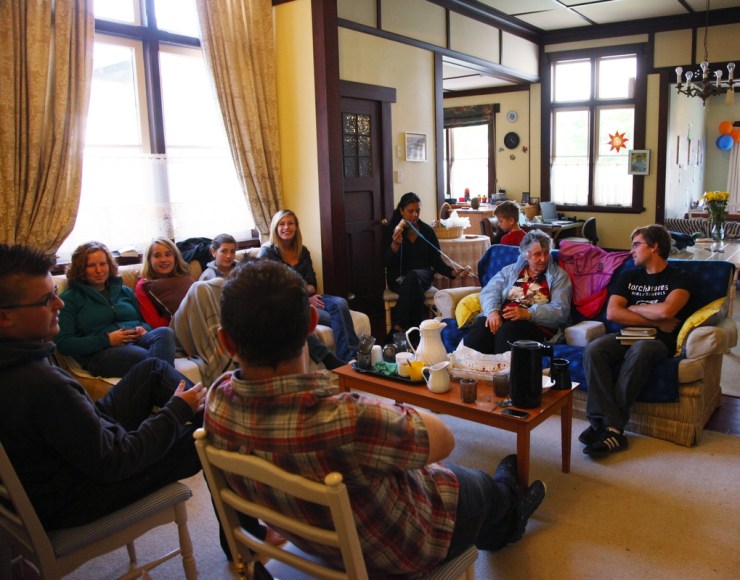
We humans are, by nature, social beings. So, when the New Testament speaks about the Church as a community, this isn’t a new idea. God built it into our human nature right from the very beginning.
Our involvement in each other’s lives should go well beyond our gatherings. You only have to count the number of times that ‘one another’ and ‘each other’ occur in the New Testament letters to see how fundamental it is to share our lives. We’re to love one another (for example, Romans 13:8), look out for each others’ interests (Philippians 2:4), serve one another in love (Galatians 5:13), bear one another’s burdens (Galatians 6:2). We’re to teach, advise and warn one another (Colossians 3:16), encourage and build one another up (1 Thessalonians 5:11). We’re to bear with one another and forgive one another (Colossians 3:13); we’re to confess our sins to one another and pray for one another (James 5:16). When non-Christians see a local church functioning as God’s community as He intended, they’re seeing what it really means to be human. And who wouldn’t be drawn to that?
The local church―an embassy of God’s Kingdom
When you go into a foreign embassy―for example, the Japanese embassy in London―you’ll suddenly find yourself immersed in another culture. You’ll feel as if you’ve just arrived in Japan itself! Each local church is an embassy of the Kingdom of God.[2] When visitors come to a gathering of the church, they’ll find themselves in another culture―they’ll experience people speaking and behaving in a different kind of way. They’ll be immersed in the culture of God’s Kingdom.
We’re all God’s ambassadors (2 Corinthians 5:20, Ephesians 6:20). An ambassador is appointed to represent their country and speak and act on their government’s behalf. Similarly, King Jesus has authorised and commissioned us to represent Him and speak on His behalf. He said to His disciples: “All authority in heaven and on earth has been given to me. Go therefore and make disciples of all nations, . . . .” (Matthew 28:18-19).

Image from Wikipedia
Embassies in Washington, DC―from left to right, the embassies of Greece, Georgia, and Turkmenistan to the United States. The local church is an embassy of the Kingdom of God.
The leadership of a local church
The leadership of a local church rests with people that the Bible calls ‘elders’ or ‘overseers’ (see 1 Timothy 3:1-7, Titus 1:3-9). They’re to exercise spiritual oversight of the church, and lead the preaching and teaching. As Peter writes, they’re to “shepherd the flock of God” (1 Peter 5:2). Working with the elders are deacons (see 1 Timothy 3:8-13). The word ‘deacon’ comes from a Greek word meaning servant. Deacons oversee administration, organisation, and practical work in the church.
The gatherings of a local church
As we’ve seen, the Greek word for ‘church’ is ekklēsia. The root of this word lies in the idea of gathering together. Acts 2:42 seems to suggest a broad outline for local church life, and particularly for the gatherings―teaching, fellowship, breaking of bread, and prayer. The word “fellowship” translates the Greek word koinōnia. This word means more than just enjoying friendship. It suggests partnership in something that’s done together.
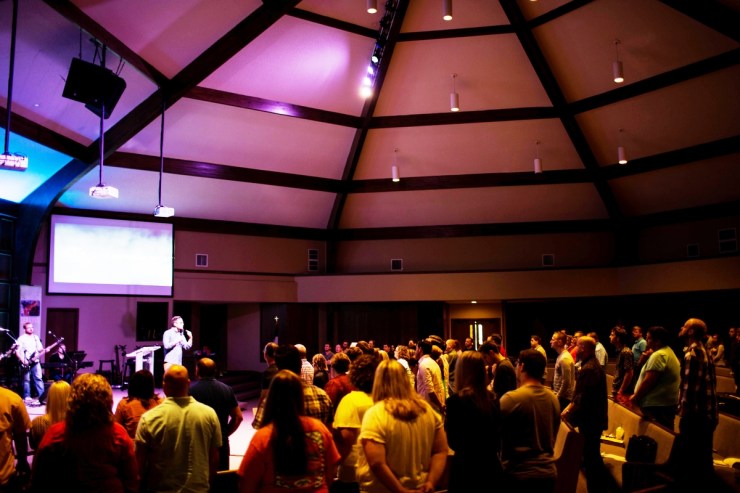
The Lord is present in a special way among us when we meet together.
The Lord is present in a special way among us when we meet together. We gather to allow Him to speak to us―through public reading of the Bible, through preaching and teaching, and through prophecy, messages of wisdom or knowledge, words of encouragement, tongues and their interpretation. (We’ll look more closely at the spiritual gifts in Part 46.) We gather to worship, praise and thank God, and to pray. It seems clear from 1 Corinthians 12:1-11, 14:26-33 that there should generally be opportunity for a variety of people to contribute. And, as Paul writes, “Everything must be done so that the church may be built up” (1 Corinthians 14:26 NIV).
It’s vital that we don’t give up gathering with God’s people. The author of Hebrews urges us to “consider how to stir up one another to love and good works, not neglecting to meet together, as is the habit of some, but encouraging one another, and all the more as you see the Day drawing near” (Hebrews 10:24-25).
The Lord’s Supper
The Lord’s Supper, also called the ‘breaking of bread’, is central to local church life. It’s a shared meal―in fact, it seems certain the first Christians ate the Lord’s Supper as part of a full meal. As we saw in Part 14, people in Bible times would only eat together if they were in relationship with each other―as family members, or as allies.[3] So when people made a covenant―a binding agreement―with each other, they typically shared a meal together. The Lord’s Supper is a covenant meal; it celebrates the “new covenant” between God and His people that was put into effect by Jesus’s sacrifical death (Jeremiah 31:31-34, Luke 22:20).

The Lord’s Supper is a covenant meal; it celebrates the “new covenant” between God and His people that was put into effect by Jesus’s sacrifical death (Jeremiah 31:31-34, Luke 22:20).
Jesus instituted the Lord’s Supper on the evening before His death (see Part 36). He broke bread and gave it to His disciples, saying: “This is my body which is for you. Do this in remembrance of me.” (1 Corinthians 11:24). After the meal, he took the cup, saying, “This cup is the new covenant in my blood. Do this, as often as you drink it, in remembrance of me”; Paul adds, “For as often as you eat this bread and drink the cup, you proclaim the Lord’s death until he comes” (1 Corinthians 11:25-26). The bread symbolises Jesus’s body given for us; the wine symbolises His blood shed for us. In eating the bread and drinking the wine, we remember that we participate in all the benefits and blessings of salvation that Jesus’s death purchased for us.
The Lord’s Supper is a time of fellowship with God and with each other. And it’s a time of celebration:
●We celebrate our covenant relationship with God. And we remember it was Jesus’s death that enabled us to come into that relationship.
●And we affirm and celebrate our relationship with each other. Our covenant bond with God means we are bound to each other, too.[4][5] Paul writes, “. . . we who are many are one body, for we all partake of the one bread” (1 Corinthians 10:17); by eating the bread, we’re affirming that we’re one body in Christ.
Finally, the Lord’s Supper is a foretaste of “the marriage supper of the Lamb” (Revelation 19:9)―the supper we’ll enjoy when the Church is married to Christ. This supper pictures our perfect and eternal fellowship with Jesus Christ and with each other.
The Lord’s Supper is a foretaste of “the marriage supper of the Lamb”―the supper we’ll enjoy when the Church is married to Christ.
Next time . . .
Jesus is our Prophet, Priest and King; and His Church is a prophetic people, “a royal priesthood” (1 Peter 2:9). We’ll explore this next time.
Bible Readings and Question
You may like to read Exodus 40:34-35, 1 Kings 8:10-11, 1 Corinthians 3:16-17, 2 Corinthians 6:16-18, and Ephesians 2:19-22. Here’s a question to think about:
?The Church is God’s temple. What implications does that have for the life of our church, and for us individually?
Videos
Here is a short video entitled Love Is: The Story of 1 Corinthians 13 (1 Corinthians 13). It’s designed for children ages 6 to 12. But youth and adults may well enjoy it, too. It’s from a series published by Crossway, and is based on the book called The Biggest Story Bible Storybook. All the videos can be viewed at The Biggest Story videos website. You can also create a free account to enable you to download them.
REFERENCES [1] Quoted from The Living Church: the Convictions of a Lifelong Pastor by John Stott, chapter 1. Published by Inter-Varsity Press, London, U.K., in 2021. [2] See Visiting an Embassy by Jesse Johnson. Available online at https://thecripplegate.com/visiting-an-embassy/ (accessed 23 April 2025). [3] See Exodus (The New American Commentary) by Douglas K. Stuart, page 555. Published by B&H Publishing Group, Nashville, Tennessee, in 2006. [4] See The First Epistle to the Corinthians, Revised Edition (The New International Commentary on the New Testament) by Gordon D. Fee, page 518. Published by William B. Eerdmans Publishing Company, Grand Rapids, Michigan, and Cambridge, United Kingdom, in 2014. [5] See How the Lord’s Supper Makes a Local Church by Bobby Jamieson. Available online at https://www.9marks.org/article/how-the-lords-supper-makes-a-local-church/ (accessed 23 April 2025).Quoted from Genesis: An Introduction and Commentary (Tyndale Old Testament Commentaries) by Derek Kidner, page 159. Published by Inter-Varsity Press, Leicester, U.K. and Downers Grove, Illinois, in 1967.
CREDITS ► Text copyright © 2025 Robert Gordon Betts ► Unless otherwise indicated, all Scripture is taken from the ESV® Bible (The Holy Bible, English Standard Version®), copyright © 2001 by Crossway, a publishing ministry of Good News Publishers. Anglicized English Standard Version copyright © 2002 by Crossway. Used by permission. All rights reserved. The ESV text may not be quoted in any publication made available to the public by a Creative Commons license. The ESV may not be translated in whole or in part into any other language. ► Scripture quotations marked ‘NIV’ are taken from The Holy Bible, New International Version (Anglicised edition). Copyright © 1979, 1984, 2011 by Biblica (formerly International Bible Society). Used by permission of Hodder & Stoughton Publishers, an Hachette UK company. All rights reserved. ‘NIV’ is a registered trademark of Biblica (formerly International Bible Society). UK trademark number 1448790.
 52 Steps
