
Part 43: A New Life in Christ
Click the icon below to download a 4-page PDF version of this page.

Our new ‘Adam’
Last time, we saw how―through Jesus’s death, resurrection and ascension―God has brought about “such a great salvation” (Hebrews 2:3). When we truly repent, turn from sin, and receive Jesus Christ as our Lord and Saviour, we’re saved. We undergo a deep, radical, inward transformation.[1] We become a new person with a new identity, a new character, and a new destiny!
So what actually happens to us? First and foremost, God joins us to Christ. As we saw in Part 6, we’re all born into this world connected to our forefather Adam―with all the dire consequences that brought with it. To be saved, we need to be disconnected from Adam and connected to another ‘Adam’, an ‘Adam’ who never sinned.
And that’s exactly what God has done! He’s provided a new ‘Adam’ for us―Jesus Christ. He was conceived “from the Holy Spirit” (Matthew 1:20). He had no human father; God is His Father. So He wasn’t connected to Adam in the way we are; He wasn’t infected by Adam’s sin. When we receive Christ as Lord and Saviour, the Holy Spirit disconnects us from the first Adam and connects us to Him. The Spirit unites us with Christ;[2] we’re now “in Christ” (for example, 1 Corinthians 15:22), members of God’s new humanity.
Jesus pictures our union with Him as a vine (John 15:1-8). He says, “I am the vine; you are the branches. Whoever abides in me and I in him, he it is that bears much fruit, for apart from me you can do nothing”. As the branches draw their life-sustaining sap from the main stem, so we draw our life from Him.
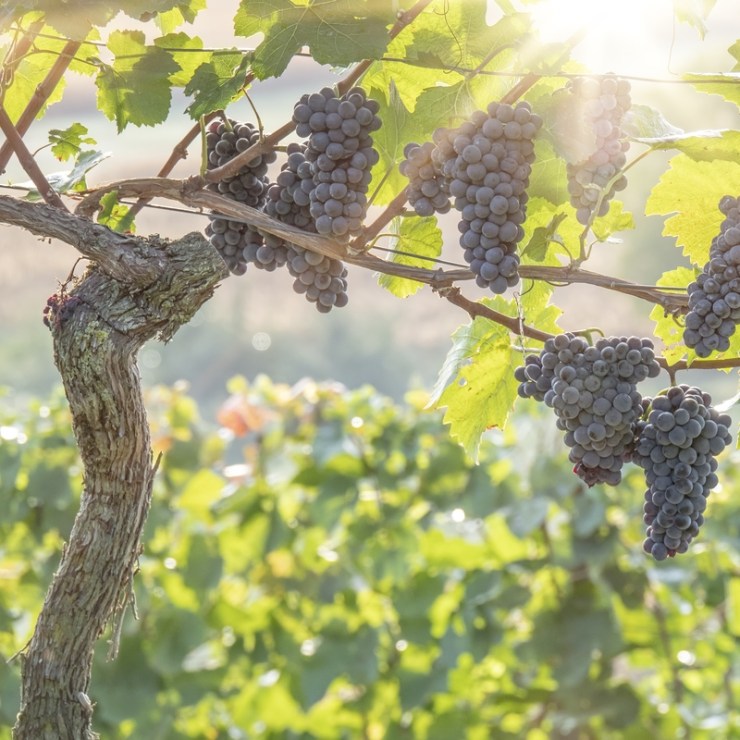
Jesus says, “I am the vine; you are the branches. Whoever abides in me and I in him, he it is that bears much fruit, for apart from me you can do nothing”. (John 15:4).
The Spirit unites us with Christ; we’re now “in Christ”, members of God’s new humanity.
Here’s an illustration that helps us to see what God has done.
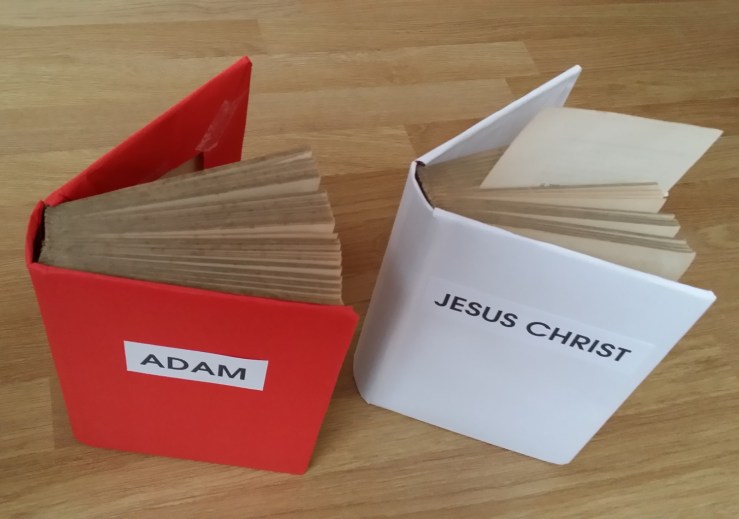
● The red book in the photo above pictures the old humanity “in Adam” (1 Corinthians 15:22). The cover represents Adam; the pages represent individual people. Every page is unique―it has a unique set of words printed on it. But the pages are all bound to the same cover. Like these pages, each of us is unique. But we all begin life bound to our forefather Adam. If the cover falls to the ground, all the pages fall with it. When Adam fell into sin, we all fell with him.
●The white book pictures God’s new humanity. Its cover represents Christ. When we’re born again, God cuts us out of the red book and binds us into the white book―the photo shows a page that was cut out of the red book being bound into the white book. We’re no longer bound to Adam; now we’re bound to Christ. And that changes everything!
A new birth
How did we become members of the first Adam’s humanity? We were born into it. How do we become members of God’s new humanity? We’re born into it. Through the Holy Spirit, we’re “born again” (John 3:3,7)―or (as it can be translated) “born from above” (CEV). We’re “born . . . of God” (John 1:13), “born of the Spirit” (3:8).

We become members of the first Adam’s humanity by being born into it. We become members of God’s new humanity by being “born again” (John 3:3,7)―or (as it can be translated) “born from above”.
We’re born again when the Spirit joins us to Christ. My “old self”―the self-willed, self-centred, and self-reliant person I once was―is ”crucified with” Christ (Romans 6:6); it dies. And I’m “raised with” Christ (Colossians 2:12, see also Ephesians 2:4-6), reborn with a new character that naturally hates sin, loves God, and wants to obey Him. I’m now spiritually alive. I have eternal life―life in fellowship with God. And I now have the power to live “a new life” (Romans 6:4 NIV). So, as Paul writes, “if anyone is in Christ, he is a new creation. The old has passed away; behold, the new has come” (2 Corinthians 5:17).
Paul writes, “if anyone is in Christ, he is a new creation. The old has passed away; behold, the new has come” (2 Corinthians 5:17).
Many believers can look back on a particular day when they were born again. Others can’t. And that’s fine; the vital thing is that you know God lives in you by His Spirit, and that you’re experiencing His power to live “a new life”.
It’s only when we’re born again, that we start becoming the kind of person God intended us to be. We now have what the prophet Ezekiel calls “a new heart”. Through Ezekiel, God promised His people: “I will give you a new heart, . . . . And I will put my Spirit within you, and cause you to walk in my statutes and be careful to obey my rules.” (Ezekiel 36:26-27). Through Jeremiah, God promised them: “I will put my law within them, and I will write it on their hearts” (Jeremiah 31:33). The word “heart” here means the innermost control centre of our personality. When we’re born again, God transforms us on the inside. He gives us a new heart―a new character. Our new heart has God’s Law written on it, just as Jeremiah prophesied. We hate sin and love God. We have an instinctive desire and willingness to obey Him.
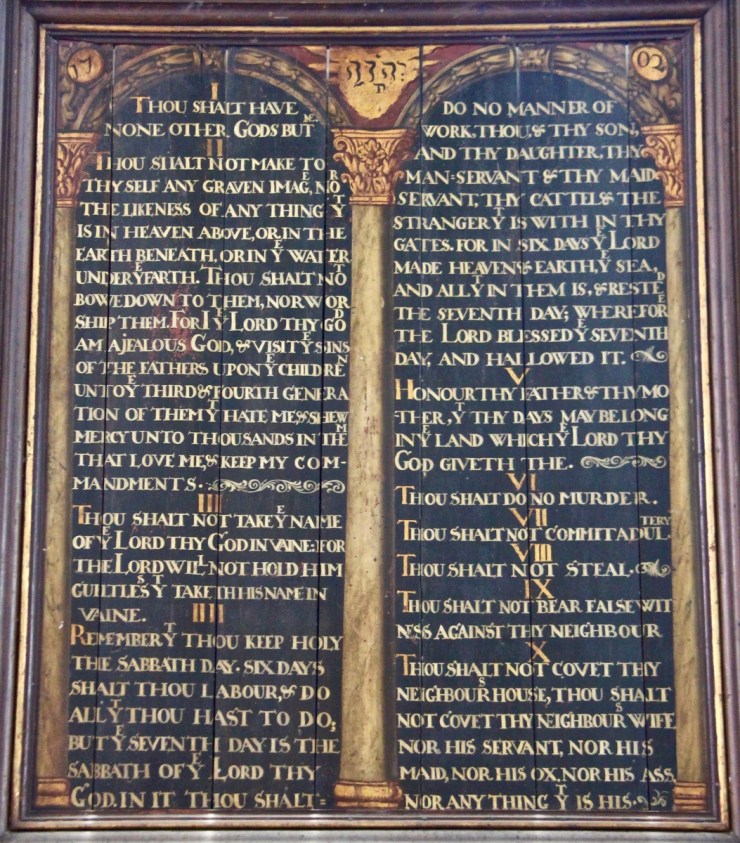
A painting of the Ten Commandments, dated 1702, in Christchurch Priory, Dorset, England. Through Jeremiah, God promised His people:“I will put my law within them, and I will write it on their hearts” (Jeremiah 31:33).
Paul says, “Christ died for us” (Romans 5:8). A little later, he says, “if we have died with Christ, . . . .” (Romans 6:8). How can both be true? It’s because we had two problems.
►Firstly, we’ve thought and said and done sinful things. But because we’re joined to Christ, He’s our Representative. Because He’s our Representative, responsibility for our sin could be transferred to Him (see Isaiah 53:6). He died for us. Going back to the white book in our illustration, if someone hits the cover, the pages inside are spared. He was “stricken, smitten by God, and afflicted” (Isaiah 53:4). He ‘took the hit’ for us; we were spared.
►But wonderful as this is, it isn’t enough. We’d not only committed sins, we were born with a sinful character. The only answer for that is death. Because we’re joined to Christ, we were included in His death and resurrection. Going back to our white book, if the cover falls and is lifted up, so are all the pages. When Christ died and rose again, so did we!
God lives in us
Through His prophet Ezekiel, God said to His people, “I will put my Spirit within you” (Ezekiel 36:27). As we saw in Part 36, Jesus promised His disciples that the Triune God―Father, Son and Spirit―would dwell in each believer! In Old Testament times, God lived among His people in the Tabernacle, then the Temple. Now God makes His home in believers. Paul writes, “we are the temple of the living God” (2 Corinthians 6:16)―we believers, collectively, are God’s temple. And each of us individually is a temple: “. . . your body is a temple of the Holy Spirit within you” (1 Corinthians 6:19).
And because God lives in us, we’re holy. We’re holy in the sense that we now belong to God. Just as the Tabernacle was holy because God lived in it, so God makes us holy by coming to live in us. Paul writes, “God’s temple is holy, and you are that temple” (1 Corinthians 3:17). We’re “sanctified” (in other words, ‘made holy’) “in Christ Jesus” (1 Corinthians 1:2). But we’re also to become holy. We’re to live holy lives. We’ll explore this aspect of holiness in Part 47.
Baptism, filling, indwelling by the Spirit
What does life in the Holy Spirit look like for us believers?
●Paul writes, “we were all baptised by one Spirit so as to form one body . . . and we were all given the one Spirit to drink” (1 Corinthians 12:13 NIV). When we’re born again, Christ baptises us into His body―the Church, God’s new humanity―by the Holy Spirit. This Spirit baptism brings new joy, love for God and for other people, assurance of God’s presence, gifting and power to serve God, and desire and ability to shun sin and pursue righteousness. This initial baptism may also be called being filled with the Spirit (Acts 2:4, 9:17) or receiving the Spirit (for example, Acts 19:2).
●There may also be times when the Spirit fills us in a new way―bringing a fresh awareness of His presence and perhaps new empowerment and gifting (see Acts 4:31, 13:52). We’ll look at the spiritual gifts in Part 46.
●And, as we’ve seen, the Holy Spirit indwells believers. Though circumstances or sin may sometimes cloud our awareness of His presence, the Holy Spirit never abandons us.
So we’re baptised by the Spirit once; He may fill us multiple times; He always indwells us.
God justifies us
But what about all the sins we’ve committed―and still commit? What does God do with them? That question introduces us to another wonderful aspect of our salvation: God justifies us. Imagine you’ve been found guilty of a serious crime. The judge is about to sentence you. You’re in the dock, trembling and fearful. Suddenly, the judge declares “Not guilty! The penalty for your crimes has been paid. You’re cleared of all charges! You may go free!” Imagine how overjoyed and relieved you’d feel! That’s exactly what God has done for us believers!
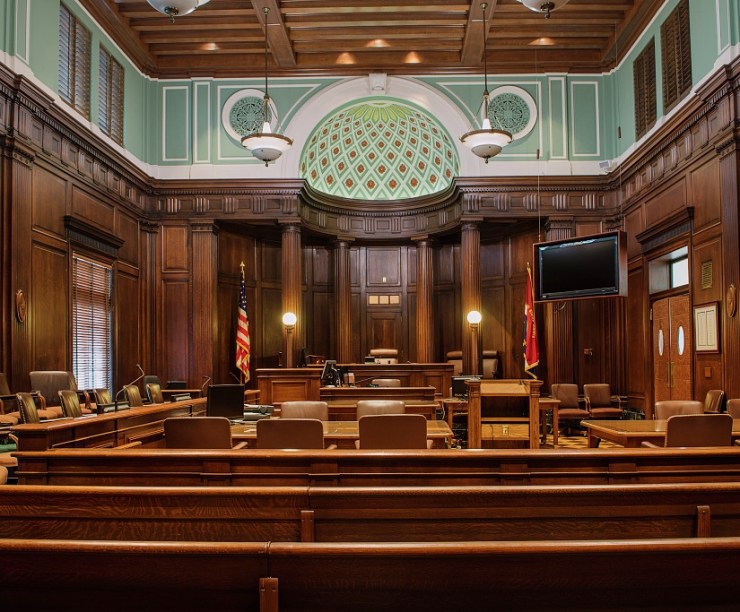
Image from The Library of Congress Prints & Photographs Online Catalog
A courtroom in the United States Court House, Augusta, Georgia. Because we’re in Christ, God has justified us. That’s a term drawn from the legal world of the lawcourt. “There is . . . now no condemnation for those who are in Christ Jesus” (Romans 8:1).
God laid on Christ “the iniquity of us all” (Isaiah 53:6). Our sins dishonour and grieve our holy God; they harm other people. We owe a debt to God and to other people we can’t possibly repay. But because we’re joined to Christ, our debt is transferred to His account. He suffered its penalty; He paid our debt. And so God forgives us and declares us to be ‘not guilty’! Paul tells us, “There is . . . now no condemnation for those who are in Christ Jesus” (Romans 8:1).
“There is . . . now no condemnation for those who are in Christ Jesus” (Romans 8:1).
But there’s more: because we’re ‘in Christ’, God also credits us with His perfect righteousness. We receive “the free gift of righteousness” (Romans 5:17). God considers us to be as righteous as Jesus Himself is! What a glorious exchange![3] Jesus takes our sin and pays its penalty; God gives us Jesus’s perfect righteousness!
All this breaks Satan’s power over us. Satan is our great accuser (see Revelation 12:10); he accuses us of sin and demands that God punish us. But God has declared us not guilty; Satan can’t accuse us any longer!
Of course, we can and do still sin. We’re God’s ‘work in progress’. Nonetheless, we enjoy the legal status of being righteous before God. In other words, we’re justified. This is God’s free gift to us. We can’t do a single thing to earn it. We’re “justified by faith in Christ” (Galatians 2:16). And because we’re justified, the barrier between us and God, caused by our sin, is removed. So we’re reconciled to God. Paul writes, “. . . while we were God’s enemies, we were reconciled to Him through the death of His Son . . . .” (Romans 5:10 NIV). We’re now God’s friends!
The wrath of God
Jesus has quenched God’s wrath toward us. God now takes pleasure in us. That’s what the Bible calls “propitiation” (for example, 1 John 2:2―the NIV uses “atoning sacrifice”). God’s wrath isn’t vindictive, resentful fury. It’s His “uncompromising antagonism to evil”.[4] In fact, God’s wrath is an expression of His love. Sin violates the moral order of the Universe, a moral order codified in God’s Law.[5] Sin ruins and torments people He created in His image. Sin indebts us to God. And sin spoils God’s creation. God must judge sin and expel unrepentant sinners from His presence. If He did not do so, He would not be true to His holy, righteous character. But, in His love, God has Himself provided the way for His wrath against us to be quenched. God Himself presented Christ “as a propitiation by his blood, to be received by faith” (Romans 3:25). Jesus fulfilled the requirements of God’s justice; He paid the penalty for our sin in full.
Adopted as God’s children
Another wonderful aspect of our relationship with God is this: God has adopted us. Paul writes, “. . . the Spirit you received brought about your adoption to sonship. And by Him we cry, ‘Abba, Father’. The Spirit Himself testifies with our spirit that we are God’s children.” (Romans 8:15-16 NIV). Now we can call God ‘Father’! He’s the Father we all, deep down, long for―the Father who knows us completely, who loves us perfectly, who protects, provides, guides, corrects and encourages us.
We believers can call God ‘Father’! He’s the Father all of us, deep down, long for―the Father who knows us completely, who loves us perfectly, who protects, provides, guides, corrects and encourages us.
In Paul’s day, in the Roman Empire, adoption was different from our modern practice. Roman adoptees were male. They’d be adopted to provide an heir for a family. The head of a family would adopt a youth or man, rather than a child. He wanted to be sure the adoptee was a worthy son and heir.[6] When our Father adopted us He chose us with great care. He knew what we were like, and He still wanted us! He chose us to be His heirs; as Paul explains, “if we are children, then we are heirs―heirs of God and co-heirs with Christ, if indeed we share in his sufferings in order that we may also share in his glory” (Romans 8:17 NIV). We inherit all the wonderful blessings of having God as our Father, and of sharing in Christ’s glory![7]
Released from slavery to sin
In Paul’s day, there were many slaves. It was sometimes possible for slaves to gain their freedom. One way to do this was by paying money. They were released―redeemed―by paying a price. [8]
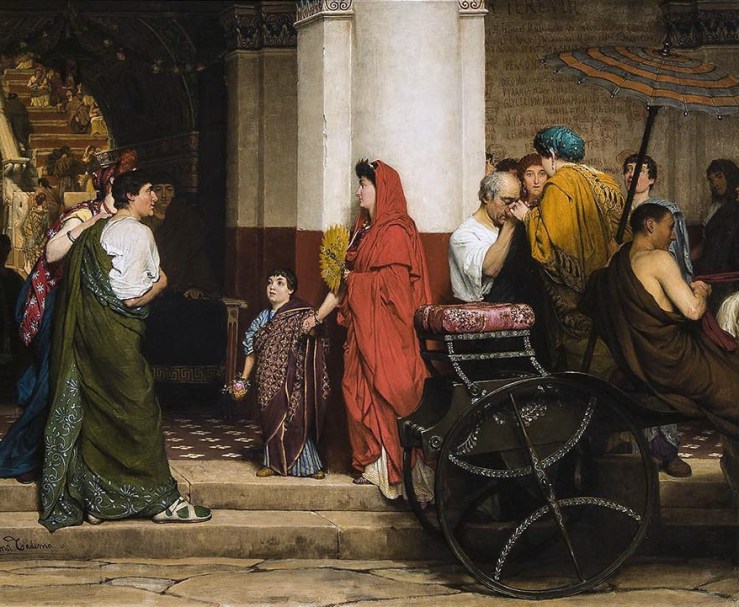
Entrance of the theatre by Lawrence Alma-Tadema, from Wikimedia Commons
In Paul’s day, there were many slaves. In this painting, entitled Entrance of the theatre, the artist, Lawrence Alma-Tadema, gives us an astonishingly realistic window into Roman life. The driver of the cart (to the far right), and the man helping the lady dismount from the cart would probably be slaves. Contrast their clothing with the elaborate attire of the guests gathering for the performance at the theatre.
We were all born slaves to sin; as Jesus said, “everyone who sins is a slave to sin” (John 8:34 NIV). We may have had the occasional victory over sin but, in the end, sin’s power was too strong for us. But we “were bought with a price” (1 Corinthians 6:20, 7:23). The price paid wasn’t money; it was Jesus’s blood―His sacrificial death. Peter writes, “you were ransomed . . . with the precious blood of Christ” (1 Peter 1:18-19). Now we belong to God. Paul says, “you who were once slaves of sin . . . having been set free from sin, have become slaves of righteousness” (Romans 6:17-18, see also 6:6). When were we released? It was when we were born again, when our “old self” was crucified with Christ. For “one who has died has been set free from sin” (Romans 6:7).
However, we have a vital part to play, too. We have to put off our old way of life, and cultivate godly thoughts, speech and behaviour. The Holy Spirit shows us how, and gives us the power to do this. Our part is to co-operate with Him and obey Him. We’ll look at this in Part 47.
Baptised into Christ
Jesus told His disciples to baptise in water those who became His followers (Matthew 28:18-20). Water washes away dirt; water baptism pictures the deep, thorough, spiritual cleansing that happens when we’re born again (compare Acts 22:16). This is what Paul calls “the washing of regeneration and renewal of the Holy Spirit” (Titus 3:5).
Baptism also pictures how we’re washed. We’re washed by being “baptised into Christ Jesus” (Romans 6:3, see also Galatians 3:27). Being plunged into water pictures our dying with Christ; our emerging from the water pictures our being raised with Christ into a new clean life.
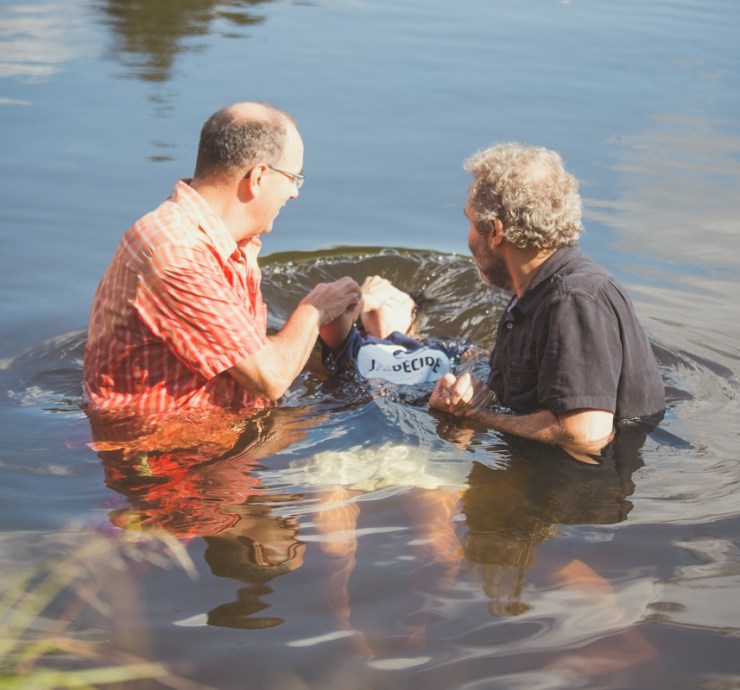
Water baptism pictures the deep, thorough, spiritual cleansing that happens when we’re born again.
Next time . . .
As Christians, we’re not isolated individuals in fellowship with God. We’re members of God’s new humanity, the Church. We’ll explore what this means for us next time.
Bible Readings and Question
You may like to read Romans 8:15-17, Galatians 4:1-7, Ephesians 3:6, Titus 3:4-7. Here’s something to think about:
?An heir is someone who’s due to receive an inheritance. So what does Paul mean when he says we are heirs?
Video
Here is a short video entitled No Nothing: The Story of God’s Inseparable Love (Romans 8). It’s designed for children ages 6 to 12. But youth and adults may well enjoy it, too. It’s from a series published by Crossway, and is based on the book called The Biggest Story Bible Storybook. All the videos can be viewed at The Biggest Story videos website. You can also create a free account to enable you to download them.
REFERENCES [1] Quoted from The Letters of John: an Introduction and Commentary, Revised Edition (Tyndale New Testament Commentaries) by John R.W. Stott, page 131. Published by Inter-Varsity Press, Leicester, United Kingdom, in 2004. [2] See The First Epistle to the Corinthians, Revised Edition (The New International Commentary on the New Testament) by Gordon D. Fee, page 287. Published by William B. Eerdmans Publishing Company, Grand Rapids, Michigan, and Cambridge, United Kingdom, in 2014. [3] These are Martin Luther’s words, quoted in The Doctrine of Imputation by J.V. Fesko. Available online at https://www.thegospelcoalition.org/essay/the-doctrine-of-imputation/ (accessed 18 April 2025). [4] Quoted from The Cross of Christ, with Study Guide. 20th Anniversary Edition, page 202 by John R.W. Stott, page 131. Published by Inter-Varsity Press, Nottingham, United Kingdom, in 2006. [5] See The Mediator: a Study of the Central Doctrine of the Christian Faith by Emil Brunner, pages 444-446. Published by The Lutterworth Press and The United Society for Christian Literature, London, undated. [6] See Adopted into God’s Family: Exploring a Pauline Metaphor by Trevor J. Burke, pages 65-66. Published by Inter-Varsity Press, Nottingham, United Kingdom, and InterVarsity press, Downers Grove, Illinois, in 2006. [7] See The Epistle to the Romans (The New International Commentary on the New Testament) by Douglas Moo, page 505. Published by William B. Eerdmans Publishing Company, Grand Rapids, Michigan, and Cambridge, United Kingdom, in 1996. [8] See The Atonement: Its Meaning and Significance by Leon Morris, pages 108-109. Published by InterVarsity Press, Downers Grove, Illinois, and Inter-Varsity Press, Leicester, United Kingdom, in 1983.
CREDITS ► Text copyright © 2024 Robert Gordon Betts ► Unless otherwise indicated, all Scripture is taken from the ESV® Bible (The Holy Bible, English Standard Version®), copyright © 2001 by Crossway, a publishing ministry of Good News Publishers. Anglicized English Standard Version copyright © 2002 by Crossway. Used by permission. All rights reserved. The ESV text may not be quoted in any publication made available to the public by a Creative Commons license. The ESV may not be translated in whole or in part into any other language. ► Scripture quotations marked ‘NIV’ are taken from The Holy Bible, New International Version (Anglicised edition). Copyright © 1979, 1984, 2011 by Biblica (formerly International Bible Society). Used by permission of Hodder & Stoughton Publishers, an Hachette UK company. All rights reserved. ‘NIV’ is a registered trademark of Biblica (formerly International Bible Society). UK trademark number 1448790. ► Scripture quotations marked (CEV) are from the Contemporary English Version Copyright © 1991, 1992, 1995 by American Bible Society. Used by Permission.
 52 Steps
