
Part 42: The Way Home to God
Click the icon below to download a 4-page PDF version of this page.

Paul’s final years
The apostle Paul is now in Rome, under house arrest. He lives there for two years, welcoming visitors, teaching and preaching (Acts 28:30-31). Historical records and clues in the letters of 1 Timothy and Titus tell us he’s then probably freed, and may have lived another five years, continuing his missionary journeys, perhaps travelling to Spain (where he wanted to go―see Romans 15:24,28), then to what’s now Greece, to Crete and to Asia Minor. He’s rearrested and executed under the Emperor Nero, perhaps around AD65. And so Paul enters into the presence of the Lord he’s served so faithfully.
Letters to God’s people
Paul left behind him a wonderful treasury of truth―13 letters (often called ‘epistles’), handed down to us in the New Testament. The other nine New Testament letters are written by other leaders of the early church: the Lord’s half-brothers who wrote the letters of James and Jude; the apostle Peter; and the apostle John, who also very probably wrote the Book of Revelation (which is a letter to seven churches). We don’t know who wrote the letter to the Hebrews, though there’s no shortage of suggestions!
These letters are arranged in order. Paul wrote the most; his nine letters to churches are placed first, then his four letters to individuals; within each group, the order is longest to shortest.[1] Then follow the eight letters written by other authors, and to a more general audience―Hebrews to Jude. They’re arranged by author, and within that by size. Finally, Revelation is placed last because it’s the final ‘chapter’ of the whole Bible story.
The Holy Spirit inspired these writers to teach, encourage and correct God’s people. Through their letters, we learn what Jesus’s life, death, resurrection and ascension achieved for us. Through them, God teaches us how to think and to live as His redeemed people. In them, God unveils the spiritual war that we’re involved in, and trains us to stand firm against our enemies―Satan and the forces of evil. And, especially in the Book of Revelation, God unveils the final glorious climax of the Bible story to encourage and inspire us to remain faithful to Him to the end.
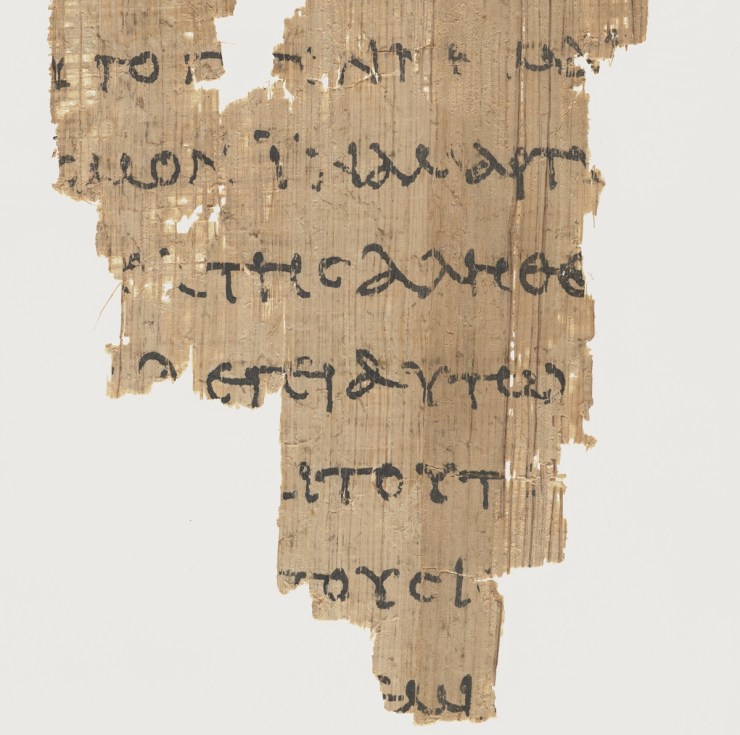
Image courtesy of courtesy of RylandsImaging through Wikipedia (CC BY-SA 4.0)
A portion of Rylands Library Papyrus P52, that’s been dated to around AD125-175 (only 45-95 years after John wrote his Gospel). It may well be the earliest New Testament manuscript yet found. The image shows a fragment of the Greek text of John 18:37-38.
All 22 of these New Testament books―from Romans to Revelation―are letters, not essays or textbooks. Letters are personal. Paul and the other authors are writing either to people they know personally, or they know to be their brothers and sisters in Christ. Some of the letters are to individuals, such as Timothy; some are to local churches, such as the church in Corinth (or, in the case of Galatians, a group of churches); some are written to their brothers and sisters more widely, such as Jude’s letter to “those who are called, beloved in God the Father and kept for Jesus Christ” (Jude 1). And because, under the Holy Spirit’s guidance, these letters were included in our New Testament, they’re also God’s personal letters to us!
The letters included in our New Testament are also God’s personal letters to us!
The catastrophe in the garden
First and foremost, the New Testament letters show us what Jesus accomplished for us and for our world. But before we can fully appreciate what Jesus accomplished, we need to recall everything that went wrong in the first place. And so we have to go back to Genesis 3.
In Part 6, we saw how Adam’s first sin unleashed catastrophic damage to himself, the human race, and the natural world. It’s important to understand what that first sin did. Only then can we see all that God needed to do to put everything right.
► Because we’re all connected to Adam, we were all “made sinners” (Romans 5:19). We were all born with a natural desire to do what we wanted, not what God wanted.
►We’re alienated from God.
►Our relationships with other people are spoiled.
►We’re in debt to God because of our sin.
►Directly or indirectly, our sin spoils the lives of other people.
►Satan gained power over this world; as Jesus said, “the whole world is under the control of the evil one” (1 John 5:19 NIV).
► We’re slaves to sin.
►We suffer physical, emotional, and mental pain, disease and injury, ageing and death.
►God imposed a curse on the land, blighting its productivity, and brought creation into ”bondage to decay” (Romans 8:21 NIV).
►Our dominion over the Earth is crippled and spoiled.
►We’re exiled from paradise―God expelled Adam and Eve from the Garden of Eden.
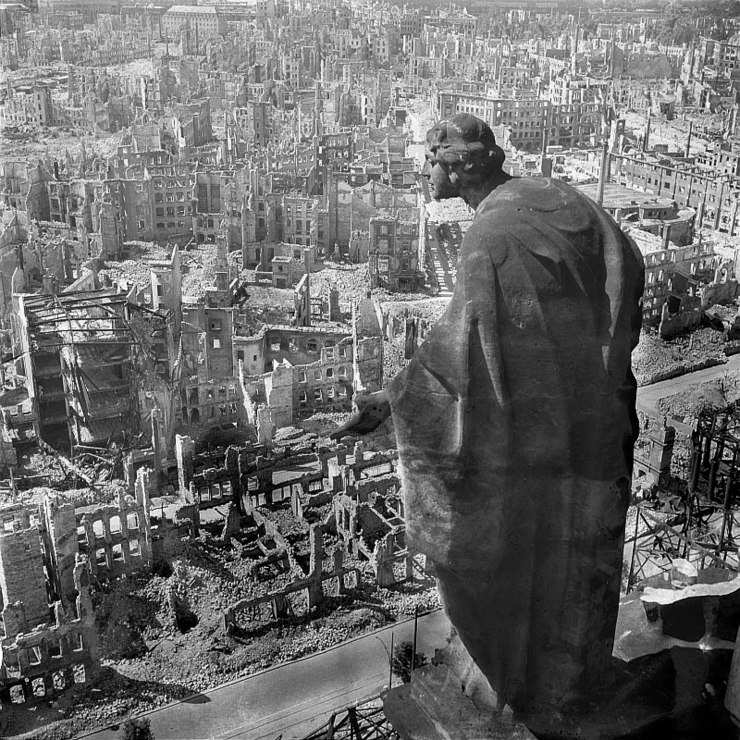
Image courtesy of Deutsche Fotothek on Wikimedia Commons (CC BY-SA 3.0 DE)
A graphic image of the consequences of humanity’s sin. A statue on Dresden’s city hall stands sentinel over the bombed-out city in early 1945―as if grieving over this once beautiful city now laid waste.
Jesus, our perfect and complete sacrifice
However could God sort all this out and put everything right? As we saw in Part 6, right at the very beginning God seems to hint at the answer. He clothes Adam and Eve with animal skins (Genesis 3:21). To provide them, we may assume that God sacrificed animals. He seems to be telling us that to deal with human sin and all its consequences, there needs to be sacrificial death. And as we read through the Bible, we discover whose death this is. It’s Jesus’s death.
We’ve seen this foreshadowed in the Old Testament sacrifices, which we looked at in Part 18. These sacrifices enabled God to forgive His people and welcome them back into fellowship with Himself―something the Bible calls atonement. They point to Jesus.

Agnus Dei by Francisco de Zurbarán, from Wikimedia Commons
‘Agnus Dei’ (‘Lamb of God’) painted by Francisco de Zurbarán. A wonderful depiction of a lamb ready to be sacrificed, and representing Jesus as the Lamb of God. The artist painted a number of versions; another has a Latin paraphrase of Acts 8:32 at the bottom of the painting: in the ESV this passage reads “Now the passage of the Scripture that he was reading was this: ‘Like a sheep he was led to the slaughter and like a lamb before its shearer is silent, so he opens not his mouth.’” This is cited from Isaiah 53:7; Isaiah may have had the Passover lamb primarily in mind.[2]
Leviticus 1:1-7:38 describes the five major sacrifices offered in the Tabernacle and Temple―the purification offering, restitution offering, burnt offering, grain offering, and fellowship offering. Together, they restored a sinner to fellowship with God. Jesus fulfilled all of them. He’s cleansed us from the guilt and pollution of sin, made restitution for our sin―both to God and to others―and brought us into fellowship with God. As Peter writes, “Christ also suffered once for sins, the righteous for the unrighteous, that he might bring us to God” (1 Peter 3:18).
“Christ also suffered once for sins, the righteous for the unrighteous, that he might bring us to God” (1 Peter 3:18).
Jesus, our Passover Lamb
Just before the Exodus, and annually thereafter, God’s people celebrated the Passover. At this festival, lambs were sacrificed. They died instead of the firstborn sons, who represented the whole of God’s people. Now “Christ, our Passover lamb, has been sacrificed” (1 Corinthians 5:7). Jesus died instead of us. Jesus is our perfect Passover Lamb:
●The Passover lamb had to be “without blemish” (Exodus 12:5). Peter writes of “the precious blood of Christ, like that of a lamb without blemish or spot” (1 Peter 1:19).
●The bones of the Passover lamb weren’t to be broken (Exodus 12:46). After His death, the soldiers didn’t break Jesus’s legs, as they did to the criminals crucified alongside Him.
●Jesus died at the Passover, and almost certainly at the very time the Passover lambs were being sacrificed in the Temple.
Jesus, our atoning sacrifice
Jesus fulfils the sacrifice of the two goats on the great annual Day of Atonement:
●One was killed; then the high priest entered the Most Holy Place, and sprinkled its blood there (Hebrews 9:7-8). This cleansed God’s people from the guilt and impurity of sin, and God’s house from the spiritual pollution caused by Israel’s sin.
●Then the high priest confessed the nation’s sins over the other goat (the ‘scapegoat’). This animal was now symbolically responsible for the nation’s sins over the past year. It was then led into the wilderness and released. This pictures the complete removal of Israel’s sin. And the scapegoat symbolically suffered the nation’s penalty for sin―exile from God’s presence.
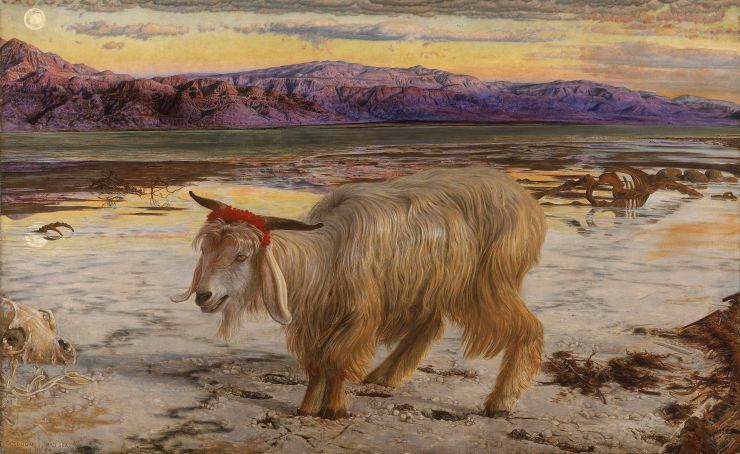
The Scapegoat by William Holman Hunt, from Wikimedia Commons
‘The Scapegoat’ painted by William Holman Hunt. The goat is shown near the southern end of the Dead Sea, in a desolate wilderness. Abandoned, it stands shakily, soon to be just another skeleton embedded in the mud. The goat bears a piece of red cloth. Although not prescribed in Leviticus, the High Priest in Jesus’s time tied a piece of scarlet cloth to its horn. This identified it as the scapegoat; and the red colour, it seems, represented the sin of the people.
These two goats together picture what Jesus did on the Cross.
●He fulfilled what happened to the first goat. He entered the true Most Holy Place, Heaven, with His own blood (Hebrews 9:11-13,24-26). He’s cleansed us from the guilt and impurity of sin. And He’s cleansed the creation, polluted by sin; one day, God will live among us on the renewed Earth (Revelation 21:3).
●And He fulfilled what happened to the second goat. Just as the goat was loaded with the nation’s sins, God “laid on him the iniquity of us all” (Isaiah 53:6). Just as the scapegoat was removed from the camp, so our sins have been removed “as far as the east is from the west” (Psalm 103:12). And just as the scapegoat suffered exile in the wilderness, so Jesus was exiled from God’s presence in our place on the Cross, crying out, “My God, my God, why have you forsaken me?” (Matthew 27:46). In other words, He suffered spiritual death.
“Such a great salvation”
The New Testament―especially the letters―confirms, explains and adds to what we read in the Old Testament. It sets out everything that Jesus achieved for us. Through His death, resurrection and ascension, God reversed every one of the consequences of Adam’s sin we listed earlier. He has brought about “such a great salvation” (Hebrews 2:3):
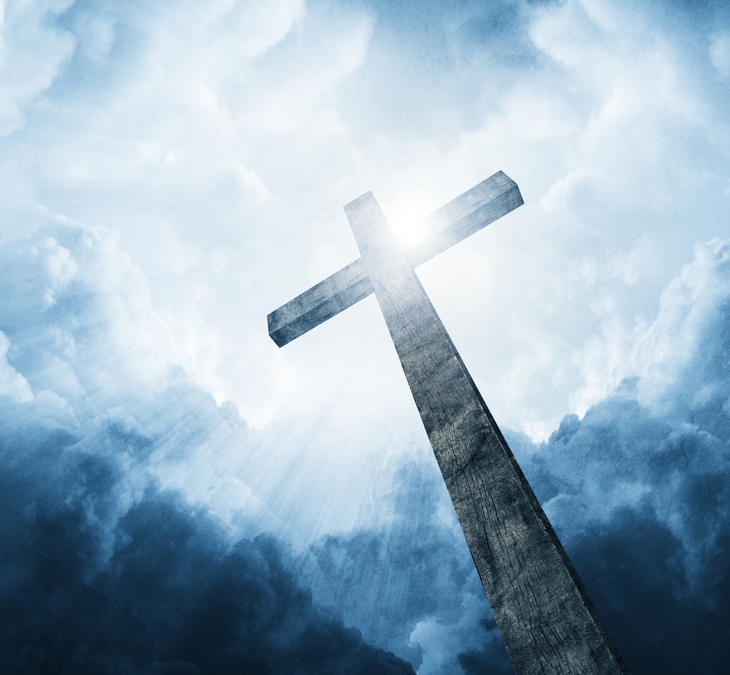
Through Jesus’s death, resurrection and ascension, God reversed every one of the consequences of Adam’s sin.
►Jesus has ‘disconnected’ us from Adam, and joined us to Himself. Now, in Christ, we’re “made righteous” (see Romans 5:12-21).
►We’re no longer alienated from God; now the Holy Spirit lives in us and, by the Spirit, the Father and the Son make Their home in us, too (see John 14:15-17, 23).
►We’re able to love one another (see John 15:12, Romans 12:10).
►Jesus paid the debt we owed God and other people because of our sin (see Colossians 2:13-14).
►We’ve been released from Satan’s power (see Acts 26:18, Colossians 1:13).
►We’re no longer slaves of sin, but “slaves of righteousness” (Romans 6:18).
►Jesus’s resurrection guarantees that we, too, will rise from death with new bodies like His (Philippians 3:21); we’ll be free from pain and disease and death (see Revelation 21:4). And His resurrection guarantees that, one day, the whole creation will be renewed and freed from its “bondage to decay” (Romans 8:21 NIV) and from the curse imposed on it at the Fall.
►In the new creation, we’ll exercise our dominion over creation as God planned from the beginning.
►Most wonderful of all, we’ll live there in the presence of our Father. “God’s dwelling-place” will be “among the people, and he will dwell with them” (Revelation 21:3 NIV). No longer will we be in exile; we’ll return to paradise. We’ll come home, and live in our Father’s house for ever (see John 14:2-3).
When God renews the creation, we’ll no longer be in exile. We’ll come home, and live in our Father’s house for ever.
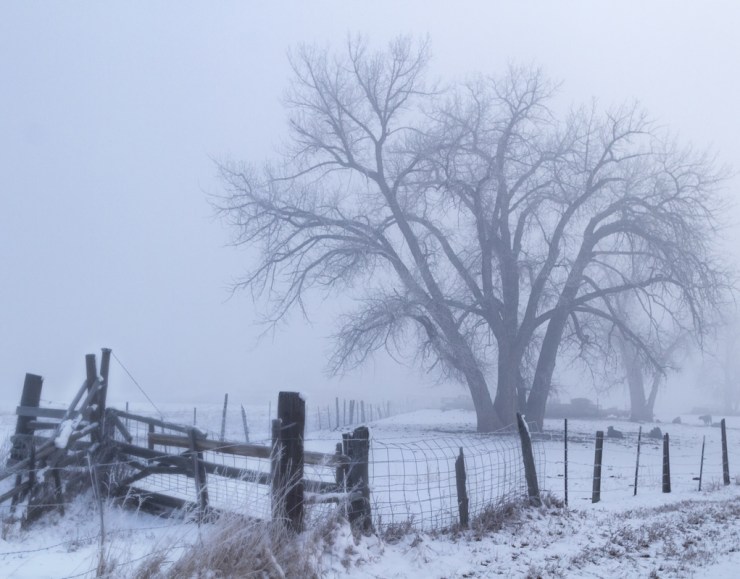
The creation “was subjected to frustration” (Romans 8:20 NIV). It is waiting for the day when it “will be set free from its bondage to decay and obtain the freedom of the glory of the children of God” (Romans 8:21).
Next time . . .
We’ll take a closer look at all that Jesus did for each one of us on the Cross, and at the new life He brings us into as believers.
Bible Reading and Question
You may like to read Ephesians 1:1-23. Here’s a question to think about:
?Imagine the Ephesian letter has just dropped through your letterbox, with your own name and address on the envelope. How might this affect how this first chapter of Ephesians impacts you when you read it?
Video
What would it be like today if disciples of Jesus across the world had just heard―for the very first time―that He had risen from the dead? This captivating little video imagines the scene.
REFERENCES [1] Adapted from Good News for All the Earth: Understanding the Story of the New Testament by Mitchell L. Chase, pages 121-123. Published by 10Publishing, a division of 10ofthose.com, Leyland, U.K., in 2025. [2] See The Lamb of God: A Pattern of Redemption by David Christensen. Available online at https://christoverall.com/article/concise/the-lamb-of-god-a-pattern-of-redemption/ (accessed 10 April 2025).
CREDITS ► Text copyright © 2025 Robert Gordon Betts ► Unless otherwise indicated, all Scripture is taken from the ESV® Bible (The Holy Bible, English Standard Version®), copyright © 2001 by Crossway, a publishing ministry of Good News Publishers. Anglicized English Standard Version copyright © 2002 by Crossway. Used by permission. All rights reserved. The ESV text may not be quoted in any publication made available to the public by a Creative Commons license. The ESV may not be translated in whole or in part into any other language. ► Scripture quotations marked ‘NIV’ are taken from The Holy Bible, New International Version (Anglicised edition). Copyright © 1979, 1984, 2011 by Biblica (formerly International Bible Society). Used by permission of Hodder & Stoughton Publishers, an Hachette UK company. All rights reserved. ‘NIV’ is a registered trademark of Biblica (formerly International Bible Society). UK trademark number 1448790.
 52 Steps


