
Part 35: The Road to the Cross
Click the icon below to download a 4-page PDF version of this page.

The true Messiah
Jesus has just fed a crowd of perhaps 20,000 or more[1] with five small loaves and two little fish (John 6:1-13). So impressed are they by this miracle, they’re about to take Him by force to make Him a king (John 6:14-15)―a leader who’ll liberate them from Roman occupation. But Jesus’s Kingdom isn’t an earthly one (see John 18:36). He slips away to a mountain, where He can be alone.
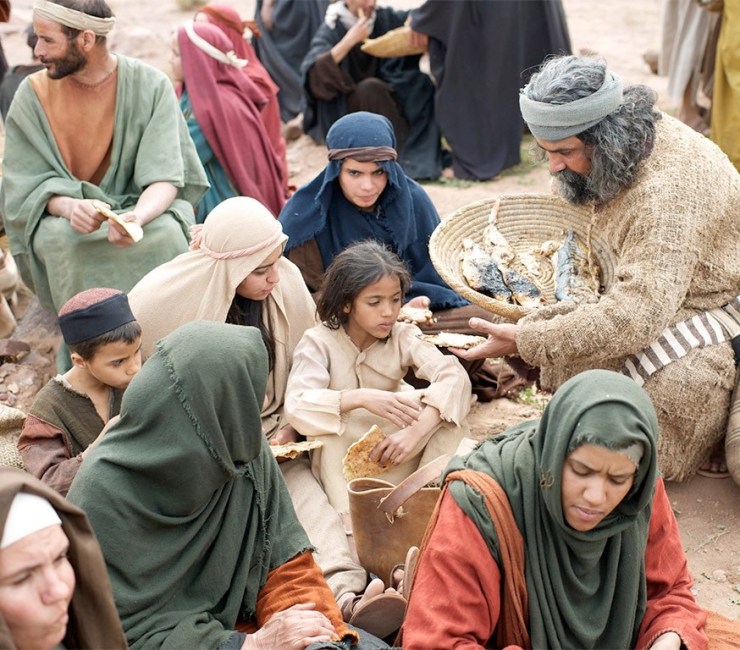
Photo courtesy of LUMO Project and made available by FreeFreeBibleimages
Jesus feeds a great crowd, including 5000 men; there may have been more than 20,000 people in all. “Jesus then took the loaves, and when he had given thanks, he distributed them to those who were seated. So also the fish, as much as they wanted.” (John 6:11).
The next day finds Him teaching the people. He who has given them bread tells them, “I am the Bread of Life. . . . . Whoever feeds on my flesh and drinks my blood has eternal life, and I will raise him up on the last day” (6:48,54). But many of His disciples find these words hard to take. They’re looking for a king who’ll throw out the Romans. It’s now clear Jesus isn’t that kind of Messiah! Many of them forsake Him, disillusioned (John 6:60-66). But some stay; Peter speaks for them all: “Lord, to whom shall we go? You have the words of eternal life” (6:68).
Many of Jesus’s disciples forsake Him, disillusioned. But some stay; Peter speaks for them all: “Lord, to whom shall we go? You have the words of eternal life” (John 6:68).
Jesus isn’t the Messiah many Jews are looking for. So who is He, then? Some time later, Jesus asks His disciples this very question: “Who do people say that the Son of Man is?” (Matthew 16:13). He gets various answers―John the Baptist, Elijah, Jeremiah or another Old Testament prophet. Then He asks, “But who do you say that I am?”; Peter―always one to speak up―replies, “You are the Christ, the Son of the living God” (16:15-16). Jesus responds with these astonishing words: “. . . flesh and blood has not revealed this to you, but my Father who is in heaven. . . . you are Peter, and on this rock I will build my church, and the gates of hell shall not prevail against it. I will give you the keys of the kingdom of heaven, and whatever you bind on earth shall be bound in heaven, and whatever you loose on earth shall be loosed in heaven.” (16:17-19). What must the disciples―especially Peter―have thought when they heard this? Jesus is looking forward to the time when He’ll build His Church―a community of believers, born of the Holy Spirit, that will last for ever. And Peter will have a foundational role. Empowered by the Spirit, he’ll serve as leader of the apostles in the Church’s early days. [2] Through the preaching of Peter and others, God will open Heaven’s door to those who receive Christ as Lord and Saviour. [3]
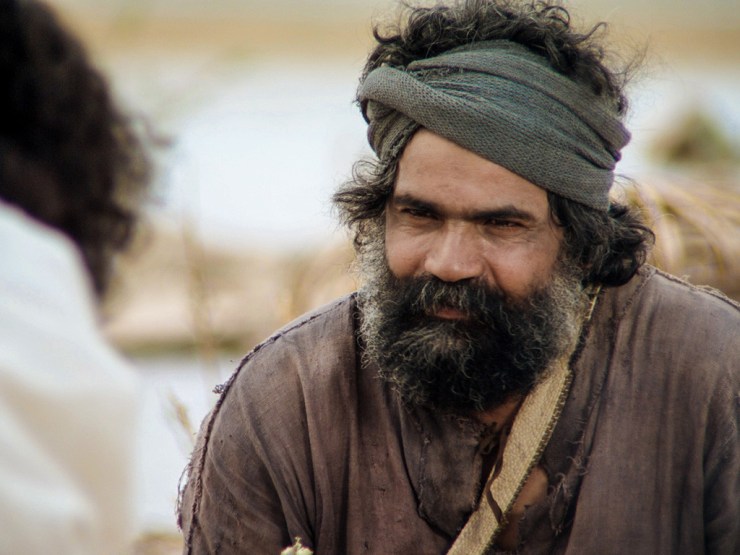
Photo courtesy of LUMO Project and made available by FreeFreeBibleimages
Jesus asks His disciples, “But who do you say that I am?” Peter replies, “You are the Christ, the Son of the living God” (Matthew 16:15-16).
But we’re taken aback by what happens next. Jesus orders His disciples “to tell no one that he was the Christ” (16:20). Why does Jesus want His identity concealed? Because He isn’t the kind of messiah that so many people are longing for―a king who’ll lead them in throwing out the Roman oppressors.[4] Jesus hasn’t come to deliver people from political oppression. He’s come to deliver them from their own sin. And only His death on the Cross can do that. Only after the Cross, and empowered by the Holy Spirit, will it be appropriate for Jesus’s disciples to proclaim Him the Messiah (compare Acts 2:14-41).
And Jesus teaches his disciples what it really means to follow Him. He says, “If anyone would come after me, let him deny himself and take up his cross and follow me” (Matthew 16:24). The Romans used crosses to execute people. To ‘take up your cross’ means to go to the place of death. My ‘self’―which makes me the centre of my universe and insists on my own way―must be put to death. And I must follow Jesus. That’s when life really begins for me―as Jesus says: “whoever loses his life for my sake will find it” (Matthew 16:25).
The Cross in view
In the final year or so of His ministry, Jesus teaches His remaining disciples what’s really involved in being the Messiah. He begins “to show his disciples that he must go to Jerusalem and suffer many things . . . and be killed, and on the third day be raised” (Matthew 16:21). But Peter takes Him aside, saying, “Far be it from you, Lord!”. Jesus responds with sharp rebuke: “Get behind me, Satan!” (16:22-23). In the wilderness, Satan tempted Jesus to take the easy road to global power and glory (Matthew 4:8-10). Now, through Peter, Satan again entices Him to avoid the cross. Again, Jesus refuses.
Days after Jesus begins to teach His disciples about His death, He takes Peter, James and John up a mountain. He’s “transfigured before them”, his face shines “like the sun”, His clothes become “white as light” (Matthew 17:2). The Father repeats what He said at Jesus’s baptism: “This is my beloved Son, with whom I am well pleased”, this time adding “listen to him” (17:5). Moses and Elijah appear with Him; they probably represent the Law and the Prophets, which prophesied about Jesus (see Luke 24:27,44-47). Both men had encountered God’s glory on another mountain (Exodus 34:1-9, 1 Kings 19:9-18)[5] Now they’re on this mountain, seeing God’s glory shining from His Son.
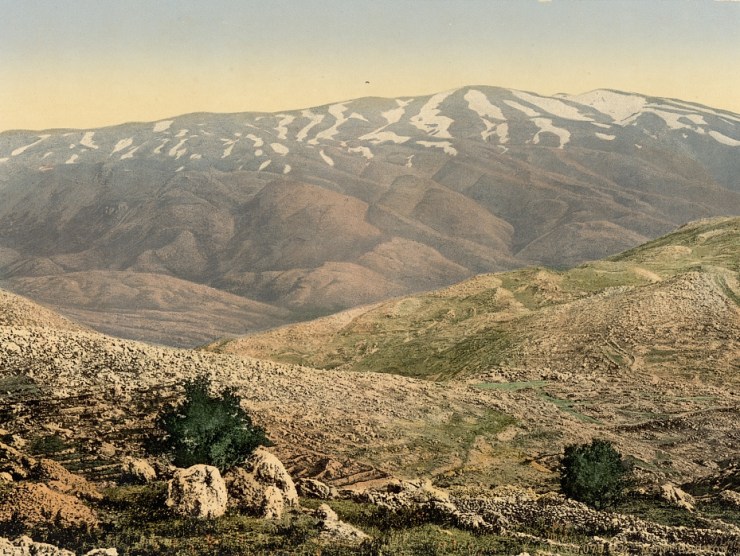
Image from The Library of Congress Prints & Photographs Online Catalog
Jesus’s transfiguration may well have occurred on Mount Hermon, depicted here in this photo taken between around 1890 and 1900. on what is now the border of Lebanon and Syria.
They talk with Jesus about “His departure, which He was about to accomplish at Jerusalem” (Luke 9:31). That word “departure” is the Greek word ‘exodos’. Centuries before, Moses led God’s people in their Exodus from slavery in Egypt. Now a new ‘Moses’, Jesus, will lead people in another, greater Exodus. That ‘exodus’ is His death, resurrection, and ascension into Heaven. Through this exodus, God will release people from guilt and from slavery to sin. They’ll cross over “from death to life” (John 5:24). This marvellous moment on the mountain was etched in Peter’s memory for the rest of his life (2 Peter 1:17-18).
Centuries before, Moses led God’s people in their Exodus from slavery in Egypt. Now a new ‘Moses’, Jesus, will lead people in another, greater Exodus.
Final days in Jerusalem
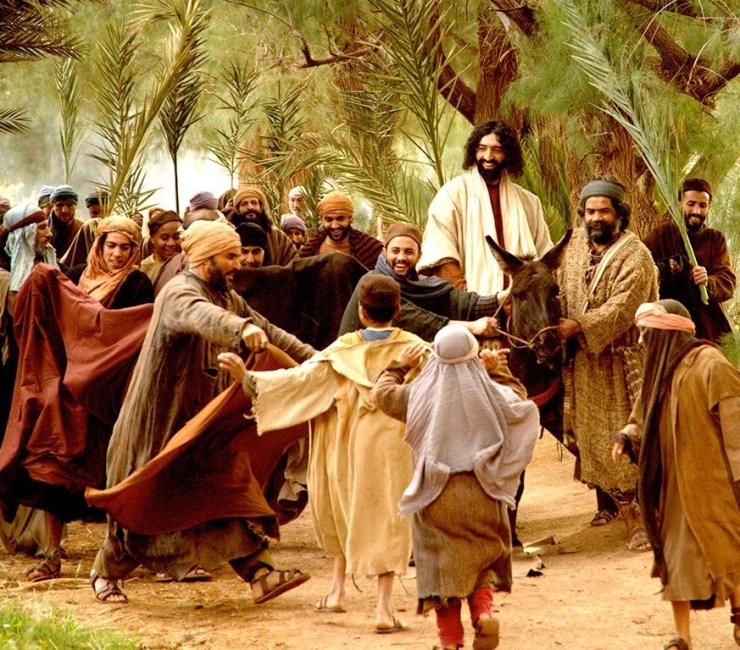
Photo courtesy of LUMO Project and made available by FreeFreeBibleimages
On a borrowed donkey, Jesus rides into Jerusalem to the jubilation of the crowds (Matthew 21:1-11), who cry, “Hosanna to the Son of David! Blessed is he who comes in the name of the Lord! Hosanna in the highest!” (Matthew 21:9).
Around 9 months after His transfiguration, Jesus approaches Jerusalem. It’s springtime, a few days before the Jewish festival of Passover. The year is probably AD33. He enjoys a meal with His disciples in Bethany, where Mary anoints Him (John 12:1-8). Borrowing a donkey, He rides into Jerusalem while jubilant crowds shout, “Hosanna to the Son of David! Blessed is he who comes in the name of the Lord!” (Matthew 21:1-11). This fulfils an Old Testament prophecy: “Say to the daughter of Zion, ‘Behold, your king is coming to you, humble, and mounted on a donkey, . . . .” (Matthew 21:5, quoting from Isaiah 62:11 and Zechariah 9:9). Jesus enters Jerusalem as the Messiah, the King of David’s dynasty―not as a freedom fighter on a warhorse, but in peace, as the humble Servant who will save people through His death. Only days later, a mob will shout, “Let him be crucified!” (Matthew 27:20-23).
The city is crowded with Passover pilgrims. Next day, Jesus goes to His Father’s house, the Temple. Three years earlier, He’d cleared it of traders. But they’d just set up their stalls again and carried on. So He cleanses the Temple again (Mark 11:15-17).
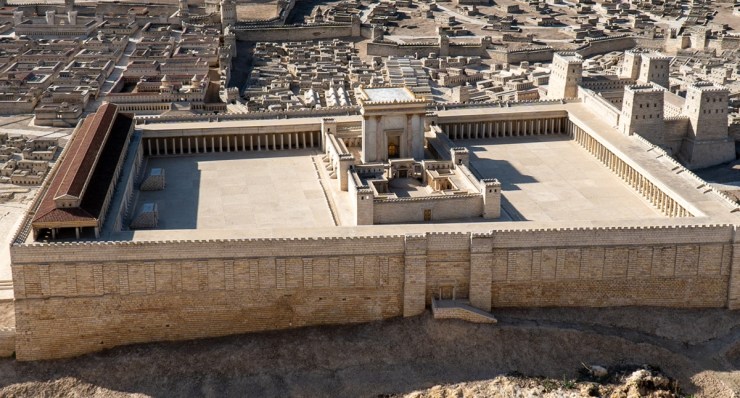
A model of the city of Jerusalem as it was in the first century AD until its destruction in AD70. This is the city as Jesus knew it. The Temple is by far the most notable building. Adjoining the Temple on the right is the Antonia Fortress, bastion and symbol of Roman military power.
Jesus concludes His public teaching, climaxing in His scorching criticism of the Jewish religious leaders (Matthew 21:23-23:36). Finally, on the Mount of Olives, Jesus teaches His disciples about the events in the years after His resurrection until His return to Earth (Matthew 24:1-25:46). He warns them against false prophets and messiahs, and tells them there’ll be wars and natural disasters and rampant wickedness. God’s people will be terribly persecuted; many will betray and hate each other. But the Gospel will be preached across the globe before the end comes. And Jesus foretells the Roman war that will climax in the appalling horror of the fall of Jerusalem in AD70 (24:15-22). But that’s just a foretaste of the distress that will overwhelm the Earth in the end times. And He teaches His disciples about His coming again―and how to live in the light of His coming. We’re to be obedient, faithful, alert and watchful for His return.
We’re to be obedient, faithful, alert and watchful for our Lord’s return.
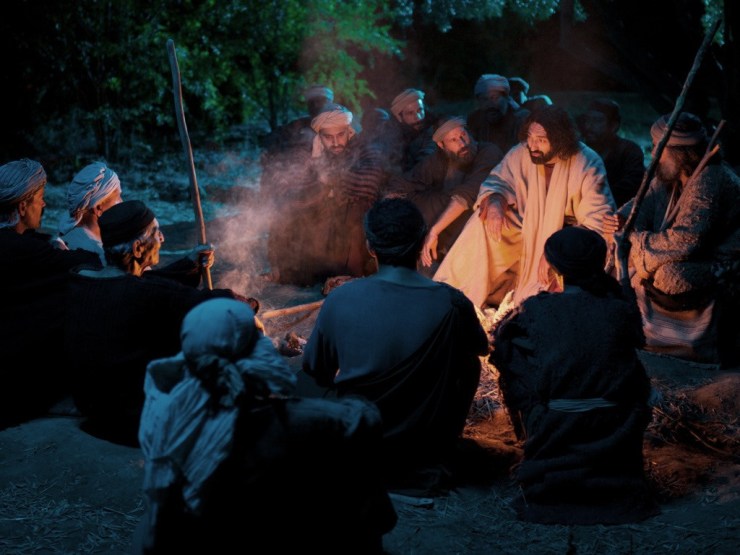
Photo courtesy of LUMO Project and made available by FreeFreeBibleimages
On the Mount of Olives, Jesus teaches His disciples about the events in the years after His resurrection until His return to Earth (Matthew 24:1-25:46). And He teaches us how we’re to live in the light of His coming.
Growing opposition
From early in His ministry, Jesus faces growing opposition―chiefly from the Jewish religious leaders (with exceptions like Nicodemus and Joseph of Arimathea). Now that opposition comes to a head. The Jewish leaders argue that, if they don’t do something about Jesus, “everyone will believe in Him, and the Romans will come and take away both our place and our nation” (John 11:48). They fear that Jesus’s popularity might set off a rebellion by the people, which the Romans will crush―taking away their ”place” (probably meaning they’d destroy the Temple) and their “nation” (meaning they’d rule the nation directly, not through the Jewish leaders). And so these leaders would lose their power and status―and that was the thing they feared most.[6]

Photo courtesy of LUMO Project and made available by FreeFreeBibleimages
Right at the start of His public ministry, Jesus began to suffer opposition―chiefly from the Jewish religious leaders.
The chief priests and the other leaders gather in the house of the High Priest, Caiaphas, and plot to arrest Jesus (Matthew 26:3-5). But how can they arrest Him without the danger of setting off a riot? Then Judas Iscariot turns up. He agrees with the chief priests to betray Jesus (Matthew 26:14-16). Judas now watches for an opportunity when the Jewish authorities can arrest Jesus quietly.
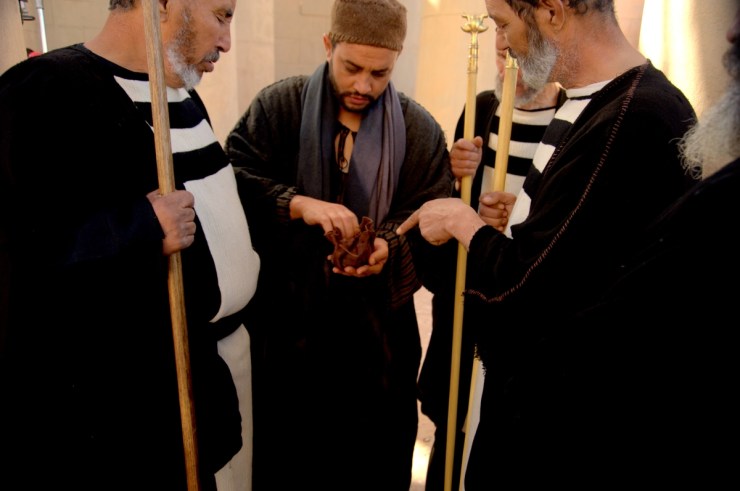
Judas Iscariot “went to the chief priests and said, ‘What will you give me if I deliver him over to you?’ And they paid him thirty pieces of silver. And from that moment he sought an opportunity to betray him.” (Matthew 26:14-16).
Why does Judas betray the One whom he’s travelled with, learned from, and shared meals with for so long? He must have had ambitions of high office in Jesus’s coming Kingdom―hadn’t Jesus promised thrones to all the disciples (Matthew 19:28)? Perhaps the decisive moment comes when Mary anoints Jesus in Bethany. She pours the entire contents of a jar of costly perfume over Him. Jesus says, “In pouring this ointment on my body, she has done it to prepare me for burial” (Matthew 26:12).
Mary values Jesus as worthy of her most precious possession; Judas values Jesus as a ticket to position and power. But Jesus has steadfastly refused to be a political and military liberator. And now He’s talking about His death! Perhaps Judas’s treachery is vengeance on Jesus for failing to be what Judas wants Him to be. Or maybe Judas thinks Jesus’s arrest will force Him to assert Himself and be proclaimed king.[7] Whatever Judas’s motive, it seems money plays only a part. He agrees to betray Jesus for 30 pieces of silver―the price of a slave (see Exodus 21:32). Jesus, who took “the form of a bondservant” (Philippians 2:7 ESV margin) was valued as a slave. The chief priests, we may presume, paid Judas out of Temple money―money also used to buy the Temple sacrifices. Unwittingly, they had just purchased the Lamb whose sacrifice would fulfil all the Old Testament sacrifices.
The chief priests presumably paid Judas out of Temple money also used to buy the Temple sacrifices. Unwittingly, they had just purchased the Lamb whose sacrifice would fulfil all the Old Testament sacrifices.

Image from The Library of Congress Prints & Photographs Online Catalog
Bethany, the village a couple of miles east of Jerusalem; a photo taken between around 1890 and 1900. Mary, Martha, and Lazarus lived here (see, for example, John 11:1-44, 12:1-8).
Next time . . .
On the evening before His crucifixion, Jesus eats a Passover meal with His disciples. Later that night, we find Jesus in a garden, “greatly distressed and troubled” (Mark 14:33). These scenes show us more about what Jesus’s death and resurrection will achieve.
Bible Reading and Questions
You may like to read Matthew 16:24-26. Here are questions to think about:
? Jesus says, “whoever would save his life will lose it, but whoever loses his life for my sake will find it”. What does He mean by ‘saving our lives’ and ‘losing our lives’?
?Jesus says, “What good will it be for someone to gain the whole world, yet forfeit their soul?” (NIV). How valuable does that make our soul, in other words, ourselves. How might that impact how we think and how we live?
Videos
Here are two short videos, entitled The King Comes: The Story of Palm Sunday (Luke 19) and A Woman to Be Remembered (John 12). They’re designed for children ages 6 to 12. But youth and adults may well enjoy them, too. These videos are in a series published by Crossway. They’re based on the book called The Biggest Story Bible Storybook. All the videos can be viewed at The Biggest Story videos website. You can also create a free account to enable you to download them.
REFERENCES [1] See The Gospel According to John (The Pillar New Testament Commentary) by D.A. Carson, pages 270. Published by Inter-Varsity Press, Nottingham, U.K., and William B. Eerdmans Publishing Company, Grand Rapids, Michigan and Cambridge, U.K., in 1991. [2] See Matthew (Tyndale New Testament Commentaries) by R.T. France, pages 253-256. Published by Inter-Varsity Press, Leicester, U.K., and William B. Eerdmans Publishing Company, Grand Rapids, Michigan, in 1985. [3] See The Expositor’s Bible Commentary, Revised Edition, volume 9: Matthew and Mark, edited by Tremper Longman III and David E. Garland, page 421-426. Published by Zondervan, Grand Rapids, Michigan, in 2010. [4] See The Gospel According to John (The Pillar New Testament Commentary) by D.A. Carson, pages 271-273. See also The Gospel of Mark: a Commentary on the Greek Text (The New International Greek Testament Commentary) by R.T. France, pages 330-331. Published by William B. Eerdmans Publishing Company, Grand Rapids, Michigan and Cambridge, U.K., and The Paternoster Press, Milton Keynes, U.K., in 2002. [5] See Good News for All the Earth: Understanding the Story of the New Testament, page 58. Published by 10Publishing, Leyland, U.K., in 2025. [6] See The Gospel According to John (The Pillar New Testament Commentary) by D.A. Carson, pages 420-421. [7] See The Master’s Men by William Barclay, pages 76-77. Published by SCM Press, London, in 1959.
CREDITS ► Text copyright © 2024 Robert Gordon Betts ► Unless otherwise indicated, all Scripture is taken from the ESV® Bible (The Holy Bible, English Standard Version®), copyright © 2001 by Crossway, a publishing ministry of Good News Publishers. Anglicized English Standard Version copyright © 2002 by Crossway. Used by permission. All rights reserved. The ESV text may not be quoted in any publication made available to the public by a Creative Commons license. The ESV may not be translated in whole or in part into any other language. ► Scripture quotations marked ‘NIV’ are taken from The Holy Bible, New International Version (Anglicised edition). Copyright © 1979, 1984, 2011 by Biblica (formerly International Bible Society). Used by permission of Hodder & Stoughton Publishers, an Hachette UK company. All rights reserved. ‘NIV’ is a registered trademark of Biblica (formerly International Bible Society). UK trademark number 1448790.
 52 Steps