
Part 31: Preparing For Our Saviour’s Coming
Click the icon below to download a 4-page PDF version of this page.

Four ancient empires
Four and a half centuries elapsed from the final Old Testament prophet, Malachi, to Jesus’s birth. They’re sometimes called the ‘silent years’. But they weren’t silent. God was still speaking to His people through the Old Testament Scriptures. And He was active in history, as He always is.
In the centuries before Jesus’s birth, God was still speaking to His people through the Old Testament Scriptures. And He was active in history, as He always is.
Through the centuries from Malachi’s time to Jesus’s birth, three empires successively dominated Judah (later known as Judea). In Malachi’s day, the Persians were in charge. The Persian Empire fell to the Greek Alexander the Great, who captured Babylon in 331BC. After Alexander died, his empire was divided. A Greek kingdom based in Egypt ruled Judea for much of the time until 198BC, when a Greek empire based in Syria took control. A heroic Jewish resistance campaign (called the Maccabean revolt) gave the Jews around 80 years of relative independence until the Romans seized Jerusalem in 63BC. The Romans were in charge of Judea during Jesus’s day.
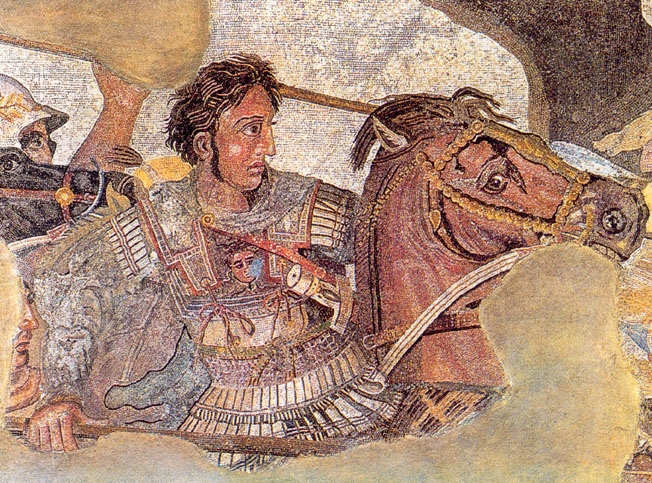
Detail of the Alexander Mosaic from Wikimedia Commons
Detail of the Alexander Mosaic, representing Alexander the Great on his horse during a battle, traditionally believed to be the Battle of Issus against Darius III over control of the Persian Empire. Alexander was the general who created the Greek Empire. He died in 323BC.
Nebuchadnezzar’s image
God tells us about these empires in the Book of Daniel. In Daniel 2:1-49 we read about a dream that God gives to King Nebuchadnezzar. He sees a towering image. Its head is of gold, its chest and arms of silver, its middle and thighs of bronze, its legs of iron, and its feet partly of iron and partly of clay. The head of gold represents Nebuchadnezzar himself (2:38), ruler over the great Babylonian kingdom. The rest of the image probably symbolises the Persian, Greek, and Roman Empires respectively, going down from chest to legs and feet.
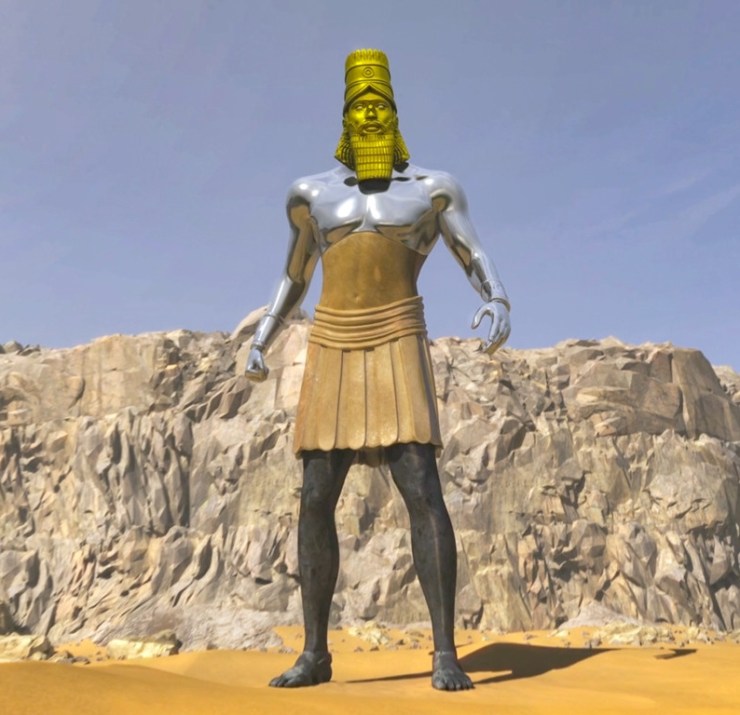
Video from Bible-Scenes.com and made available by (CC BY 4.0 International)
An artist’s impression of the image that Nebuchadnezzar saw in his dream (Daniel 2:1-49). Its head is of gold, its chest and arms of silver, its middle and thighs of bronze, its legs of iron, and its feet partly of iron and partly of clay.
The four beasts, and the little horn
Years later, God shows Daniel a vision of four terrifying beasts (Daniel 7:3-8). They’re “four kings who shall arise out of the earth” (7:17). They probably correspond to the four successive empires that Nebuchadnezzar saw in his dream―a winged lion representing the Babylonians, a bear the Persians, a winged four-headed leopard the Greeks, and a ten-horned beast the Romans. If so, God is showing Daniel these kingdoms in their true light―their evil, destructive character.
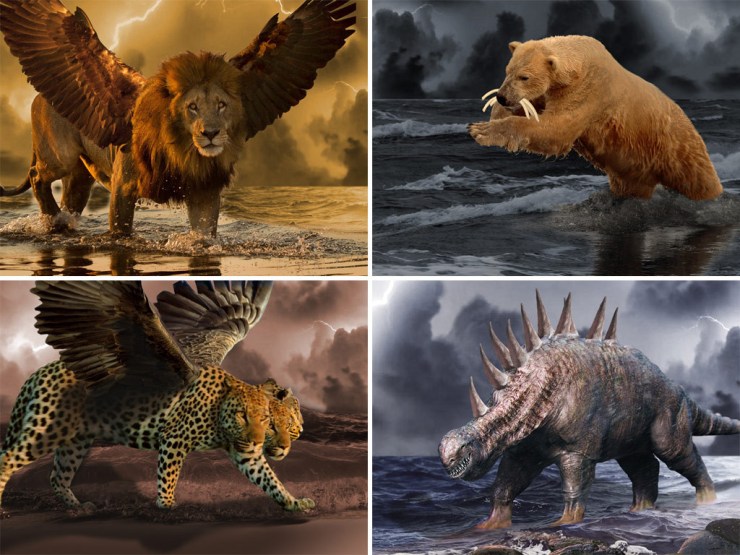
Image courtesy of FreeBible Images (CC BY-NC-ND 4.0)
An artist’s impression of the four terrifying beasts that Daniel saw (Daniel 7:3-8).
The fourth beast―the beast with ten horns―probably pictures the Roman Empire. Its ten horns are “ten kings”; who may symbolise the various nations and empires that have arisen through history since the fall of the Roman Empire.
Then, among these ten horns, “there came up among them another horn, a little one, . . . . in this horn were eyes like the eyes of a man, and a mouth speaking great things” (Daniel 7:8). This little horn “shall speak words against the Most High” (7:25); it blasphemes God. It “shall think to change the times and the law; . . . .” (7:25)―which is God’s prerogative alone (compare Daniel 2:21). It “made war with the saints and prevailed over them” (7:21), and “shall wear out the saints of the Most High” (7:25). This horn pictures a satanic power that opposes God and His rule over this world.[1] It seems to arise at the close of this age. We’ll see more at the end of our journey through the Bible.
The coming of the Kingdom of God
But God will overthrow these godless powers.
● The towering image that Nebuchadnezzar sees is shattered by a stone (Daniel 2:34-35).
●The fourth beast in Daniel’s vision is “killed and its body destroyed and given over to be burned with fire” (Daniel 7:11).
●The “dominion” of the other three beasts is taken away (7:12), though they continue to live for a time.
●And the “dominion” of the godless ‘little horn’ will be “taken away, to be consumed and destroyed to the end“ (7:26).
In their place, God will establish His Kingdom―the Kingdom of God.
God will overthrow these godless powers. In their place, He will establish His Kingdom―the Kingdom of God.
●The stone that strikes the image in Nebuchadnezzar’s dream “became a great mountain and filled the whole earth” (Daniel 2:35). Daniel explains, “in the days of those kings the God of heaven will set up a kingdom . . . . It shall break in pieces all these kingdoms and bring them to an end, and it shall stand forever, . . . .” (Daniel 2:44). That ”kingdom” is the Kingdom of God.
●After his vision of the four beasts, Daniel sees a vision of God, “the Ancient of Days” in His heavenly courtroom (Daniel 7:9). And he sees “one like a son of man”, who is led into the presence of the Ancient of Days and ”given dominion and glory and a kingdom, that all peoples, nations, and languages should serve him; his dominion is an everlasting dominion, . . . .” (7:13-14). We’re surely seeing Jesus ascend to His Father in Heaven (Luke 24:50-52, Acts 1:9-11)―but as if we’re in Heaven watching it, rather than on Earth, like the disciples. And Jesus will share His rule with His people: “the greatness of the kingdoms under the whole heaven shall be given to the people of the saints of the Most High” (7:27).
The “one like a son of man” is the Messiah Jesus Christ. He will establish God’s Kingdom. And so, as we’ll soon see, when Jesus begins His public ministry, He proclaims “The time is fulfilled, and the kingdom of God is at hand; repent and believe in the gospel” (Mark 1:15).
Blazing a trail for the Church
During the centuries after Malachi wrote his prophecy, God was readying His people, and the world, for the Messiah’s coming, and for the mission of His Church. Through the Church, God was going to fulfil what He promised to Abraham, that through his descendants, “all the families of the earth shall be blessed” (Genesis 12:3).
During the centuries after Malachi wrote his prophecy, God was readying His people, and the world, for the Messiah’s coming, and for the mission of His Church.
►Many Jews settled in Gentile lands. This began as far back as the Assyrian conquest of the northern kingdom, Israel. Acts chapter 2 tells us just how widely the Jews had dispersed by New Testament times. Pilgrims came to Jerusalem to celebrate Pentecost from such far-flung regions as Iran, Mesopotamia, Asia Minor, Egypt, North Africa, Crete and Italy.
►During the Babylonian exile, God purged Israel from idolatry. As a nation, Israel never falls into idolatry again.
►Jews began to meet for prayer and study of the Scriptures at ‘synagogues’. This probably began during the exile. By New Testament times, synagogues could be found in many places where Jews had settled. Synagogues would become ‘launch pads’ for the preaching of the gospel, and thus the expansion of the Church. And aspects of synagogue life carried over into local church life.
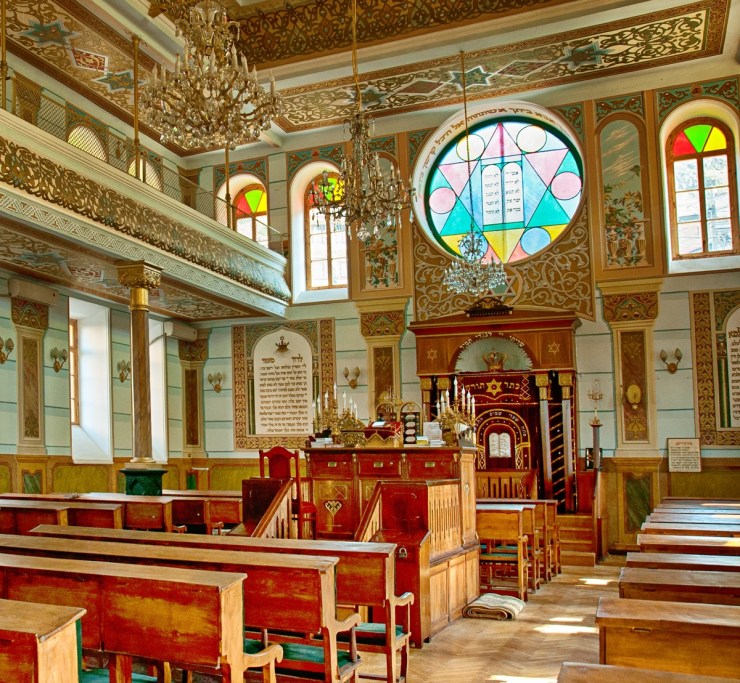
The interior of the Great Synagogue in Tbilisi, Georgia.
►God was drawing Gentiles to associate with Jews and attend synagogue services. The gospel found good ground among these God-fearing Gentiles, as we read in the Book of Acts.
►Thanks especially to Ezra, God’s people began to study the Scriptures as never before. And in the period between the return from exile and the birth of Jesus, the Jewish Scriptures were gathered together into the Old Testament as we know it today.
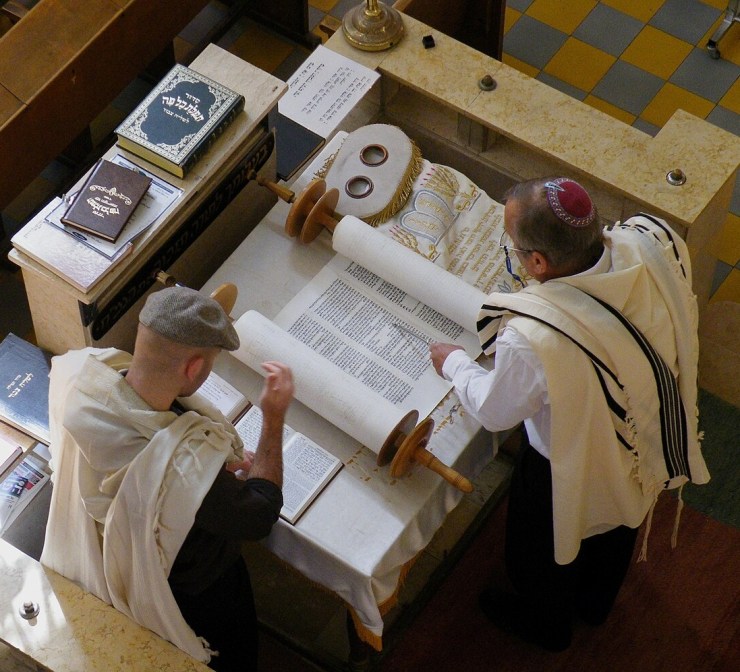
Reading of the Torah, Aish Synagogue, Tel Aviv, Israel © Roy Lindman at Wikimedia Commons (CC BY-SA 3.0)
Reading the Torah, Aish Synagogue, Tel Aviv, Israel.
►Greek became the common language of the eastern Mediterranean region. All the Old Testament was translated into Greek in the second and third centuries BC. The whole New Testament was written in Greek, too. Having this common language was an enormous help in preaching the gospel and teaching believers.
►By the time of Jesus, the Roman Empire covered the whole Mediterranean region and beyond. Political unity and lasting peace, coupled with good communications by sea and the famous Roman roads, all helped the gospel to spread rapidly.
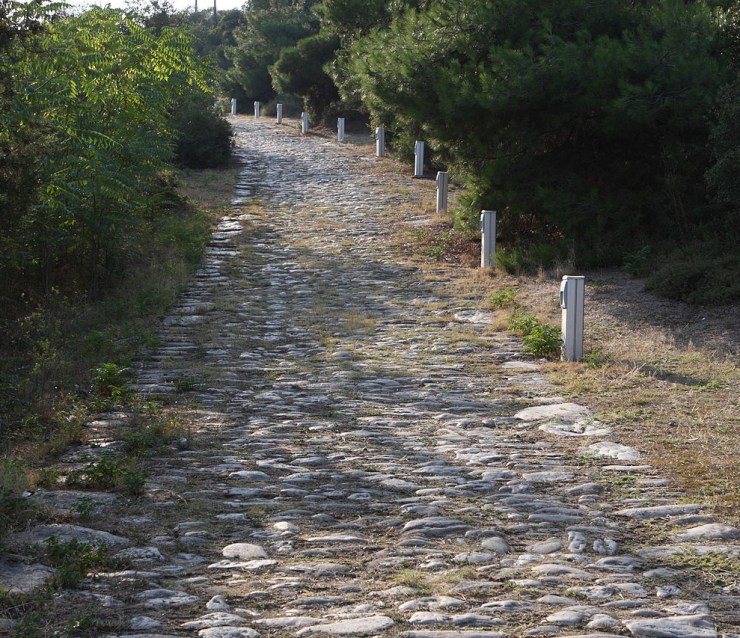
Image © Philipp Pilhofer at Wikimedia Commons (CC BY-SA 3.0)
Part of the ancient Roman Road known as the Via Egnatia. It ran all the way from present-day Durrës in Albania, on the Adriatic coast, to present-day Istanbul in Turkey. The section in the photo is in Kavala, a city in northern Greece, known in New Testament times as Neapolis (see Acts 16:11).
►Finally, there was social, political and religious turmoil in Judea at the time of Jesus―driving many to look earnestly, even desperately, for God’s intervention on behalf of His people.
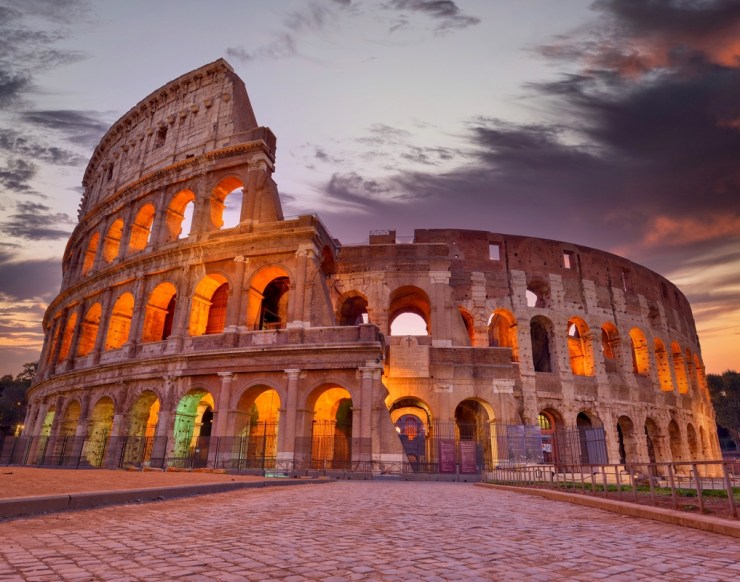
The Colosseum in Rome. This huge amphitheatre, completed in AD80, bears witness to the splendour of the Roman Empire.
Milestones to the Messiah
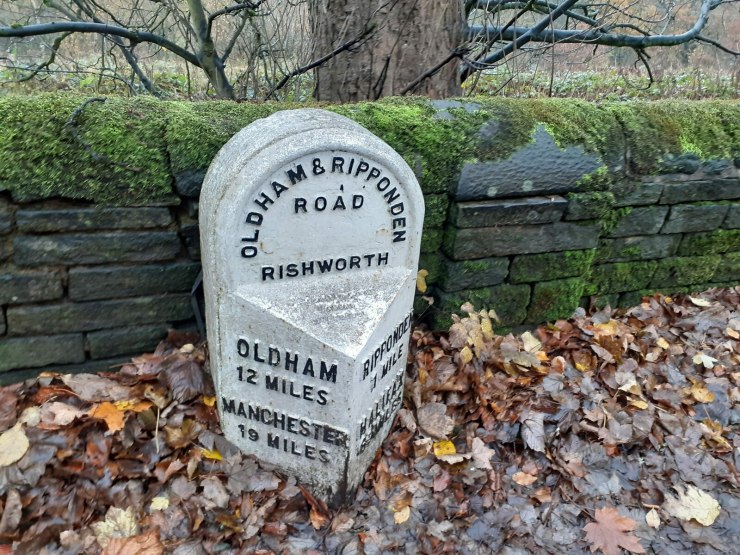
Old milestone © Robert Glover from Wikimedia Commons (CC BY-SA 2.0)
An old milestone near Rishworth, Calderdale, England. As you journey along some of the old roads in England, you may spot milestones to show travellers how near they are to their destination. The ‘destination’ of the Old Testament is Jesus the Messiah. As we travel from Genesis to Malachi, there are many ‘milestones’ along the way, pointing us to Him.
The ‘destination’ of the Old Testament is Jesus the Messiah. And as we travel from Genesis to Malachi, there are many ‘milestones’ along the road, pointing us to Him. Here are just a few.
●In Genesis 3:15, God says to the snake: “I will put enmity between you and the woman, and between your offspring and hers; he will crush your head, and you will strike his heel” (NIV). One day, a single offspring of Eve will “crush” Satan’s “head”―in other words, defeat him.
●In Genesis 49:10, Jacob prophesies, “The sceptre will not depart from Judah, . . . until he to whom it belongs shall come and the obedience of the nations shall be his” (NIV). One day, a king of Judah’s tribe would rule the nations.
●In Numbers 24:17-18, Balaam prophesies, “. . . a sceptre shall rise out of Israel; it shall crush the forehead of Moab . . . .”―fulfilled ultimately by a king of Israel crushing the supreme enemy of God’s people, Satan.
●In 2 Samuel 7:12-16, God promises King David, “Your throne shall be established for ever”. It lasts forever because Jesus is the great and final King of David’s dynasty; “Of the greatness of his government and peace there will be no end. He will reign on David’s throne and over his kingdom . . . .” (Isaiah 9:7 NIV).
●Isaiah 7:14 tells us that He’ll be born of “the virgin”, who will call Him “Immanuel” (meaning “God is with us”).
●Isaiah 9:6 tells us that His name will be called “Wonderful Counsellor, Mighty God, Everlasting Father, Prince of Peace”.
●Isaiah 53:5-6,11 tells us that the Lord’s servant “was pierced for our transgressions”; on Him “the LORD has laid . . . the iniquity of us all” (NIV); He’ll “make many to be accounted righteous”.
●Daniel 9:24-27 prophesies about the “Anointed One, the ruler” who “will be put to death” (NIV); “transgression” will be finished, “sin” ended, “wickedness” atoned for, and “everlasting righteousness” brought in. The “Anointed One” will “confirm a covenant with many” (NIV)―the new covenant prophesied in Jeremiah 31:31-34.
●And Micah 5:2 prophesies He’ll be born in “Bethlehem”.
Next time . . .
And so, the long-awaited Messiah is born. A new and wonderful chapter opens in the drama of God’s redemption of His people and His creation. We’ll look at our Saviour’s birth and early years, and the birth of His forerunner, John the Baptist.
Bible Readings and Question
You may like to read Deuteronomy 8:1-10 and Jeremiah 29:10-14. Here’s something to think about as we leave the Old Testament:
?Consider how the Lord led His people over many centuries. And think of the wonderful ways in which He guided the course of history to prepare the world for our Saviour’s coming. What light does all this throw on how He guides and watches over our own individual lives?
Book – Hope for All the Earth

In this brief guide, the author takes us, step by step, through the whole sweep of the Old Testament, through its stories and songs, through its prophecies and promises, and shows us how each one points us to the coming Saviour, and God’s plan to rescue us from our sin and establish his everlasting kingdom. See the publisher’s information (with a sample to view or download) HERE. You can get it direct from the publisher, or from any Christian bookseller.
REFERENCES [1] See Daniel (The Preacher’s Commentary) by Sinclair B. Ferguson, page 150. Published by Thomas Nelson, Inc., Nashville, Tennessee, in 1988.
CREDITS ► Text copyright © 2024 Robert Gordon Betts ► Unless otherwise indicated, all Scripture is taken from the ESV® Bible (The Holy Bible, English Standard Version®), copyright © 2001 by Crossway, a publishing ministry of Good News Publishers. Anglicized English Standard Version copyright © 2002 by Crossway. Used by permission. All rights reserved. The ESV text may not be quoted in any publication made available to the public by a Creative Commons license. The ESV may not be translated in whole or in part into any other language. ► Scripture quotations marked ‘NIV’ are taken from The Holy Bible, New International Version (Anglicised edition). Copyright © 1979, 1984, 2011 by Biblica (formerly International Bible Society). Used by permission of Hodder & Stoughton Publishers, an Hachette UK company. All rights reserved. ‘NIV’ is a registered trademark of Biblica (formerly International Bible Society). UK trademark number 1448790.
 52 Steps


.jpg)