
Part 30: Visions of Glory
Click the icon below to download a 4-page PDF version of this page.

The promise of a new nation
We pick up the story of God’s people from Part 26. Thousands of Jews have returned from exile in Babylon. But the nation (now called Judah) is a pale shadow of what it was in Solomon’s day. A new Temple has been built―but it’s not, it seems, as splendid as Solomon’s. The Ark, with its mercy seat, has disappeared, never to return. We don’t hear of God filling this Temple with His presence, as He did the Tabernacle and Solomon’s Temple. Jerusalem has been restored and its walls rebuilt; but the nation is still under Persian control, and there’s no Davidic king on the throne. It must have felt to many as if they were still in exile.

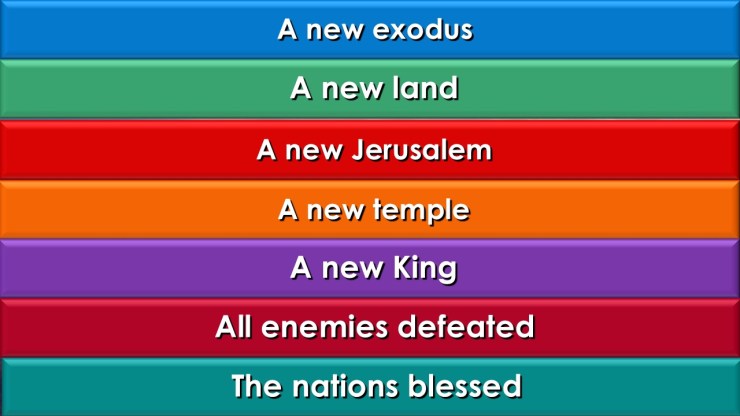
Over the centuries―woven through their rebukes and warnings―God’s prophets bring a breathtaking message of hope.
But this isn’t the end of the story. Over the centuries―woven through their rebukes and warnings―God’s prophets bring a breathtaking message of hope.
► There’ll be a new Exodus (for example, Isaiah 11:10-16, 43:14-21). It will be like the Exodus from Egypt all over again!
►There’ll be a new Promised Land, fertile and fruitful, like a new Garden of Eden (for example, Ezekiel 36:33-36). In fact there’ll be a new Heaven and a new Earth (Isaiah 65:17-25)!
►There’ll be a new Jerusalem―the capital, not just of Israel, but of the whole world (see Zechariah 8:3-5).
►There’ll be a new Temple (prophesied in detail in Ezekiel 40 to 47). God will dwell there and fill it with His glory. God will live among His people; He’ll be their God and they’ll be His people (for example, Ezekiel 37:26-28).
►There’ll be a new King of David’s dynasty (for example, Ezekiel 37:24-25). He’ll rule over God’s people for ever. He’ll not only be David’s son, He’ll be God Himself (for example, Isaiah 7:14, 9:6)! And He’ll rule the whole Earth (for example, Zechariah 9:9-10).
►All the evil forces ranged against God’s people will be defeated (for example, see Ezekiel 38:1-39:29, Isaiah 27:1).
►And finally, the nations will be blessed, just as God promised Abraham (see, for example, Zechariah 8:13).
The Anointed One
But how could all these promises become reality? It was sin that caused God to expel His people from the Promised Land. It was sin that led to God allowing the Babylonians to destroy Jerusalem and the Temple. It was sin that unseated David’s dynasty from Judah’s throne. And the people are still backsliding into sin (see, for example, Nehemiah 13:15-18, Malachi 2:10-12). Sin had to be fully and finally finished with. Only then could these promises be fulfilled. So how will this happen?
Sin had to be fully and finally finished with. Only then could these promises be fulfilled.
To find out, we go back to the time before the return to the Promised Land. The Jews are in exile in Babylonia; Daniel the prophet is with them there. In 539BC the Persians capture Babylon and become the new superpower of the Near East. Daniel knows that God will soon bring His people back to the Promised Land. So he prays. In response, God sends the angel Gabriel to give him “insight and understanding” (Daniel 9:22).
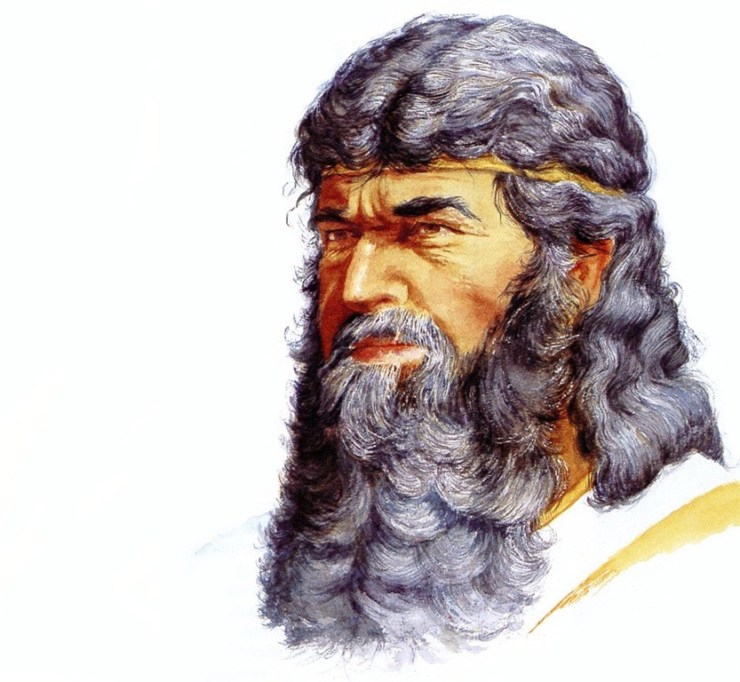
Isaiah: image © John Heseltine 2015 and © Pam Masco 2015. Image courtesy of FreeBible Images (CC BY NC ND 4.0)
An artist imagines what Daniel might have looked like.
What Gabriel tells Daniel is a key Old Testament prophecy. He says, “Seventy ‘sevens’ are decreed for your people and your holy city to finish transgression, to put an end to sin, to atone for wickedness, to bring in everlasting righteousness, to seal up vision and prophecy and to anoint the Most Holy Place [or “the most holy One”]. Know and understand this: from the time the word goes out to restore and rebuild Jerusalem until the Anointed One, the ruler, comes, there will be seven ‘sevens’, and sixty-two ‘sevens’. It will be rebuilt . . . , but in times of trouble. After the sixty-two ‘sevens’, the Anointed One will be put to death and will have nothing. . . . . He will confirm a covenant with many for one ‘seven’. . . . he will put an end to sacrifice and offering. . . . .” (Daniel 9:24-27 NIV)
The phrase “seventy ‘sevens’” is translated “seventy weeks” in the ESV. These ’70 weeks’ symbolise a very long period of time. It starts “from the time the word goes out to restore and rebuild Jerusalem”―probably King Cyrus’s decree around 538BC encouraging Jews to return home and “rebuild the house of the LORD” (Ezra 1:1-3, see 2 Chronicles 36:22-23).
During these ’70 weeks’, “transgression” will be finished, “sin” brought to an end, “wickedness” atoned for, and “everlasting righteousness” brought in. In other words, sin will be completely dealt with and people will be made right with God. The “Anointed One, the ruler” will accomplish all this. The Hebrew word for “Anointed One” here is māshîach, from which the English word Messiah is derived. The Greek translation for māshîach is christos, which is ‘Christ’ in English. The “Anointed One” is Jesus Christ.
But how will sin be dealt with? Gabriel says, “the Anointed One will be put to death and will have nothing”. Isaiah 52:13-53:12 tells us more. God’s “servant” (52:13), “was pierced for our transgressions, he was crushed for our iniquities; the punishment that brought us peace was on him, and by his wounds we are healed. . . . the LORD has laid on him the iniquity of us all” (53:5-6). And through the servant’s death, God will “make many to be accounted righteous” (Isaiah 53:11): He’ll make many people right with God. The “servant” is, of course, Jesus.
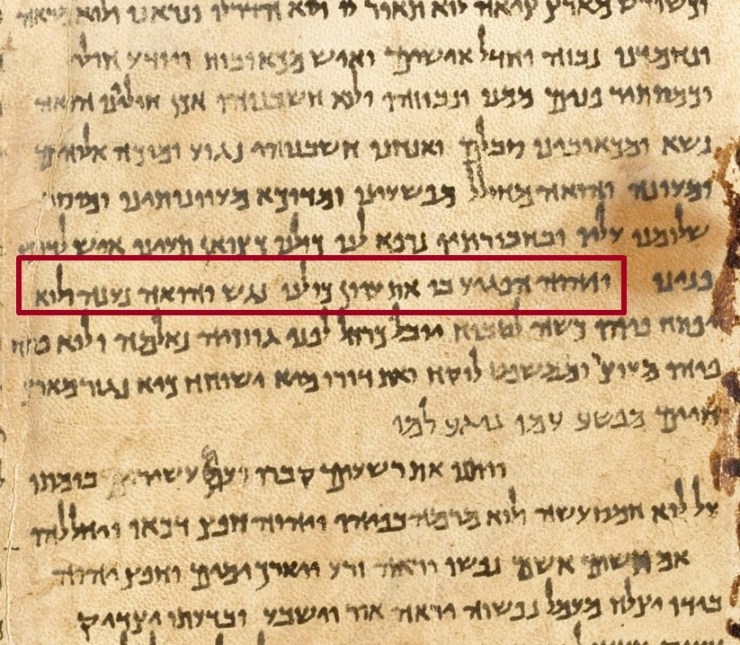
Great Isaiah Scroll Ch53 from Wikimedia Commons
A portion of a photo of the Great Isaiah Scroll, one of the Dead Sea Scrolls. This photo shows part of Isaiah 53. The portion highlighted reads “the Lord has laid on him the iniquity of us all” (Isaiah 53:6). This manuscript was probably written around the second century BC, many decades before Jesus fulfilled this prophecy.
Gabriel also tells Daniel that the Messiah will “confirm a covenant with many”. This is surely the new covenant that Jeremiah tells us about. God promises: “I will make a new covenant with the house of Israel and the house of Judah, . . . . I will put my law within them, and I will write it on their hearts. And I will be their God, and they shall be my people. . . . . For I will forgive their iniquity, and I will remember their sin no more.” (Jeremiah 31:31-34). Ezekiel, too, prophesies about what God is going to do: “I will . . . bring you into your own land. I will sprinkle clean water on you, and you shall be clean . . . . And I will give you a new heart, . . . . And I will put my Spirit within you, and cause you to walk in my statutes . . . .” (Ezekiel 36:24-27, and see Ezekiel 11:19-20).
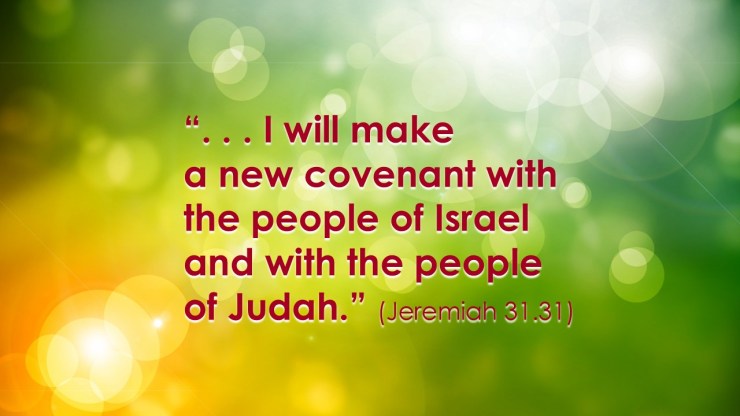
Through this new covenant, God is going to cleanse His people and give them a “new heart” with His Law written on it. No longer will they be slaves to sin and Satan; they’ll have a natural desire to love and obey God. Once they were spiritually dead, like dry bones. But they’ll rise from the dead―the dry bones will be clothed with flesh and sparked into life by God’s Spirit (Ezekiel 37:1-14).
Through His “new covenant”, God will cleanse His people and give them a “new heart” with His Law written on it (Jeremiah 31:31-34, Ezekiel 36:24-27).
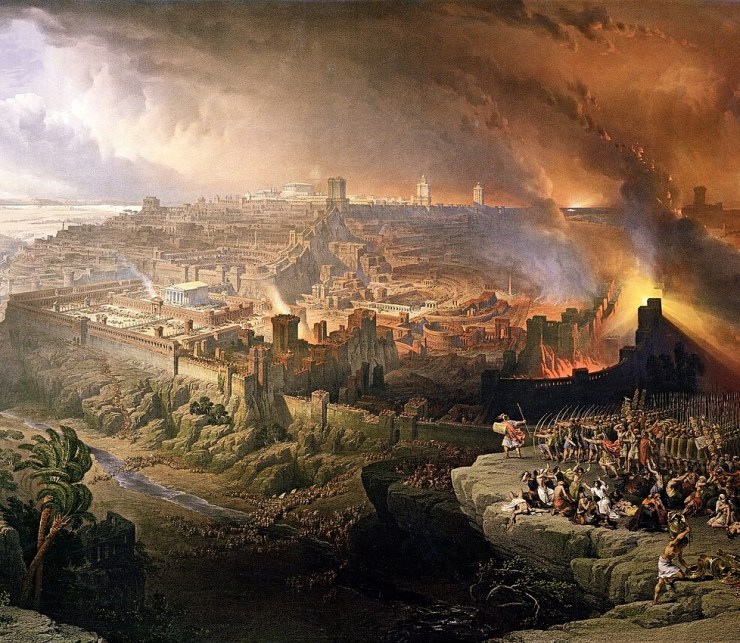
Gabriel also reveals that the Messiah “will put an end to sacrifice and offering”. Jesus’s sacrificial death fulfills all the Old Testament sacrifices. So they’re no longer needed. And it wasn’t long before they ceased to be offered at all: in AD70, a Roman army destroyed the Temple, and the sacrifices ceased to be offered.
The Siege and Destruction of Jerusalem by the Romans Under the Command of Titus, A.D. 70 from Wikimedia Commons
Portion of The Siege and Destruction of Jerusalem by the Romans Under the Command of Titus, AD 70 painted by David Roberts.
God’s final Jubilee
As we saw above, Gabriel tells Daniel about 70 ‘sevens’ or ‘weeks’ “decreed for your people and your holy city. . . .” (9:24). These ’70 weeks’ recall the Year of Jubilee, which we looked at in Part 19. The Jubilee was a wonderful year of freedom and rest and joy. It occurred after “seven weeks of years, seven times seven years”―in other words, every 50th year (Leviticus 25:8).
Now, here in Daniel, we read about a period of, not seven, but seventy ‘weeks’―ten times as many. After “seven weeks of years” came the Jubilee; after these “seventy weeks” will come the ‘super-Jubilee’. This super-Jubilee won’t last for just one year. It will last for ever. It will be a time of eternal freedom and rest and joy.
When will this super-Jubilee begin? At the start of His public ministry, Jesus says: “The Spirit of the Lord is upon me, because he has anointed me to proclaim good news to the poor. He has sent me to proclaim liberty to the captives and recovering of sight to the blind, to set at liberty those who are oppressed, to proclaim the year of the Lord’s favour.” (Luke 4:18-19, quoting from Isaiah 58:6 and 61:1-2). The “year of the Lord’s favour” points us back to the Year of Jubilee (see Leviticus 25:10). Then Jesus declares: “Today this Scripture has been fulfilled in your hearing” (Luke 4:21). Jesus announces that this final Jubilee―super-Jubilee―has begun!
So, in a sense, we’re already in this Jubilee! We’re already in this time of freedom and joy. Through His death and resurrection, Jesus has released us from spiritual blindness (see Acts 26:18). He’s redeemed us from the penalty of sin (Romans 6:23); and forgiven us. He’s unshackled us from slavery to sin (see Romans 6:7,18, 22, 8:2).
But this super-Jubilee hasn’t yet fully come. That will happen when Jesus returns to Earth. Then we’ll be freed from even the presence of sin; we’ll be sinlessly perfect. We’ll enjoy freedom, rest and joy in God’s presence in the new Earth for ever. Through His prophet Isaiah, God tells us: “I create new heavens and a new earth, and the former things shall not be remembered . . . . I create Jerusalem to be a joy, and her people to be a gladness. . . . . no more shall be heard in it the sound of weeping and the cry of distress. . . . . like the days of a tree shall the days of my people be, . . . . Before they call I will answer; while they are yet speaking I will hear. The wolf and the lamb shall graze together; . . . and dust shall be the serpent’s food. They shall not hurt or destroy in all my holy mountain” (Isaiah 65:17-25).

The ‘super-Jubilee’ will fully begin when Jesus returns to Earth. We’ll enjoy freedom, rest and joy in God’s presence in the new Earth for ever.
As we’ve seen, sin had to be fully and finally finished with―or none of the blessings God promised through His prophets would ever come to pass. But now “the Anointed One” has dealt with sin. So all God’s promises will be fulfilled. Both “vision and prophecy” (9:24) will be ‘sealed up’. This could mean: sealed up because they’re completed, or sealed to authenticate them. Both are true. Jesus completes everything God has promised: “all the promises of God find their Yes in him” (2 Corinthians 1:20). And so He authenticates God’s promises as true vision and prophecy.
Through His death on the Cross and His resurrection and ascension to His Father’s right hand in Heaven, Jesus completes everything God has promised: “all the promises of God find their Yes in him” (2 Corinthians 1:20).
Next time . . .
We’ll look at how God prepared His people and the world for the coming of His Son, and for the worldwide mission of His Church.
Bible Reading and Questions
You may like to read Daniel 9:1-23. Here are questions to think about:
?What does Daniel pray, and how does he pray? What is God teaching us through Daniel here? And is it significant that God brings this wonderful prophecy to Daniel while he is praying so earnestly?
Video
Here’s a short video, entitled The Valley of Dry Bones: The Story of Ezekiel’s Prophecy (Ezekiel 37). It’s designed for children ages 6 to 12. But youth and adults may well enjoy it, too. This video is in a series published by Crossway. It’s based on the book called The Biggest Story Bible Storybook. All the videos―there are 104 in all―can be viewed at The Biggest Story videos website. You can also create a free account to enable you to download them.
CREDITS ► Text copyright © 2024 Robert Gordon Betts ► Unless otherwise indicated, all Scripture is taken from the ESV® Bible (The Holy Bible, English Standard Version®), copyright © 2001 by Crossway, a publishing ministry of Good News Publishers. Anglicized English Standard Version copyright © 2002 by Crossway. Used by permission. All rights reserved. The ESV text may not be quoted in any publication made available to the public by a Creative Commons license. The ESV may not be translated in whole or in part into any other language. ► Scripture quotations marked ‘NIV’ are taken from The Holy Bible, New International Version (Anglicised edition). Copyright © 1979, 1984, 2011 by Biblica (formerly International Bible Society). Used by permission of Hodder & Stoughton Publishers, an Hachette UK company. All rights reserved. ‘NIV’ is a registered trademark of Biblica (formerly International Bible Society). UK trademark number 1448790.
 52 Steps

