
Part 10: Our Faithful Father Abraham
Click the icon below to download a 4-page PDF version of this page.

Waiting for the promised offspring
We continue the story of Abram. God later renames him Abraham; and that’s what we’ll call him from now on. He’s now settled in Canaan, the land God promised him and his descendants. He’s “very rich in livestock, in silver, and in gold” (Genesis 13:2). But he and his household don’t live in a house; they live in tents. And he doesn’t own any land, either. The Book of Hebrews tells us, “By faith he went to live in the land of promise, as in a foreign land, living in tents . . . .” (Hebrews 11:9).
And there’s a huge gap in his life. He has no child. God has promised him, “I will make you into a great nation” (12:3). Later, God said, “I will make your offspring as the dust of the earth” (13:15-16). Abraham was already an old man when he entered the promised land. Years have passed; he still has no “offspring”. What’s more, his wife Sarai is barren (11:30), and too old to have a baby anyway. How will God fulfil His promise? How will Abraham become a great nation? How can he possibly have offspring as countless “as the dust of the earth”? We can imagine Abraham again and again pondering how God would fulfil that promise to him.
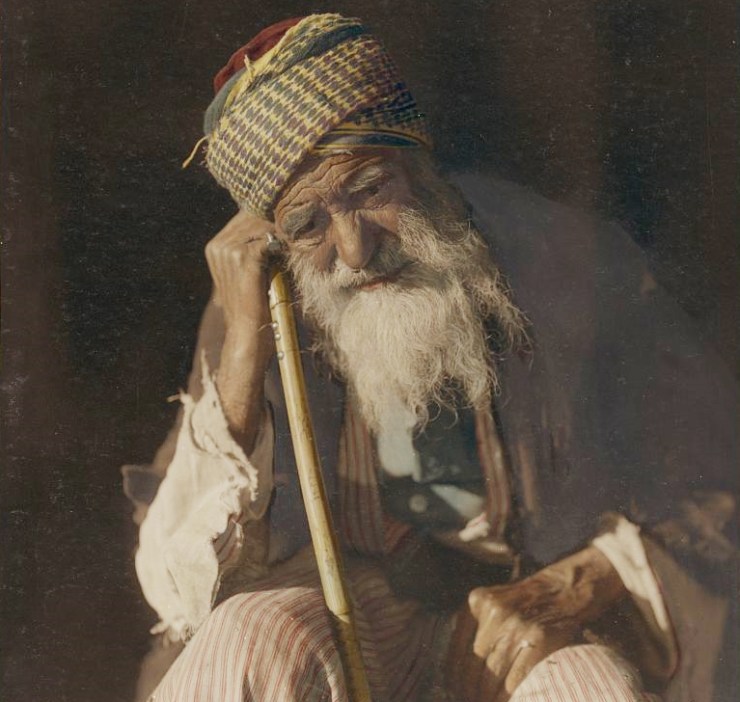
Image courtesy of Library of Congress
We can imagine Abraham again and again pondering how God would fulfil His promises to him. A photograph of an Arab Jew from the Yemen, taken between 1898 and 1914―a portrait that brings Abraham to mind.
“The just shall live by faith”
Then, one night, God speaks to Abraham in a vision. Abraham reminds God―as if He needed reminding!―that He’s given him no child. God leads him outside and says, “Look up at the sky and count the stars – if indeed you can count them”. Then He says, “So shall your offspring be” (Genesis 15:5 NIV). This was some promise! To human eyes, it seemed impossible. Yet “Abram believed the LORD, and he credited it to him as righteousness” (15:6 NIV). This is one of the Bible’s outstanding verses. The prophet Habakkuk echoes it when he says “the just shall live by his faith” (Habakkuk 2:4). These two verses are, between them, quoted no less than seven times in the New Testament.
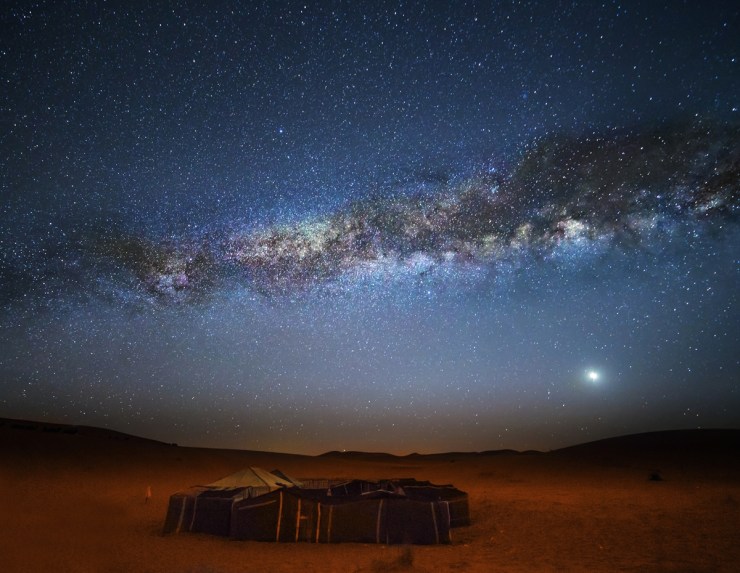
One night, God leads Abraham outside and says, “Look up at the sky and count the stars – if indeed you can count them”. Then He says, “So shall your offspring be” (Genesis 15:5 NIV).
Abraham trusted that God would do what He said, however impossible it might seem (see Romans 4:18-22). So God ”credited it to him as righteousness”. He considered Abraham―sinful though he was―to be righteous―in other words, to be in right relationship with Himself.
Abraham trusted that God would do what He said, however impossible it might seem.
Abraham’s offspring
Who are Abraham’s “offspring”? They include God’s faithful people in Old Testament times. They also include us! All those who have faith in Christ Jesus “are the sons of Abraham” (Galatians 3:7). Paul tells us, “if you are Christ’s, then you are Abraham’s offspring, . . . .” (Galatians 3:29); Abraham “is the father of us all” (Romans 4:16). So we, too, are Abraham’s offspring, and included in God’s covenant with Abraham!
We, too, are Abraham’s offspring, and included in God’s covenant with Abraham.
God’s covenant with Abraham
God had promised to give Abraham and his offspring the land of Canaan (12:7, 13:14-17). He had promised him offspring as countless as the dust of the earth (13:16). And He had promised to bless him, and that through him “all peoples on earth will be blessed” (12:3 NIV). Now God confirms those promises by making a covenant―a binding agreement―with Abraham (15:7-21).
God tells him to sacrifice some animals and birds. Abraham cuts the dead animals in half. Then he lays the pieces, together with two birds, in two rows. This all seems rather strange to us. But it wasn’t strange to people in Abraham’s time. In those days, a king might make a covenant with another king. To confirm this covenant, they’d offer a sacrifice. If one of the kings was more powerful than the other, the weaker king might have to walk between the pieces of the sacrificial animal. This symbolised that, if this weaker king ever broke the covenant, he’d have to share the fate of the sacrificial animal―in other words, death. It made it quite clear to the weaker king that he had to keep the covenant―or else!
And so God makes the covenant with Abraham in the customary way, with a sacrifice―in fact, a number of sacrifices. Abraham is the junior partner in this covenant. He’s supposed to walk between the sacrifices. But he doesn’t. God sends Abraham to sleep. Then God alone―visible as a smoking pot and a blazing torch―walks between the sacrifices. Why? He’s showing Abraham―and us―that if the covenant is ever broken, He Himself will suffer the penalty of death.
And God’s covenant with Abraham was broken. Abraham’s “offspring” broke it. Time and again God’s Old Testament people refused to trust and obey God. We, too, break it. We fail to trust and obey God.
So who should have suffered the penalty of death? God’s people―including you and me―should have suffered it. But God the Son, Jesus Christ, suffered that penalty instead. He died in our place. The sacrificial ceremony we read about here in Genesis 15:7-21 is a prophecy of the Cross. And because Jesus died in our place, Abraham’s covenant remains unbroken. Everything that God promised Abraham will happen. That’s guaranteed!
The sacrificial ceremony we read about in Genesis 15:7-21 is a prophecy of the Cross.
Abraham’s faltering faith
But Abraham sometimes failed to trust God. Sometime after God confirmed His covenant with Abraham, his wife Sarai persuades him to take her servant girl Hagar as another wife. Hagar bears Abraham a son, called Ishmael. But this is all a terrible mistake. Abraham is trying to fulfil God’s promise using his own human methods. So, of course, it ends in failure. Genesis 16:1-16 and 21:8-21 tell the whole story.
The covenant sign―circumcision
Years later, God appears to Abraham again―Genesis 17:1-22 records the occasion. Abraham is now 99 years old. He’s still waiting for the promised son and heir. God tells him he’ll be “the father of a multitude of nations” and that “kings” will come from him. God says that His covenant with Abraham and his offspring will be everlasting―He’ll be their God for ever.
God promises that Sarai will bear him a son, whom he’s to name Isaac. God again promises him and his descendants the land of Canaan as a possession for ever. And God now renames him; no longer Abram, he’s now called Abraham. God renames Sarai, too. She’s now called Sarah.
Then God commands Abraham, together with every male eight days old or over, to be circumcised (17:10-13). Circumcision was “a sign”―a symbol―of the covenant. We still have covenants today. The prime example is marriage. In many countries, wearing a wedding ring symbolises that the wearer is married―in other words, in a marriage covenant. In the same kind of way, circumcision symbolised that Abraham and his household were in covenant relationship with God.
But why circumcision? One reason may be this. Everything that God had promised Abraham―the countless offspring, the possession of the land, and bringing blessing to the world―depended on just one thing. It all depended on Abraham having a son by his wife Sarah.
Circumcision is a surgical procedure to remove a small piece of flesh from the part of a man’s body involved in procreation.
● It symbolises the cutting away―the putting to death―of natural human ability. For Abraham, it meant that fathering a child by Sarah wouldn’t happen through his own natural human virility and strength, but only through God’s miraculous power. So the other promises that depended on the birth of this child would happen only through God’s power.
●More generally, circumcision pictures faith in God. Paul tells us that Abraham “received the sign of circumcision as a seal of the righteousness that he had by faith” (Romans 4:11). In other words, it showed that Abraham had faith in God, and so was righteous―in other words, in right relationship with God.
But physical circumcision was only a sign. God also wanted His Old Testament people to have ‘circumcised’ ears and hearts―to listen to Him, to love and obey Him, and to rely on Him for everything. We believers in New Testament times don’t have to be physically circumcised. But God still wants us to be spiritually circumcised.
All the males in Abraham’s household were circumcised. That’s very significant. Abraham’s household included not only his relatives, but also people who weren’t related to him. They were all members of God’s covenant people. God has always wanted people from every tribe and nation to be in covenant relationship with Him.
God has always wanted people from every tribe and nation to be in covenant relationship with Him.
The sacrifice of the beloved son
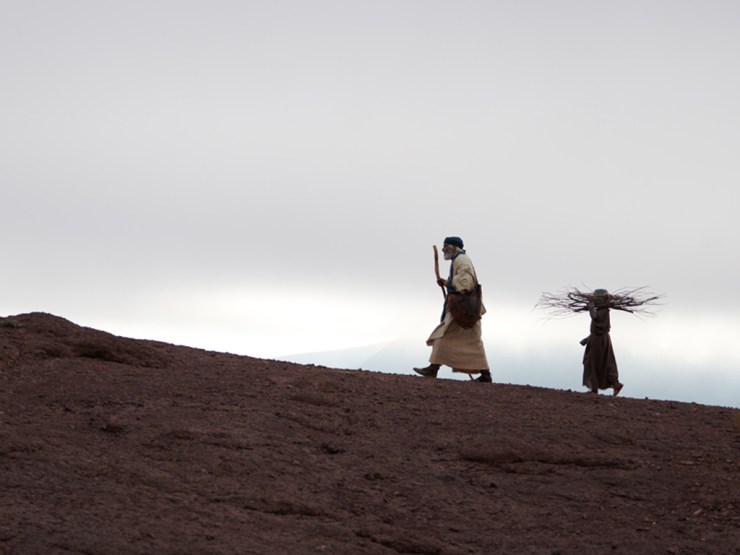
Image courtesy of www.LumoProject.com through FreeBibleimages.org
God tells Abraham: “Take your son, your only son, whom you love—Isaac—and go to the region of Moriah. Sacrifice him there as a burnt offering on a mountain that I will show you.” (Genesis 22:2 NIV).
The following year―when Abraham is 100 years old―Sarah gives birth to the promised son (Genesis 21:1-7). He’s named Isaac. When he’s a young lad, perhaps a teenager, God tells Abraham: “Take your son, your only son, whom you love—Isaac—and go to the region of Moriah. Sacrifice him there as a burnt offering on a mountain that I will show you.” (Genesis 22:2 NIV).
To offer his dearly loved son Isaac to God was the greatest sacrifice Abraham could ever make. But without delay, he obeys. Abraham stands over his son, knife in hand, ready to plunge it into his son’s body. Suddenly, an angel stops him. God provides a ram to take Isaac’s place. Abraham offers this ram instead of his son.
God told Abraham to sacrifice Isaac on a mountain in the land of Moriah. This mountain may well be Mount Moriah, one of the hills that the city of Jerusalem was later built on. If so, then Abraham offered Isaac close to where Jesus Christ would one day be crucified. Abraham’s offering of his beloved son is another prophecy. It points to the sacrifice of God’s only Son on the Cross.
In the next part . . .
We’re now nearly halfway through Genesis, and beginning to travel more swiftly through the Old Testament. But reading the Old Testament can be a real challenge, can’t it? How can we understand it? That’s the question we’ll look at in the next part.
Bible Readings and Questions
You may like to read Genesis 15:1-6 and 22:1-19. Here are some questions to think about:
?Why does God require Abraham to wait so long before the promised son, Isaac, is born? And why does God then test Abraham in the way described in Genesis 22:1-19? What’s God’s purpose with Abraham in all this? And how does that reflect the way He leads us?
Videos
Here’s two short videos, entitled Let’s Make a Deal and It’s a Boy! They’re designed for children ages 6 to 12. But they’re so good, I think everyone will find them helpful. These videos are in a series published by Crossway. They’re based on the book called The Biggest Story Bible Storybook. All the videos can be viewed at The Biggest Story videos website. You can also create a free account to enable you to download them.
CREDITS ► Text copyright © 2024 Robert Gordon Betts ► Unless otherwise indicated, all Scripture is taken from the ESV® Bible (The Holy Bible, English Standard Version®), copyright © 2001 by Crossway, a publishing ministry of Good News Publishers. Anglicized English Standard Version copyright © 2002 by Crossway. Used by permission. All rights reserved. The ESV text may not be quoted in any publication made available to the public by a Creative Commons license. The ESV may not be translated in whole or in part into any other language. ► Scripture quotations marked ‘NIV’ are taken from The Holy Bible, New International Version (Anglicised edition). Copyright © 1979, 1984, 2011 by Biblica (formerly International Bible Society). Used by permission of Hodder & Stoughton Publishers, an Hachette UK company. All rights reserved. ‘NIV’ is a registered trademark of Biblica (formerly International Bible Society). UK trademark number 1448790.
 52 Steps